(Opinion) From mill town to river town
New Hampshire has more than 10,000 miles of rivers, many of which flow through downtowns.
EXTENSION WORKS FOR NH
By: Shannon Rogers, Ph.D
New Hampshire has more than 10,000 miles of rivers, many of which flow through downtowns.
Numerous towns and cities in New England were built along rivers, often with their backs to the river, which provided both mill power and waste removal. Today, those same communities may see renewed value in their rivers as a source of economic vibrancy.
As a state specialist and extension professor teaching community economics at UNH, I’ve been researching this topic and working directly with communities taking part in mill town redevelopment across New Hampshire.
A local river can serve as a place to fish, paddle, observe wildlife and relax with friends and family.
A vibrant river town has public spaces where people can safely enjoy a view of the river, while also featuring good water quality and accessible launch sites for paddle sports and fishing. Residents and visitors value walkable, attractive river towns with a diverse downtown business community where they can enjoy a meal and access basic amenities.
While recreation and other scenic amenities may be the goal of redeveloping mill towns, some mill towns may consider going back to the future by focusing on more sustainable textile or mini mill operations.
I’ve recently started working with a team of UNH researchers and community partners with support from the NH Agricultural Experiment Station to consider this question: “what would it look like for textile to return to river towns?”
With many important social, economic and environmental considerations to be made, former mill towns may want to envision a new mill future where labor practices are safer, water quality is paramount, and local economic vibrancy is achieved, while providing a locally made product.
A diverse business community attracts residents, employees, and visitors to the downtown area. People will look for casual restaurants with evening hours, a coffee shop, drugstore and gas station.
Residents or visitors looking to rent or purchase sporting equipment or take a lesson will look for outfitters with a focus on paddle sports and fishing.
A vibrant river town must maintain clear sightlines to the river. This may require communities to manage native vegetation and remove invasive species that block the river from view.
Lighting along pathways, river walks, streets and parking lots can activate spaces at night, creating a positive perception of safety that’s essential to continually attracting community members and visitors to these spaces.
River towns should have adequate parking downtown, at parks and river walks, which may include street, public and private lots and garages.
Docks and public launch sites for canoes, kayaks and motorboats are important for attracting community members and visitors to the river’s edge.
Ideally, these launch sites are connected to downtown areas with a signed and low-grade pathway that draws people into the downtown area.
Public spaces along the riverbanks provide seating and gathering space for the community to enjoy the river.
River walks provide a space where community members can walk, run or portage their canoe or kayak to a launch site. Larger parks with amphitheaters or pavilions may serve as a location for concerts, farmers’ markets, river festivals, regattas and other community activities.
Water quality is central to the vibrancy of a river town. While pristine waters are not necessary, it is important that riverways are safe for secondary contact recreation activities like paddling, fishing, and riverside walks.
Communities like Rochester have been actively planning and building a river walk along the Cocheco River to support downtown economic development while also providing access to nature. Harrisville has maintained its historic mill buildings and has an active textile operation.
Note: part of this article is based on a UNH Extension research brief by Shannon Rogers and Julia Jones. “Rivers & Economic Development” 2019.
Shannon Rogers, Ph.D., is an extension professor and state specialist of nature-based economic development. She also currently leads the Community & Economic Development team at the University of New Hampshire’s Cooperative Extension.

New Hampshire has more than 10,000 miles of rivers, many of which flow through downtowns.

It is easy to forget that people are part of this ecosystem, that we are neither separate from nor owners of it. Just as the health of the forest depends on a system of relationships, human well-being is influenced by the environments we inhabit.

Anyone who has taken a transmission line or a wind farm through New Hampshire’s Site Evaluation Committee knows the process is long, expensive and can be fraught with complication.

Evan Clements and Precia Harthcock of Jaffrey love their 1926 home, but they acknowledge the drawbacks of houses built in that era. The room that is now their sitting room, for example, was once a porch that had been enclosed and is noticeably colder than other parts of the house. The second floor was much hotter than the first floor, and their kitchen was drafty.
Energy reliability and affordability are of paramount importance in New Hampshire.

With gasoline near $4 a gallon and healing oil prices expected to jump this winter, U.S. Energy Secretary Chris Wright on Thursday said clean energy initiatives are partly to blame for high prices of energy. Wright, the founder and former chief-executive of a Denver-based oil-services and fracking company, spoke within eyesight of a small solar array at the Raymond district office of the New Hampshire Electric Co-op.
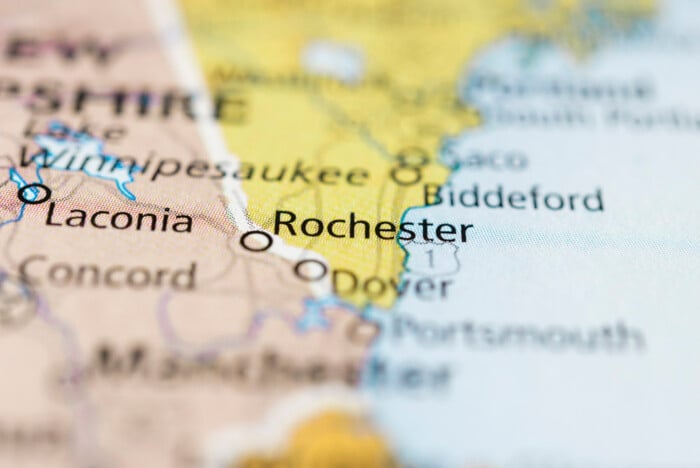
City officials are taking steps they hope will prevent data centers from locating in Rochester.

With a new state law set to go into effect with the dawn of a new year in 2027, Granite Staters will be able to install so-called “balcony solar” panels for home use.

House Bill 707, signed into law by NH Gov. Kelly Ayotte, promotes expanding existing landfills, rather than building new ones, and also establishes a seven-member committee to evaluate landfill sites.