Navigating NH’s new solid waste site eval. committee
Anyone who has taken a transmission line or a wind farm through New Hampshire’s Site Evaluation Committee knows the process is long, expensive and can be fraught with complication.
Anyone who has taken a transmission line or a wind farm through New Hampshire’s Site Evaluation Committee knows the process is long, expensive and can be fraught with complication.
In exchange, the applicant receives a Certificate of Site and Facility — a single, controlling state permit to construct and operate an energy facility.
All other state agency permits and approvals are folded into the Energy SEC process, and the certificate it issues and all local authority is preempted. For this reason, practitioners commonly call it “one-stop shopping.”
House Bill 707, signed July 10 and codified at RSA 149-M:65 through 149-M:86, established a new Solid Waste Site Evaluation Committee (SWSEC) modeled in many ways on the Energy SEC, but with several important differences.
For the first time, no new major solid waste facility may be built, and no existing facility significantly expanded, without first receiving a certificate from the SWSEC.
The requirement applies to any “major solid waste disposal facility” with a proposed acceptance rate above 100,000 tons per year — not only landfills, but also transfer, processing and storage facilities.
For existing facilities, a certificate is required for changes that increase average permitted annual capacity by at least 50,000 tons or 100,000 cubic yards per year. The certificate requirement is layered onto one of the most heavily regulated industries in the state.
A modern lined landfill already operates under a DES Solid Waste Facility permit that rests on detailed hydrogeologic investigation and engineered design, carries ongoing operating, inspection and reporting obligations, and requires financial assurance sufficient to fund closure and long-term post-closure monitoring and maintenance.
Landfills must also meet Clean Air Act standards for landfill gas collection and control and hold state groundwater release detection permits and often federal stormwater permits. HB 707 changes none of this.
Thus, unlike the Energy SEC, the SWSEC is not a “one-stop shopping” forum — its certificate is additive to existing permitting requirements.
A solid waste applicant still faces everything it faced before, plus a seven-member committee chaired by the chair of the Waste Management Council and including the commissioners of DES and Business and Economic Affairs (or, more likely, their designees) and four gubernatorial appointees confirmed by the Executive Council.
Navigating two parallel permitting proceedings will require careful planning from project inception and design through construction.
The findings the SWSEC must make to grant a certificate will look familiar to energy developers and practitioners.
The applicant must possess the financial, technical and managerial capability to construct and operate the project, and the project must not unduly interfere with orderly development of the region.
A second material difference from the Energy SEC lies in the next finding. Rather than asking whether impacts are unreasonable, the SWSEC must find that the public benefit of the proposed facility outweighs its adverse effects on human health, aesthetics, historic preservation, recreation, wildlife, noise, odor, traffic, property values and a range of other impacts enumerated in the statute. Such a balancing test gives opponents fertile ground to contest any proposed solid waste facility, regardless of the demonstrated need for the disposal capacity it would provide.
The Legislature tempered the public benefit balancing test with a stated preference for expanding existing landfills and developing brownfields over opening greenfield sites, backed by a rebuttable presumption that an expansion of an existing landfill satisfies the capability, orderly development and benefit-versus-impact findings.
Opponents bear the burden of rebutting the presumption. That is a meaningful advantage, but by no means a safe harbor.
Viggo C. Fish is a director in the Administrative Law Department of McLane Middleton.

Anyone who has taken a transmission line or a wind farm through New Hampshire’s Site Evaluation Committee knows the process is long, expensive and can be fraught with complication.

Evan Clements and Precia Harthcock of Jaffrey love their 1926 home, but they acknowledge the drawbacks of houses built in that era. The room that is now their sitting room, for example, was once a porch that had been enclosed and is noticeably colder than other parts of the house. The second floor was much hotter than the first floor, and their kitchen was drafty.

Energy reliability and affordability are of paramount importance in New Hampshire.
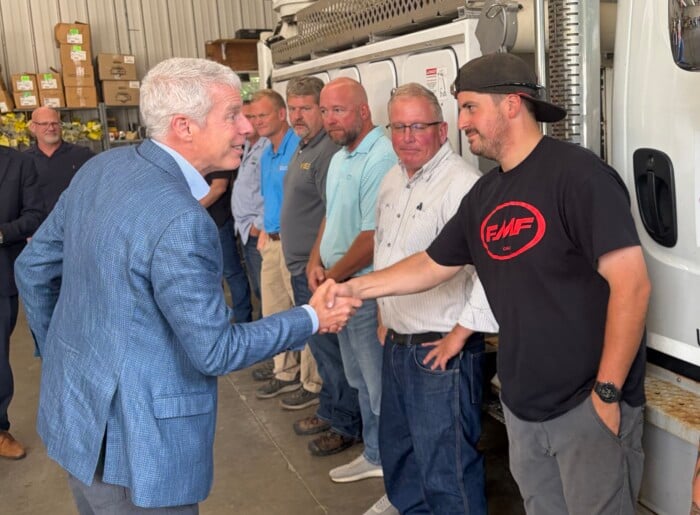
With gasoline near $4 a gallon and healing oil prices expected to jump this winter, U.S. Energy Secretary Chris Wright on Thursday said clean energy initiatives are partly to blame for high prices of energy. Wright, the founder and former chief-executive of a Denver-based oil-services and fracking company, spoke within eyesight of a small solar array at the Raymond district office of the New Hampshire Electric Co-op.
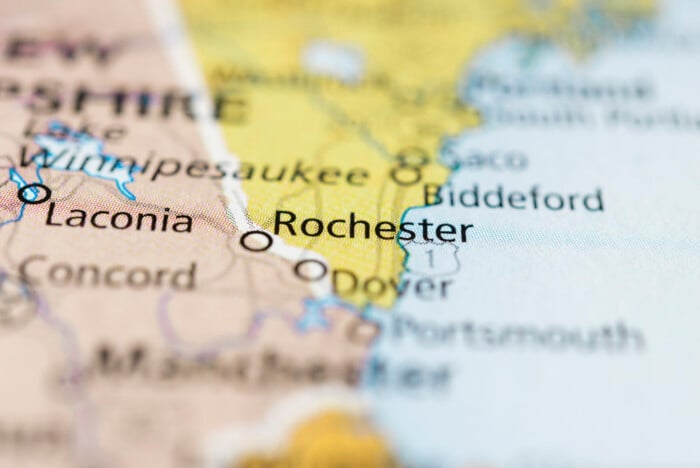
City officials are taking steps they hope will prevent data centers from locating in Rochester.

With a new state law set to go into effect with the dawn of a new year in 2027, Granite Staters will be able to install so-called “balcony solar” panels for home use.

House Bill 707, signed into law by NH Gov. Kelly Ayotte, promotes expanding existing landfills, rather than building new ones, and also establishes a seven-member committee to evaluate landfill sites.
The recently formed New Hampshire Forum has been whittling down — from 18 to four to one or two — important issues that will be addressed in the 2027 session of the state Legislature.

Upcoming legislation may provide (somewhat) smoother permitting process for developers