Will hackers use your own AI against you?
Businesses have spent years asking what AI can do for their employees. Fewer have asked what it would do for an intruder inside an employee’s account.
Cybersecurity hiring in New Hampshire has changed dramatically over the last few years. What used to be a specialized corner of IT is now a priority for nearly every organization, and that urgency has only grown as AI becomes more embedded in day-to-day business operations.
Across the state, demand is steady and competitive. Healthcare, financial services, SaaS companies, and manufacturers are all competing for the same talent at the same time. Where the challenge once was convincing organizations to take cybersecurity seriously, now it’s supply. There simply aren’t enough experienced professionals to meet the need, particularly at the mid and senior levels.
From a recruiting standpoint, this isn’t a short-term issue. It’s structural. Cybersecurity requires a mix of technical depth, real-world experience, and the ability to think critically under pressure. That combination takes time to build, and most companies are competing for the same relatively small pool of proven talent.
Building a Stronger Pipeline
Because of that, more attention is shifting toward long-term pipeline development. In New Hampshire, there’s been a noticeable push to connect employers more directly with schools, whether that’s high schools, community colleges, or local universities that have made the commitment to build cybersecurity programs.
The focus isn’t just on degrees. Certification programs, hands-on training, internships, and co-ops are all playing a bigger role. Early exposure matters too. When students understand what a cybersecurity career actually looks like in practice, not just in theory, they’re more likely to pursue it.
One of the advantages here is flexibility. Cybersecurity doesn’t have a single entry point. Some professionals come up through traditional computer science programs, but just as many transition from IT support, networking, or systems roles. Others come in with military or certification-based backgrounds.
For employers, that opens the door to thinking differently about hiring. The most successful teams are often the ones willing to invest in potential, not just experience.
Career Paths Are Not One-Size-Fits-All
Another thing that makes cybersecurity unique is the number of ways to build a career in it. There isn’t one linear path, which can be a positive for both candidates and employers.
Many people start in general IT roles and specialize over time. From there, paths can branch into areas like engineering, compliance, threat detection, or leadership. Certifications and hands-on experience can carry as much weight as formal education, depending on the role.
It’s also a field where soft skills matter more than people expect. Communication, judgment, and the ability to work across teams are critical, especially when something goes wrong and decisions need to be made quickly.
For anyone considering a move into cybersecurity, that combination of strong demand, multiple entry points, and long-term career growth makes it one of the more compelling areas in tech right now. Most people won’t land directly in a cybersecurity role on day one, but intentional career decisions, choosing adjacent roles, pursuing relevant certifications, and seeking out hands-on learning, can build a clear path there.
Why AI Is Raising the Stakes
AI is adding another layer to all of this. It’s making cybersecurity both more effective and more complex at the same time.
On one side, AI is helping organizations detect and respond to threats faster. On the other, it’s giving bad actors better tools, automating attacks, improving phishing attempts, and making it far easier to identify vulnerabilities at scale.
That shift is also changing the skills employers look for. Professionals who understand how AI tools work, both defensively and as a threat vector, are increasingly valuable. It’s not just about technical ability; it’s about being able to think alongside these systems and anticipate how they’ll be used against you.
Cybersecurity is no longer just an IT issue sitting in the background. It’s directly tied to business continuity, customer trust, and overall operational stability. In a state like New Hampshire, where industries rely heavily on data and connected systems, that risk is very real. A single incident can have ripple effects well beyond the initial breach.
What This Means for Hiring
For employers, the takeaway is straightforward: waiting for the “perfect” cybersecurity candidate is rarely a winning strategy.
The companies making progress are the ones taking a longer view. They’re building relationships with schools, creating entry points through internships or junior roles, and staying flexible on background as long as the core aptitude is there.
There’s also a growing recognition that cybersecurity hiring isn’t just about filling a role. It’s about building teams that can evolve as the threat landscape changes.
Looking Ahead
Cybersecurity isn’t slowing down, and neither is AI. If anything, the intersection of the two is going to drive even more demand for talent over the next several years.
For New Hampshire, there’s a real opportunity to stay ahead by continuing to invest in local pipelines and maintaining that close connection between employers and the education system. The groundwork being laid now, in classrooms, in internship programs, in how companies think about entry-level hiring, will determine how well the region is positioned when that demand peaks.
From a talent perspective, it remains one of the few areas in tech where demand, impact, and career growth are all pointed in the same direction.
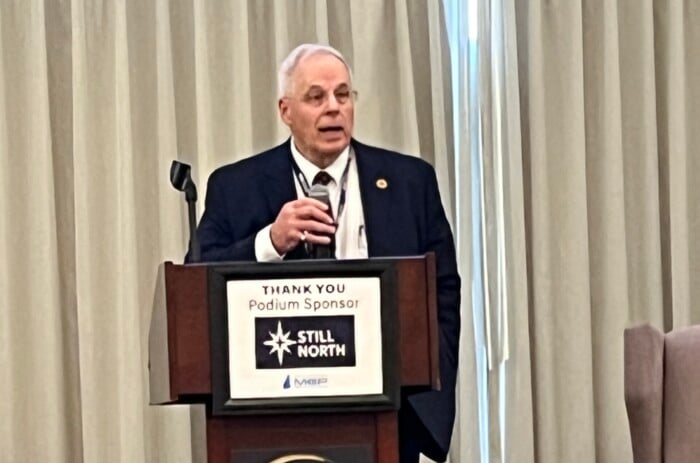
Shannon Herrmann is senior recruiting manager for Alexander Technology Group.
Businesses have spent years asking what AI can do for their employees. Fewer have asked what it would do for an intruder inside an employee’s account.

Many companies fall into the trap of innovation without realizing that not passing a data security audit will stall a deal right in its tracks.

Laws in other states, including in New Hampshire, are being used to hold businesses liable for their use of website tracking technologies

Getting cybersecurity wrong costs millions of dollars, customer trust, and sometimes the business itself.

Cybersecurity requires a mix of technical depth, real-world experience, and the ability to think critically under pressure. That combination takes time to build, and most companies are competing for the same relatively small pool of proven talent.
Prompt injection is the AI era's version of social engineering, and it's already happening in the wild. If you're deploying AI tools in your organization and haven't thought seriously about this, you should.

Strong cybersecurity can also boost business valuations and inspire buyer confidence. Both sides of the transaction should treat cybersecurity as a key factor in building enterprise value.

SB 482, which goes into effect in December, sets a daily conversion limit of $2,000 per digital transaction kiosks.
Unapproved and unmonitored AI use is spreading inside businesses faster than leadership teams know, and it may be one of the biggest privacy and security blind spots companies have today.