The amount of available office space in New Hampshire is shrinking and becoming more expensive to lease due to a lack of new construction and higher demand that is still trying to find its footing post-COVID.
“With demand holding up and little new space coming online, the market could keep tightening in the coming quarters,” said Kristie Russell of Colliers in a summary of her analysis of office market trends for the third quarter.

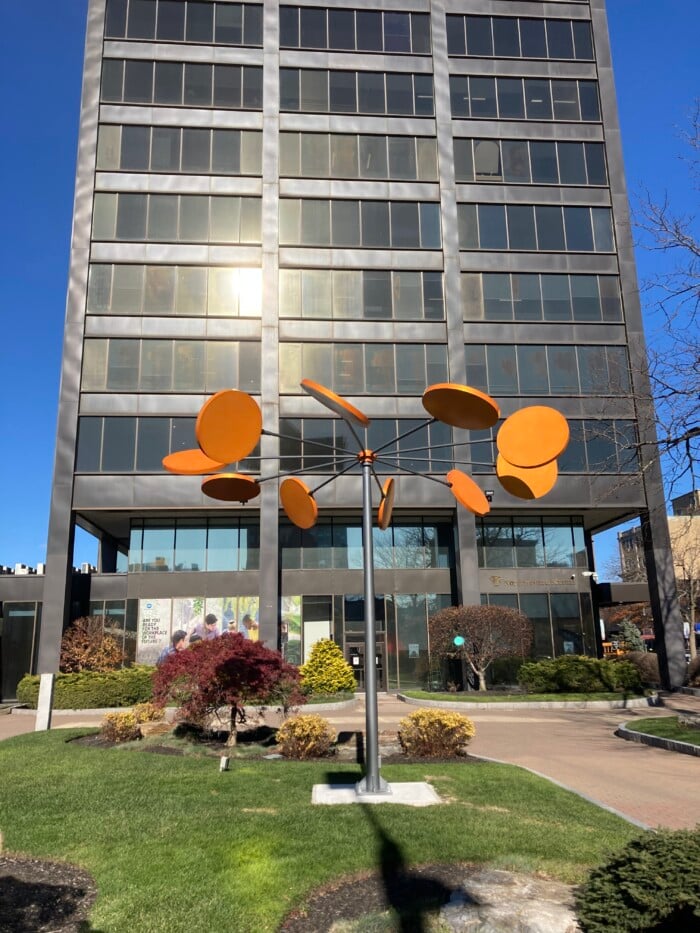
The 24=story Brady Sullivan Plaza in Manchester, completed in 1972, is now about evenly split between office space and residential units. (NHBR file)
Among her key findings: The office vacancy rate statewide fell to 10.3% in the third quarter, down 3.1% from a year ago, and average asking rent rose to $22.28, up 1.7% from a year ago.
Two factors affecting the market, according to Russell, are workforce and new construction.
On the workforce front, New Hampshire continues to adjust to post COVID work habits. After the remote work that defined the COVID era, companies moved to a hybrid model, where employees might work at home for three days, and work in the office for two days.
Today, some companies have moved completely away from the hybrid model. Fidelity moved most of its New Hampshire employees to full-time on-site work in September. But the hybrid model is still alive and well, leading some companies to downsize their need for office space.
“Hybrid work also remains well established in NH, with the state ranking fourth in the nation for its share of hybrid job postings,” said Russell, citing data from a Robert Half report that analyzed hybrid and remote job postings across the United States.
New Hampshire ranked fourth among the top five states that showed the highest prevalence — 19% — of postings for hybrid positions in the first quarter of 2026. It was tied with Washington, while Minnesota, Massachusetts and New York topped the list. Robert Half is a staffing services and consulting company.
On the supply side, Russell, who is the Colliers research director, described it as “limited.”
“The couple of office projects that broke ground have been on hold, with frames up but no further progress while they wait for tenants. Conversions are on pause rather than off the table,” Russell said. “There are no major projects underway, but some owners may continue to shift office space to other uses as leases expire, and a few buildings for sale could become conversion candidates. Either could shrink office supply further. With demand holding up and little new space coming online, the market could keep tightening in the coming quarters.”
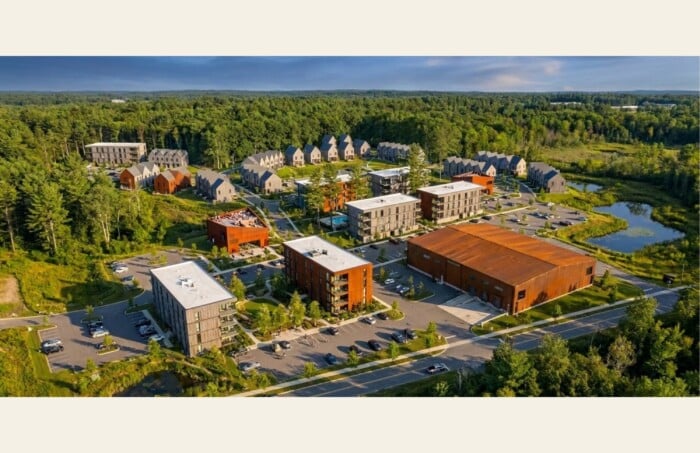
One major conversion is the former Liberty Mutual campus in Dover. Manchester-based real estate developer Brady Sullivan Properties is converting the 585,000-square-foot property into a massive mixed-use lifestyle village known as The Village at River’s Edge that includes commercial, retail, and residential.
In a separate Q3 report, Russell said the commercial industrial/warehouse market is stable.
The statewide vacancy rate held at 5.8%, and the average and rents rose 4.4% year over year to $11.79 NNN (or triple net), up 42.7% over the past five years.
“With smaller spaces leasing quickly and larger blocks taking longer to fill, market conditions continue to vary by property size and type,” Russell said.
The largest deal cited in the report was the $47.5 million sale of the former Anheuser-Busch plant in Merrimack to United Therapeutics.
When it comes to the best and worst states for jobs to occupy those office and industrial buildings, New Hampshire is fifth best in the country, according to new data from WalletHub.
Its overall ranking is the culmination of job-related criteria assembled by WalletHub. New Hampshire ranks fourth in job opportunities, 21st for employment growth, seventh for unemployment rate (which currently stands at 2.6%), 10th in median annual income ($112,100 according to recent U.S. Census Bureau data), and 17th for average length of work week.