Will hackers use your own AI against you?
Businesses have spent years asking what AI can do for their employees. Fewer have asked what it would do for an intruder inside an employee’s account.
No business is safe from a cyberattack — and the timing could make the fallout even worse. If you plan to put your company on the market within the next one to three years, a breach could depress valuation or even derail the entire deal.
Strong cybersecurity can also boost business valuations and inspire buyer confidence. Both sides of the transaction should treat cybersecurity as a key factor in building enterprise value.
Cyber considerations during a transaction
How cybersecurity can increase valuation
Cybersecurity is one way for non-AI companies to build value and stand out. Businesses looking to boost valuation through cybersecurity should consider these steps:
Cybersecurity is too broad and complex for most internal IT teams to manage alone. External advisors can help identify blind spots, conduct penetration testing and evaluate cybersecurity practices against established frameworks.
Cyber is both a major risk and a value driver — and it warrants a seat at the executive table. A chief cybersecurity officer (CCO) can help oversee strategy, coordinate defenses and align practices with industry standards. Depending on your company size, a fractional CCO could deliver the support you need without adding a full-time, in-house role.
Conduct penetration testing and a cybersecurity assessment to identify vulnerabilities. Many organizations pursue SOC audits or HITRUST certification to strengthen their cybersecurity posture.
Frameworks help formalize cybersecurity policies, data governance and metrics. Embedding these practices across the business helps make cybersecurity an integral part of the culture and everyday operations, rather than a reactive response.
Even the best defenses cannot eliminate risk. Cybersecurity insurance demonstrates proactive risk management and can provide protection if a breach occurs mid-transaction.
How to choose the right cybersecurity framework
Several security frameworks are widely used, including SOC, HITRUST and ISO. The best option for your company depends on industry, company size and your proximity to a sale.
Financial institutions may also undergo Bank Secrecy Act and anti-money laundering audits as part of broader compliance programs.
If you’re not sure which framework is best for your business, look at the RFPs you typically bid on. Which certifications are potential clients looking for?
How to make cybersecurity a business priority
When your team is putting out fires elsewhere, cyber can feel like a problem that can wait. Then one day, it becomes the fire.
Ignoring the issue can be costly. Instead, view cybersecurity as a driver of enterprise value. Stronger cyber defenses can reduce risk and increase valuation in a future sale.
Risk modeling can also help quantify the decision. Compare the potential financial impact of a cyberattack against the cost of strengthening defenses to clarify the ROI of lowering your risk profile.
How Wipfli can help
We help business leaders strengthen cybersecurity defenses and boost enterprise value. Our team can assess your cybersecurity needs and provide transaction advisory services to help you maximize value when buying or selling a business.

Businesses have spent years asking what AI can do for their employees. Fewer have asked what it would do for an intruder inside an employee’s account.

Many companies fall into the trap of innovation without realizing that not passing a data security audit will stall a deal right in its tracks.

Laws in other states, including in New Hampshire, are being used to hold businesses liable for their use of website tracking technologies

Getting cybersecurity wrong costs millions of dollars, customer trust, and sometimes the business itself.

Cybersecurity requires a mix of technical depth, real-world experience, and the ability to think critically under pressure. That combination takes time to build, and most companies are competing for the same relatively small pool of proven talent.

Prompt injection is the AI era's version of social engineering, and it's already happening in the wild. If you're deploying AI tools in your organization and haven't thought seriously about this, you should.

Strong cybersecurity can also boost business valuations and inspire buyer confidence. Both sides of the transaction should treat cybersecurity as a key factor in building enterprise value.

SB 482, which goes into effect in December, sets a daily conversion limit of $2,000 per digital transaction kiosks.
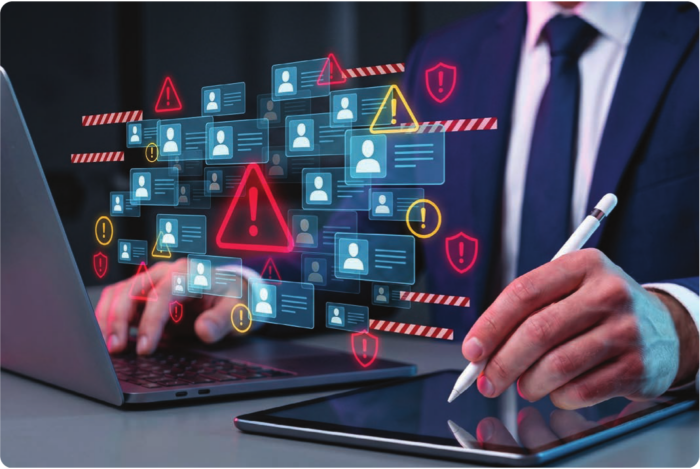
Unapproved and unmonitored AI use is spreading inside businesses faster than leadership teams know, and it may be one of the biggest privacy and security blind spots companies have today.