Is 2020 the year for expanded net-metering in New Hampshire?
The top five reasons why it’s a different playing field for the measure this go-round

The top five reasons why it’s a different playing field for the measure this go-round
Why the governor’s override pits consumers and businesses against the interests of utility shareholders
It eliminates the possibility of cost-shifting to customers
On June 19, Governor Sununu vetoed Senate Bill 446 and Senate Bill 365, two energy bills crafted to expand self-generation for larger businesses and municipalities in New Hampshire and keep existing biomass-fueled power plants operating here. Both passed the NH…
His actions on SB 446 and SB 365 were simply wrong on the merits and wrong on the facts
Change is inevitable, despite the efforts of outside interests
It’s simply not a good deal for New Hampshire
The technology is here already – we simply have to put it to work for the economy

New Hampshire has more than 10,000 miles of rivers, many of which flow through downtowns.

It is easy to forget that people are part of this ecosystem, that we are neither separate from nor owners of it. Just as the health of the forest depends on a system of relationships, human well-being is influenced by the environments we inhabit.

Anyone who has taken a transmission line or a wind farm through New Hampshire’s Site Evaluation Committee knows the process is long, expensive and can be fraught with complication.

Evan Clements and Precia Harthcock of Jaffrey love their 1926 home, but they acknowledge the drawbacks of houses built in that era. The room that is now their sitting room, for example, was once a porch that had been enclosed and is noticeably colder than other parts of the house. The second floor was much hotter than the first floor, and their kitchen was drafty.
Energy reliability and affordability are of paramount importance in New Hampshire.

With gasoline near $4 a gallon and healing oil prices expected to jump this winter, U.S. Energy Secretary Chris Wright on Thursday said clean energy initiatives are partly to blame for high prices of energy. Wright, the founder and former chief-executive of a Denver-based oil-services and fracking company, spoke within eyesight of a small solar array at the Raymond district office of the New Hampshire Electric Co-op.
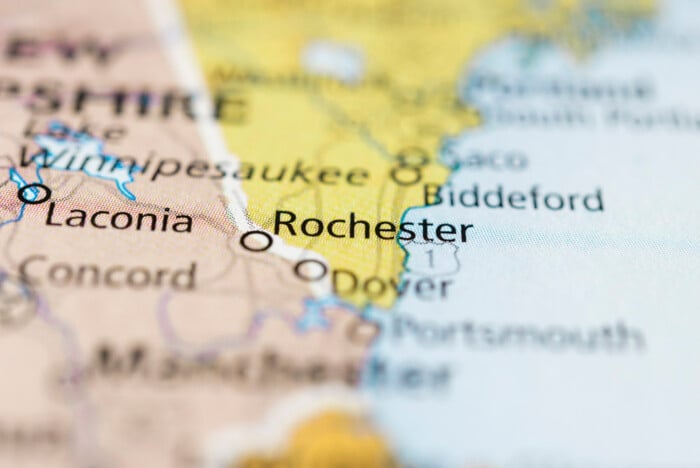
City officials are taking steps they hope will prevent data centers from locating in Rochester.

With a new state law set to go into effect with the dawn of a new year in 2027, Granite Staters will be able to install so-called “balcony solar” panels for home use.

House Bill 707, signed into law by NH Gov. Kelly Ayotte, promotes expanding existing landfills, rather than building new ones, and also establishes a seven-member committee to evaluate landfill sites.