‘What must remain human?’ Dartmouth AI conference opens without a clear answer
Dartmouth College opened its “AI at 70” conference Thursday morning, Oct. 29, with a session called “The Future Worth Building is Human.”

Dartmouth College opened its “AI at 70” conference Thursday morning, Oct. 29, with a session called “The Future Worth Building is Human.”
While the conversation leaned more toward how people can work alongside AI, both speakers kept returning to one thing they said should stay human: judgment.
The conference marks 70 years since the 1956 summer workshop at Dartmouth where the term “artificial intelligence” was coined. It runs through Saturday under the theme “What Must Remain Human?” Before the main conversation, Dartmouth President Sian Leah Beilock spoke about the news that has hung over the college all week. On Wednesday, Provost Santiago Schnell resigned after a faculty-led review found he used AI in his writing without disclosing it.
“It was certainly a difficult situation, but one that raises exactly the kinds of issues and challenges we want to explore over the next few days,” Beilock said.
Leading on AI, in her view, means “first and foremost having leaders who are modeling the transparency and human judgment we expect from our students and our scholars.”
The college is “still figuring this out, because there’s no playbook yet,” Beilock told the audience, and would rather set its own norms than have “industry or government do it for us.”
“Anyone can get a convincing answer from AI in seconds,” she said. “The hard skill now is judgment.”
Part of AI literacy, Beilock says, is teaching students “how to know when to pick up the technology and when to put it down.” Some classes will use AI, some won’t, and some will be about AI. A history professor might have students write tests in blue books, and “all three are totally valid.”
The goal is also for every student to have to “build experience with these technologies.”
Then Beilock brought out Mira Murati. Murati is a 2012 Thayer School of Engineering graduate and a former OpenAI executive who now runs her own AI company, Thinking Machines Lab.
Murati described her company’s work in technical terms. It builds models that customers can keep training on their own data, including two open weights models called Inkling that it released this summer. The idea is to let people “truly own the intelligence versus renting it.”
She did talk about risks. She warned about a small number of companies controlling the most powerful AI systems, and said one risk gets less attention than concentrated money and power: “loss of intellectual diversity.”
“Everyone sort of ends up inheriting the same strengths and the same blind spots,” Murati said. “Instead of this very strange, weird world with so many different ideas and people disagreeing everywhere, you end up with a convergence of thinking.”
OpenAI had studied problems like hallucinations and misuse before launching ChatGPT, Murati said, but didn’t learn how to build stronger guardrails until real users ran into them. And “we haven’t solved the alignment problem,” she added, meaning the challenge of making sure AI systems do what people intend.
The risks she described were about how AI gets built and who controls it. They were not about what people should keep doing themselves.
The conference is built around the question, “What Must Remain Human?”
Murati touched on that question but did not answer it.
“We’re gonna have to have a view on, what does it mean to have human worth in this time of machines being able to supersede us in some domains,” she said. That conversation “needs to come more into the public consciousness,” Murati added, then moved on to the next question.
At points, Murati described the kind of knowledge as a lot of what people know “sits in their minds,” “tacit” and “not perfectly articulated,” and that is what today’s AI systems are missing. Her vision is AI that gets better at picking up that knowledge, so it can “come towards us and understand us.”
Her advice to students came closest to the session’s title. Don’t spend college trying to guess which jobs AI won’t take, she told them.
“Really put something and go deep into it and really understand it deeply,” Murati said. “It sounds counterintuitive because you say, well, AI will know math or something else much better. So, what is the point? The point is in pursuit of knowledge and how that changes your experience and your relationship with the world.”
Beilock, a psychologist, followed with a story from her own time as an undergraduate. She spent an entire night in a lab learning to code in Lisp, a programming language, searching for one missing parenthesis.
“Which is, as people know, is not necessary anymore,” Beilock said. “But it actually taught me how to problem-solve, and I thought that was the pivotal moment in my undergrad career where I learned I could do something I didn’t think I could do.”
Murati also encouraged students to use every AI tool available.
“This is an incredibly precious time to have these superpowers in your hands,” she said. “I am jealous.”
Near the end, Beilock asked her which human capacities are most important to protect. Murati started with judgment.
“You can say that, you know, we can hold on to our judgment and machines can do everything, but judgment doesn’t work that way,” she said. “You develop it by actually doing the work.”
The conference marks 70 years since the 1956 summer workshop at Dartmouth where the term ‘artificial intelligence’ was coined.
These articles are being shared by partners in the Granite State News Collaborative. For more information, visit collaborativenh.org.

Dartmouth College opened its “AI at 70” conference Thursday morning, Oct. 29, with a session called “The Future Worth Building is Human.”
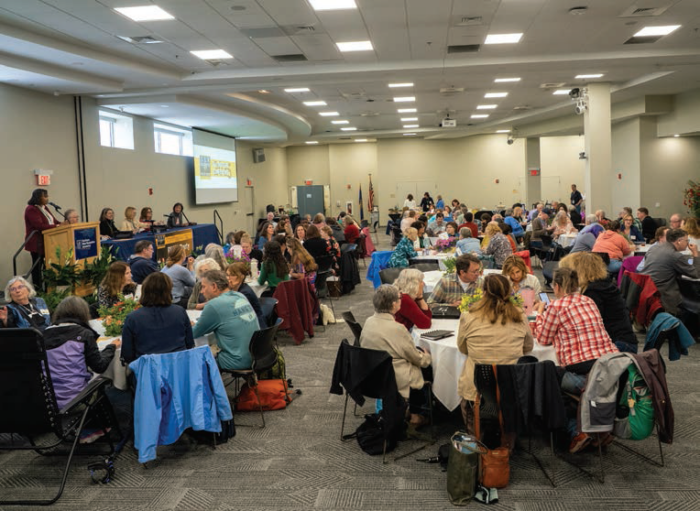
If you think artificial intelligence is the path to literary success, Masheri Chappelle has a message for you: Look into the mirror instead.

Cyber and payment fraud losses are board-level risks for every organization, escalating the need for strong, modern security systems

Artificial intelligence has moved from pilot project to daily practice inside many HR departments.
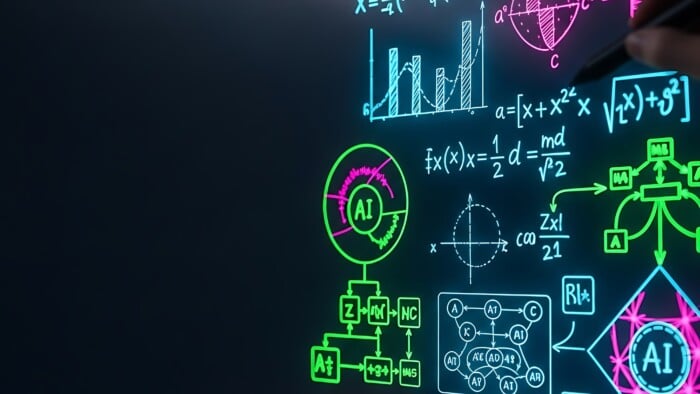
The two educational institutions launched a new pilot partnership this summer, bringing 16 high school students from towns across New Hampshire together to learn the math behind AI and how to use it to tackle real problems.

Artificial intelligence is transforming business at remarkable speed. Most discussions focus on productivity gains, cost savings or the jobs AI may eventually replace. Yet a more significant change is already underway — one that could reshape the future of nearly every profession.
Most business owners come to me with technology questions. Which AI tool should we use? What platform is best for our industry? How much will it cost? I get it. Technology feels tangible. It’s something you can research, compare and buy.

NH Tech Alliance task force maps AI in New Hampshire