AI is changing cybersecurity – and cyberattacks
Cyber and payment fraud losses are board-level risks for every organization, escalating the need for strong, modern security systems
Lakes Region Community College (LRCC) and Massachusetts Institute of Technology (MIT) launched a new pilot partnership this summer, bringing 16 high school students from towns across New Hampshire together to learn the math behind AI and how to use it to tackle real problems. LRCC is one of only two community colleges nationwide hosting the pilot course; the other is in Wyoming.
The four-week course, “Gateway to AI,” was created by MIT professors led by Arup K. Chakraborty, with input from the teachers at the New Hampshire and Wyoming sites. The aim is to close a gap Chakraborty has long observed: students in rural and small-town America often have far less access than their urban peers to advanced math and science instruction and hands-on exposure to emerging technologies like AI.
“For a long time, I’ve believed that many of our young high school students in rural America do not get the same opportunities to see and take advantage of the future possibilities, compared to people in urban areas,” said Chakraborty. “We want to change that. It doesn’t matter what these young people plan to pursue in their lives — if they work in manufacturing, at a CVS, or in agriculture they will encounter AI. It will likely be present in every aspect of their lives. Also, the need to think deeply and analytically, and ask the right questions, will become even more important than before.”
The program prioritized teens from communities with limited access to science, technology, engineering and mathematics (STEM) enrichment. Participants came from towns across the state, including Center Sandwich, Concord, Gilford, Gilmanton, Laconia, Meredith, Moultonborough, Nottingham and Salem.
“AI is a hot topic right now. It’s certainly important to know how to use it properly,” said Gus Glaser, a student from Coe-Brown Northwood Academy in Northwood, N.H.
Students spent the first two weeks learning linear algebra — a mathematical foundation of AI systems — in the context of how it’s used in AI tools. They also learned some statistics. In the second half of the course, they applied what they’d learned to hands-on projects including:
“I definitely didn’t expect the program to be so hands-on,” said Asa Buchakjian-Tweedy from Spaulding High School in Rochester, N.H. “I knew we would be learning about linear algebra which is the basis of AI models. I thought we’d be mostly sticking to that, but we’ve also been learning the statistics behind it and how to implement it.”
“We were proud to be part of this,” said Patrick Cate, president of LRCC. “Students from across New Hampshire had the opportunity to learn about topics that are not typically covered in high school. That’s a direct reflection of what LRCC and all of New Hampshire’s community colleges exist to do: connect our communities to opportunities they might not otherwise have.”
The course was taught by Inter-Lakes High School teacher Susan Foss-Finch who traveled to MIT to help shape the curriculum. MIT student Jadyn Grant served as an on-site teaching assistant. Later this month, MIT will fund a day-long campus visit for participants to tour research labs and meet MIT students.
“I hope students walk away with a better understanding of what AI is as well as its capabilities and limitations. AI is a great tool that will help our society move forward. It’s not something we should fear, but something we should learn to use and use well,” said Foss-Finch.
Sydney Conkling, a student at Inter-Lakes High School in Meredith, N.H summed it up well. “It’s a really good way to spend your summer and broaden your horizons.”
MIT hopes to grow this program and offer it in additional communities across the country.
About Lakes Region Community College
Lakes Region Community College (LRCC), located in Laconia, New Hampshire, provides high-quality, affordable education and training that prepares students for success in a rapidly evolving world. For more information, visit LRCC.edu.

Cyber and payment fraud losses are board-level risks for every organization, escalating the need for strong, modern security systems

Artificial intelligence has moved from pilot project to daily practice inside many HR departments.
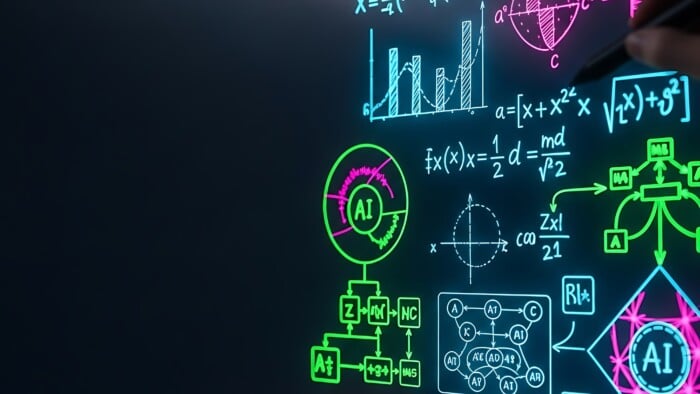
The two educational institutions launched a new pilot partnership this summer, bringing 16 high school students from towns across New Hampshire together to learn the math behind AI and how to use it to tackle real problems.
Artificial intelligence is transforming business at remarkable speed. Most discussions focus on productivity gains, cost savings or the jobs AI may eventually replace. Yet a more significant change is already underway — one that could reshape the future of nearly every profession.
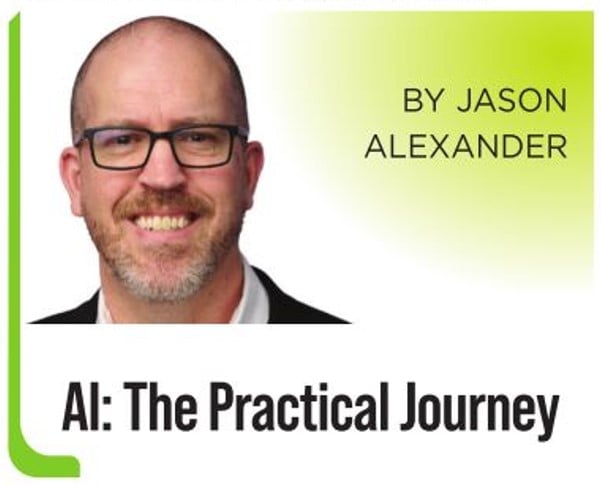
Most business owners come to me with technology questions. Which AI tool should we use? What platform is best for our industry? How much will it cost? I get it. Technology feels tangible. It’s something you can research, compare and buy.

NH Tech Alliance task force maps AI in New Hampshire

In 2024, computer programmers from DeepMind won the Nobel Prize in chemistry for developing an AI that predicts protein folding. If AI that is advanced enough to simulate protein folding (and allow programmers to win the world’s top chemistry prize) has arrived, is the law any more complicated? Why should lawyers invest time learning about various facets of the law to draft briefs or contracts, when they can task AI?
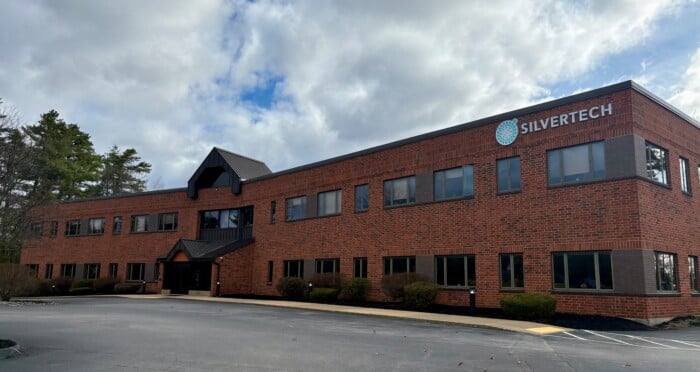
Enhancing the use of AI is one of the benefits cited in SilverTech’s recent purchase of Ohio-based Paragon, which brings to the table a broad client list that deepens the digital experience agency's portfolio.