(Opinion) In New Hampshire, your power bill is an asset hiding in plain sight
In one of the most expensive power markets in the country, sub-metered buildings hold a hidden asset.
In July 2023, I attended the Braver Angels national convention in Gettysburg, Pennsylvania. Attendees were asked, “Why are you here?” and I wrote, “I am worried that my grandchildren will not experience the benefits of this country that I have.” Other responses included: “I am here because, if we don’t change how our politics is done, we’ll see ourselves in another civil war. Except this time, it won’t look like Gettysburg; it’ll look like Rwanda.”
Having worked in Rwanda in the early 2000s, that caught my attention. I led a U.S. Agency for International Development–funded project to strengthen the parliament in that nation, which was so scarred by the 1994 Hutu genocide against the Tutsis. Neighbors killed neighbors, even people they knew well, just because they were in a different tribe. The killers were emboldened by leaders who exploited difference and fear. I remember feeling grateful that we didn’t have political tribalism in the United States.
Some years later, in 2014, I was working in Guinea during the Ebola epidemic in West Africa. I recall thinking that Americans, unlike many Guineans, would have faith and trust in our public health system in the event of a national emergency.
I was obviously wrong about our country’s growing tribalism and response to a public health emergency. The COVID pandemic hit the U.S. five years later, severely testing our ability to communicate with each other and trust what the government was telling us. While that pandemic may be behind us, it has clearly left deep scars.
We are now witnessing another big Ebola outbreak in Africa, this time centered in the Democratic Republic of Congo, with fearful people distrusting health workers and even attacking treatment centers. That has me thinking back to 12 years ago when I served as the Peace Corps country director in Guinea. While the Peace Corps volunteers were sent home as a precaution, I stayed behind with our mostly Guinean staff to support the U.S. Centers for Disease Control and Prevention (CDC) effort to contain this highly infectious disease.
Many Guineans were highly skeptical about Ebola, and there were many rumors and widespread resistance. Many who had contact with Ebola went into hiding, and there were incidents of crowds attacking government convoys. My staff used our deep community connections to educate citizens about the disease and the precautions required. We trained homemakers, teachers, students, youth leaders and others about common rumors and how to overcome fear and resistance back home.
These newly trained community educators went back to their villages and developed a personal action plan starting with one-on-one conversations with family members, neighbors and others they knew. As they gained confidence and support, they moved to others in their community, including speaking in small groups. These respected community members gained credibility, earned respect and developed trust as volunteers. They asked open-ended questions and did not judge people. They applied participative approaches to learning, used their local languages and adapted messages to the community level. They were trained to use role-playing techniques that helped them communicate effectively.
Ultimately, this initiative was estimated to reach 3.2 million people, one quarter of Guinea’s population, and that Ebola outbreak was largely ended. U.S. Ambassador Dennis Hankins wrote, “Peace Corps local staff were able to make a key contribution in fighting Ebola. Through their collective efforts, I am convinced hundreds if not thousands of lives were saved.”
For more details about this effort, see this article I wrote in the publication WorldView: “Beating Ebola: Peace Corps’ Untold Story of Fighting the Virus in Guinea” peacecorpsconnect.org/articles/beating-ebola.
Reflecting back, the most important lesson for me is, if you want to influence others, you have to be seen as trustworthy. You earn trust by treating others with dignity and respect, including listening to what they have to say. This requires enormous patience and practice starting with one-on-one conversations that apply courage, humility and vulnerability.
These are important lessons, too, for business leaders working with both staff and clients. Building trust is hard work but essential for workplace success. And these same approaches are needed to help our country continue for another 250 years – and hopefully many more.
We each have an extraordinary opportunity to make a difference in people’s lives, including our own. Don’t underestimate your impact!
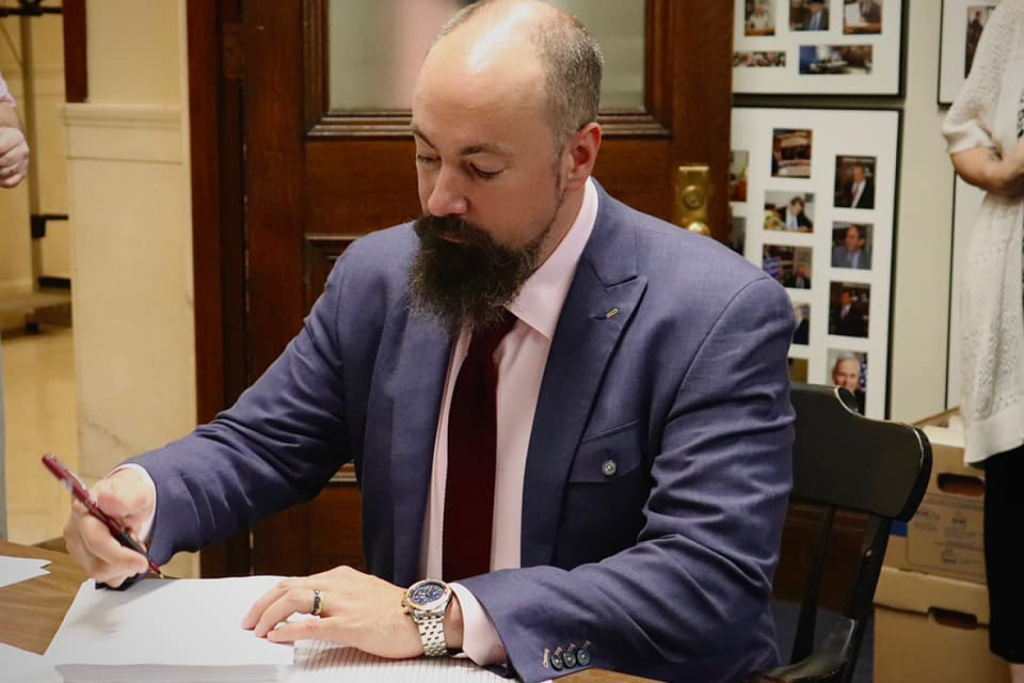
Douglass P. Teschner, founder of Growing Leadership LLC and author of “Beyond the Politics of Contempt: Practical Steps to Build Positive Relationships in Divided Times,” can be reached at dteschner@GrowingLeadershipLLC.com.

In one of the most expensive power markets in the country, sub-metered buildings hold a hidden asset.
Energy reliability and affordability are of paramount importance in New Hampshire.
One of the greatest honors for me as executive councilor for District One is representing the towns around Lake Winnipesaukee, one of New Hampshire’s most stellar natural resources.
The federal budget reconciliation law enacted last year was particularly designed to punish states that expanded Medicaid under the Affordable Care Act, as New Hampshire did through its Granite Advantage Program.
While major economic indicators are serving as caution tape for many organizations that are hesitant to make investments or take on risk right now, there is a very bright green light out there. There is also a fast-moving vehicle on the road: AI, and the frenetic adoption pace at which people now use it to find essential information. Organizations need to adapt to be seen and referenced by these tools.
When the next emergency comes, the most important question won’t be whether we have a plan; it will be whether we’ve already built the relationships that make the plan work
Every growing company hits a wall that has nothing to do with its market, its product or its strategy deck. It hits the limits of one person’s capacity — usually the founder’s — and stops.
For years, New England employers have identified one challenge that cuts across nearly every industry: Our region simply is not building enough homes to meet demand.
August 4 was a perfect New Hampshire day. Along Route 3, a tour of the wonderful New Hampshire Veterans Cemetery in Boscawen, a peaceful and impressive oasis everyone should experience, was followed by the groundbreaking ceremony for Phase II of the Military and Veterans Campus of Easterseals New Hampshire in Franklin.