Q&A: Betsey Andrews Parker
Betsey Andrews Parker, CEO of social service agency Community Action Partnership of Strafford County (CAPSC), has seen the war on poverty up close and personal since she joined the organization in 2010

Betsey Andrews Parker, CEO of social service agency Community Action Partnership of Strafford County (CAPSC), has seen the war on poverty up close and personal since she joined the organization in 2010

Traveling Tooth Fairies Dental Initiative provides free cavity prevention and dental referrals to elementary, middle-school kids in Nashua

Business has been steady since Life is Good opened its 500,000-square-foot production and fulfillment center three months ago in Hudson, where it has had a presence for more than 20 years

Data highlights disparate outcomes by gender, race, ethnicity, and geography, due to historical, political, economic, and social inequities

Vose Farm Residences, expected to break ground this summer, will feature mixed-income, one- and two-bedroom apartments available to individuals or families earning up to 60% of the area’s median income

Program connects businesses with innovative and entrepreneurial-minded students to help grow their companies by placing value in mentorship, skill building and knowledge growth

If given final approval and implemented, investments could support the economy and Granite Staters with low and moderate incomes
ReGen Valley’s latest $44 million ups the ante to a half a billion dollars since 2017

Meeting at the tail end of the biennial budget cycle on the eve of a general election, the second-year session of the Legislature is something of an anticlimax to a time when lawmaking and politicking compete for the time and attention of legislators.
We Granite Staters are proud of our first-in-the-nation presidential primary. For more than a century, it served the country well by providing an open testing ground for would-be leaders of the free world. Then came 2024.

Dartmouth College opened its “AI at 70” conference Thursday morning, Oct. 29, with a session called “The Future Worth Building is Human.”
On Nov. 26, 2015, heavy wet snow was falling, with a forecast warning of an impending storm for days. The phone rings, and before I answer it, I already know what the reporter is going to ask.
New Hampshire has more than 10,000 miles of rivers, many of which flow through downtowns.
The nationwide youth mental health crisis has seen marked improvements in New Hampshire since 2021, but the problem is still far from fixed. Indeed, while the measured outcomes are getting better compared to the worst years of the COVID-19 pandemic, the figures today are still historically concerning compared to a decade ago.
New Hampshire employers spend considerable time and resources trying to find dependable employees who want to work. Yet there is a segment of our population that is too often overlooked: adults with intellectual and developmental disabilities (IDD).
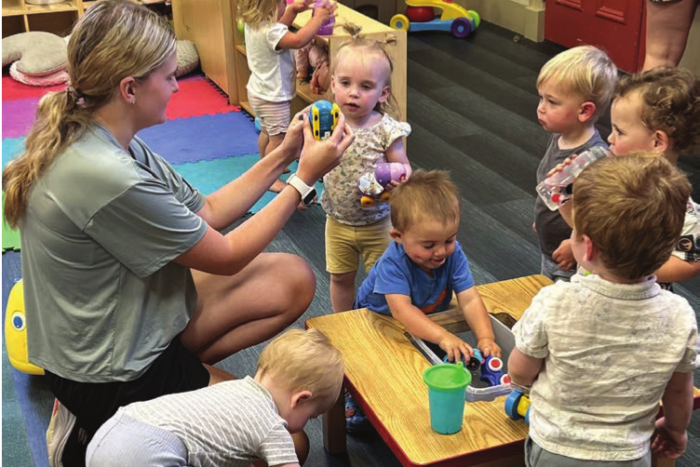
Reliable, accessible childcare is an economic advantage that helps New Hampshire businesses attract and retain employees, strengthen their workforce and support long-term growth.
Identifying growing and grace as my top two values helped me focus on who I want to be and how I want to show up. Revisiting these six years later, I am pleased that these ideas still ring true.

To many people, prediction markets and sports gaming are a distinction without a difference. Which begs the question: Should New Hampshire be regulating prediction markets, especially as they apply to sports, the same way it regulates — and draws revenue from — sports betting via DraftKings?

Over the course of my career, I have attended my share of ribbon-cuttings that were the result of a lot of effort to recruit a new company into the state.