(Opinion) New England has priorities for Congress’ lame-duck session
By: James T. Brett
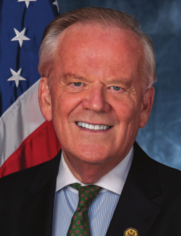
James T. Brett
After a long and incredibly divisive midterm election cycle, Congress will return to Washington for the final weeks of the 119th Congress, commonly known as the “lame-duck session.” During this final sprint to the end of 2026, many agenda items and critical legislative deadlines loom.
One of the most pressing issues will be government funding, with the Continuing Resolution to fund the federal government expiring on Dec. 10. It remains uncertain whether Congress will pass a full appropriations package or another short-term extension. Either way, government funding will be the foremost priority when the House and Senate return.
Among the many issues before Congress during this final stretch of 2026, the New England Council believes several top priorities to support economic growth and quality of life in our region:
1. Permitting Reform — Updating our federal permitting system to streamline approvals for energy and other infrastructure projects has been a front-burner topic on Capitol Hill for several years. With developments in load growth throughout the region, coupled with New England’s unique grid constraints, high electricity prices and aggressive climate targets, the Council has advocated for a federal permitting framework that fosters grid reliability, investment certainty and lower costs. In particular, the Council supports permitting reform that increases predictability across regulatory bodies, streamlines interagency review and maintains a technology-neutral approach. We are encouraged to see significant progress on permitting reform in recent months, with a bipartisan group of Senators — led by New England’s own Sen. Sheldon Whitehouse (D-RI) — introducing a compromise package in late September, and urge Congress to act on this issue before year’s end.
2. Health Extenders — More than a dozen federal healthcare programs expire on Dec. 31. Chief among them is the Community Health Center Fund, which provides roughly 70% of federal grant funding for health centers serving some 30 million low-income patients nationwide. Also expiring is funding for the National Health Service Corps, which supports clinicians who commit to practicing in shortage areas; the Special Diabetes Programs; a temporary 2.5% increase in Medicare physician payment; and supports for small and rural hospitals. With these deadlines just weeks after the current funding deadline, Congress has a natural vehicle to act. The Council urges lawmakers to renew these programs for multiple years rather than rely on short-term patches to provide certainty and continuity for our region’s providers.
3. SNAP Funding — Another bill before Congress during the lame-duck session is the Farm Bill, which includes critical funding for the Supplemental Nutrition Assistance Program, or SNAP. The latest version of the Farm Bill expired in September 2026, and while the House has passed a renewal earlier this year, the Senate has yet to act. According to the nonpartisan Center on Budget Policy and Priorities, for SNAP supports nearly 2 million households across New England, including some 76,900 in New Hampshire alone, including many families with young children and elderly residents. Under last year’s One Big Beautiful Bill Act, SNAP funding was slashed by $186 billion over 10 years. Particularly at a time when grocery costs are at an historic high, it is critical that funding for this vital program be renewed, and ideally increased.
4. Surface Transportation — After a five-year run and one extension, the nation’s surface transportation law is set to expire on Dec. 11. In the House, a five-year reauthorization was overwhelmingly approved by the Transportation and Infrastructure Committee in May, neither the House nor Senate have taken further action. New England requires consistency in the ability to tackle its road, bridge, rail, safety and numerous other infrastructure needs. Billions in funding allocations and policy priorities cannot be allowed to lapse, and the guidance of a five-year reauthorization will ensure long-range planning decisions can be put in motion. We encourage Congress to work diligently towards a bipartisan long-term renewal of our surface transportation law that also ensures equitable treatment of our region.
As Congress convenes for the final weeks of the 119th session, the decisions they make will have lasting effects on New England’s economy, infrastructure and quality of life. Addressing these issues with bipartisan cooperation will not only provide stability and certainty for our communities but also lay the foundation for sustainable growth and well-being across the region. The time to act is now — before these critical deadlines pass and opportunities for progress are lost.
James T. Brett is the president and CEO of The New England Council, a regional alliance of businesses, nonprofit organizations, and health and educational institutions dedicated to supporting economic growth and quality of life in New England.