(Improving Performance) Classical proficiency
I keep seeing articles on how hard it is for new college grads to find jobs. Some who do are often let go a few months after starting.

Ronald J. Bourque
I keep seeing articles on how hard it is for new college grads to find jobs. Some who do are often let go a few months after starting. I’m also hearing managers complain about the same thing. Some companies have even stopped their college recruiting. How are they going to replace aging workers?
It seems many of the grads, some even graduating with honors, don’t have the requisite skills formerly taken for granted with their degrees. Grade inflation is considered a common cause. In some respected institutions, an A used to be a C or a D. Incoming freshmen are often missing the skills which used to be prerequisites. As a result, many colleges and universities have relaxed their criteria for success despite the market’s continuously increasing demands for greater proficiency.
For instance, I’ve met engineers who can’t add, subtract, multiply or divide in their minds. Yes, they have calculators and computers, but all they have to do is hit a wrong key and the answer is wrong.
What I find most surprising is the claims that these grads think proficient seniors are the problem, and the grads are lacking skills that don’t matter. They resist efforts to educate and train them. I’ve been wondering about this for a long time. What causes this? How do we solve it?
Researching something on YouTube, I saw a link for “Lawrence Welk – Pennsylvania Polka.” I used to watch his show with my parents. Why not a little nostalgia? So, I clicked on it.
What you’ll see is four well-dressed and well-groomed couples perfectly choreographed singing and dancing. Myron Floren was playing the accordion accompanied by the rest of the band. This is what we used to call entertainment.
Then, it hit me. Compare that to a typical rock concert. The musicians are often anything but well groomed. They may be dressed as if they’re going to weed their garden or change the oil in their car.
I used to play the guitar as a kid. Once I learned three or four chords, I could play many rock-and-roll songs. That’s all it took.
At a friend’s wedding, the sister of the bride was a concert violinist for the Philadelphia Symphony Orchestra. She played Shubert’s “Ave Maria” so well at the ceremony, it almost brought tears to our eyes. At the reception, they had a seven-piece rock band. It was a great band, and when they heard about the violinist, they invited her to play with them.
She had no trouble accompanying them no matter what they played. Then, they invited her to play something, and they would accompany her. She played a simple piece, and they just stood there. The drummer finally figured out the beat and was able to accompany her, but that was it.
Now, before you get too angry with me, I’ll admit that as a kid, I liked the Beach Boys and other rock groups better than Lawrence Welk, but I knew his music was more difficult to play.
I know several good rock musicians, and they readily admit they would have difficulty playing some of the music our parents and grandparents loved. And of course, there’s nothing wrong with that. Now, I like classical music, and that takes even more talent and skill to play.
Unfortunately, many of our grads have rock degrees when technology and competition are demanding classical proficiency, if you get my drift. The rock-and-rollers are applying for classical jobs, and if they get them, they just can’t satisfy the ever-increasing demands.
Some folks think artificial intelligence will do their tough work for them, and they can just manage it and succeed. That’s not how it works. If AI is more intelligent than we are, why would they need us? Managers who don’t understand what they’re trying to manage are in trouble. I’ve never met an engineering manager who wasn’t also a good engineer. We need AI to be competitive today, but managing and working with it requires greater, not less, proficiency.
That chance video helped me to better explain this problem, but solving it won’t be easy. The foundation for most of these skills used to be taught in grammar school. They’re difficult for adults to learn.
We need a non-political national task force to address this problem and figure out how to solve it as quickly as possible. We can’t stay in the game, especially not as a leader, without highly competent people.
Ronald J. Bourque, a consultant and speaker from Salem, has had engagements throughout the United States, Europe and Asia. He can be reached at 603-898-1871 or RonBourque3@gmail.com.
I keep seeing articles on how hard it is for new college grads to find jobs. Some who do are often let go a few months after starting.

Preliminary data indicates that nonfarm employment in New Hampshire rose by 1.1% from January through July 2026, but fell short of a full recovery from job losses during 2025.
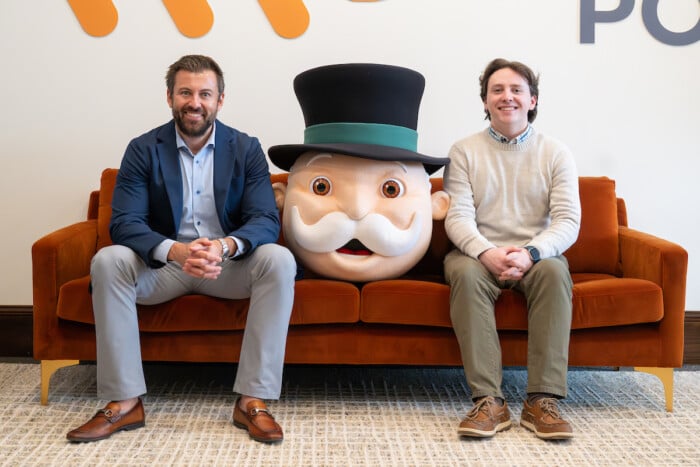
Leadership isn't measured by the title you hold or the deals you close. It's measured by the doors you open for others - especially for the next generation.

“It’s a shallow life that doesn’t give a person a few scars.” — Garrison Keillor Change is a fundamental aspect of growing as a person, but sometimes it can be pretty difficult.
You’re looking for a key guy in a senior position, and the performance of the company will largely depend on his performance. Let’s say he’ll be your vice president of operations or something like that.

Healthcare costs continue to be a major concern for employers. Where should businesses start?

If an employer intends to enter into an agreement with an employee pursuant to which the employer agrees to pay severance upon the employee’s termination of employment, the employer should, as part of the separation process or when structuring future severance entitlements, determine whether the terms of such severance comply with, or are exempt from, the provisions of Section 409A of the Internal Revenue Code.

Businesses invest heavily in recruiting talented employees. Increasingly, employers are recognizing child care as a key component of a business-friendly New Hampshire, alongside housing, energy infrastructure and broadband.

Artificial intelligence is transforming business at remarkable speed. Most discussions focus on productivity gains, cost savings or the jobs AI may eventually replace. Yet a more significant change is already underway — one that could reshape the future of nearly every profession.