Come to the table
Reliable, accessible childcare is an economic advantage that helps New Hampshire businesses attract and retain employees, strengthen their workforce and support long-term growth.
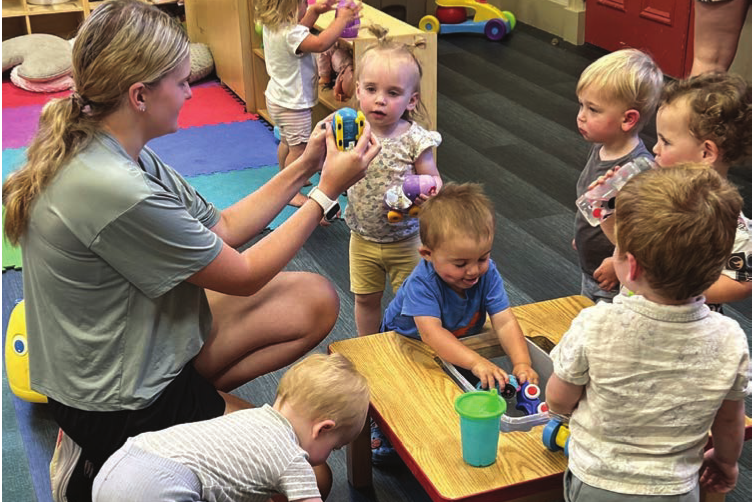
More than half of those who have completed the YMCA’s Empowered Futures Program are now working in Greater Manchester childcare facilities while others are completing additional education and training programs.
Reliable, accessible childcare is an economic advantage that helps New Hampshire businesses attract and retain employees, strengthen their workforce and support long-term growth.
Across the state, business and community leaders recognize the opportunity to invest in childcare as essential economic infrastructure. From developing new funding models to strengthening the childcare workforce, regional partnerships are bringing employers to the table to help shape solutions that meet the needs of their communities.
Solutions Fund to support rural childcare options
In the Upper Valley, Grafton Regional Development Corporation (GRDC) is developing a Business Solutions Fund with input from local employers. The fund is part of its Upper Valley Childcare Solutions Partnership, supported by the Couch Family Foundation and the New Hampshire Charitable Foundation.
Anne Duncan Cooley, CEO of GRDC, said the goal is to find ways to support rural childcare providers, though exact priorities and structure of the fund are still in development.
“We are recruiting some of our larger employers to be initial steering committee members, and so far, we’ve had a 100% acceptance rate for the employers we’ve approached,” she said. “They understand how important this is to their businesses. They see it every day, and so the Solutions Fund will be advised by this group, who are seeing the business impacts, as well as other community leaders and childcare nonprofits.”
GRDC started with larger employers because their HR departments and workforce data can help identify childcare needs. It plans to engage smaller businesses through local chambers of commerce. The Upper Valley Business Alliance is also a partner in childcare discussions focused on business engagement and will help shape the fund’s design.
While the Solutions Fund is still in development, GRDC is already applying its economic development expertise to expand childcare options in the region.
In Lebanon, the Boys and Girls Club is working on a project to build a new childcare center. GRDC helped it secure a $1 million Northern Border grant and navigate additional project financing. One design option under consideration is a modular building from Preferred Building Systems in Claremont. Duncan Cooley said a design that meets New Hampshire’s childcare requirements could potentially be replicated in other communities, reducing development costs.
In rural communities, where home-based childcare is more common, GRDC also provides specialized business coaching to help providers navigate financial decisions, facility improvements and potential expansion.
Once established, the fund could expand GRDC’s support for childcare facilities, workforce training or other priorities identified by employers and community partners.
“This is a business issue, and it has an impact on the bottom line of businesses,” she said. “We’re going to need to do some experimentation here because it’s a tough issue.”
Manchester brings community voices into childcare planning
In the state’s largest city, community voices are also coming together to address childcare. At the start of the year, Manchester Mayor Jay Ruais announced a childcare commission to hold community listening sessions and inform a report expected this fall with recommendations.
Ruais has experienced those challenges firsthand while searching for childcare for his daughter.
“Childcare isn’t just a family issue,” he said in a statement. “It’s a workforce issue, an economic issue, and a livability issue for our entire city.”
While Manchester’s commission considers long-term solutions, another regional initiative is already helping build the childcare workforce.
The Granite YMCA’s Empowered Futures program, developed in partnership with the ReGen Valley Tech Hub initiative, is helping build the region’s childcare workforce through a 10-week apprenticeship. It combines practical experience, coursework and credentialing so that these workers are ready to enter a childcare classroom. As of August, 43 apprentices had graduated, with many entering the childcare workforce or pursuing additional education. (Read more about the Empowered Futures program in the latest issue of 603 Diversity.)
Reliable childcare depends on a sustainable provider workforce, and industry partnerships can help develop that workforce.
Business leadership can drive lasting solutions
Businesses of all sizes can contribute more than financial support. By sharing workforce data, offering expertise and participating in policy discussions, they can help shape solutions that strengthen their communities.
Businesses are a critical voice on what legislative initiatives should look like.
“Statewide policy is going to really matter long term on this,” Duncan Cooley said. “If you’re having trouble getting good employees, you should be caring about childcare.”
Come together with business and state leaders to discuss employer-driven solutions and business investments already making a difference on Nov. 17 for Business Leadership in Action: Advancing Child Care Solutions for New Hampshire’s Workforce.
The event will highlight businesses already putting childcare solutions into practice, explore financing tools and tax credits that support investment and recognize businesses making a difference through the Child Care Champion Awards. Attendees will also gain practical strategies for their own organizations and opportunities to connect with state leaders and policymakers.
The event takes place Tuesday, Nov. 17, from 8:30 to 10 a.m. at the Institute of Politics at Saint Anselm College in Manchester. Space is limited. RSVP by Nov. 10.
Reliable, accessible childcare is an economic advantage that helps New Hampshire businesses attract and retain employees, strengthen their workforce and support long-term growth.

New Hampshire’s public four-year colleges and universities are increasingly offering noncredit workforce-focused certificate programs, professional skills development and industry-specific courses, both on campus and online.

The two-day Space, Technology, Trade and Research expo on Oct. 28-29 in Durham convened innovators, producers, scientists, engineers, investors, bankers, students and representatives of the U.S. Space Force and Department of War. The goal: Increase networking, collaboration and awareness of what’s happening here, including on the campus of UNH, which provides tools, expertise and facilities for product development and testing.

Driven by a need for specially educated supervisors at police departments, Great Bay Community College has introduced a certificate program to help create the next generation of law enforcement supervisors

NH schools projected to have more than 1,100 teacher openings each year over next decade, with 95 percent of vacancies driven by educators leaving the workforce or changing careers
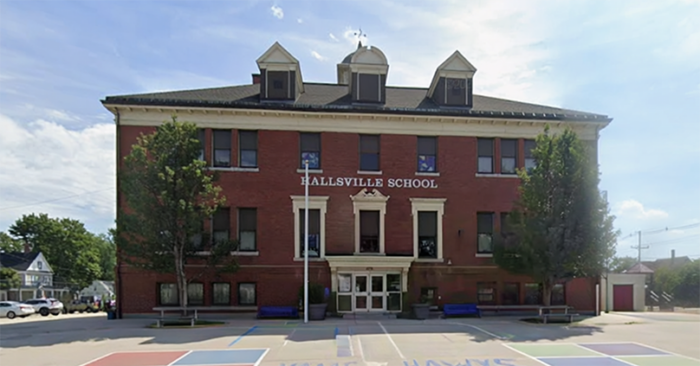
The project will transform the vacant 1891 elementary school into a 36-unit, mixed-income residential community
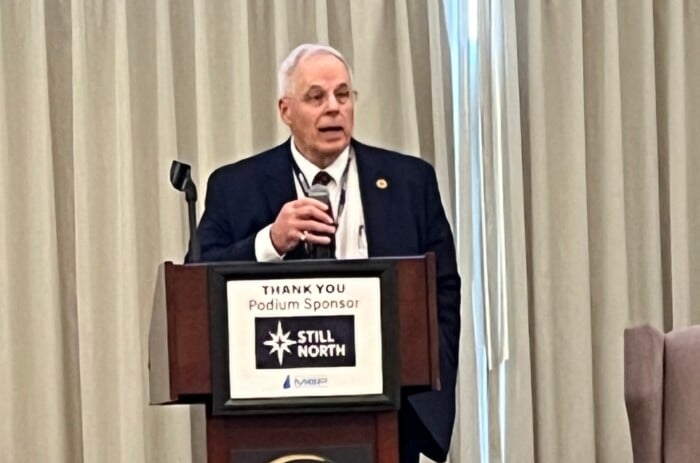
This year’s Advanced Manufacturing and High Technology Summit kicked off with a topic universal to all employers: how to build the workforce of tomorrow. The 24th annual event organized by the New Hampshire Manufacturing Extension Partnership on Oct. 9 featured a keynote panel discussion featuring representatives from the state’s university and community college systems.

Ramy Rahimi is the new vice president for research and development at the University of New Hampshire.
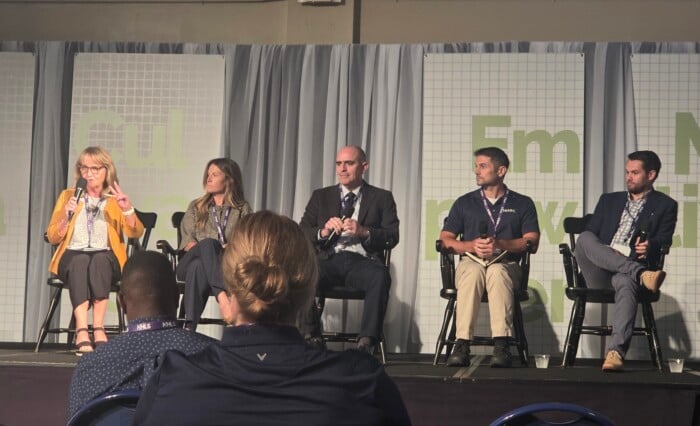
New Hampshire’s life sciences industry is expanding quickly, but the workers employers need range far beyond biomedical scientists — from manufacturing technicians and engineers to project managers, supply-chain specialists and finance professionals. At the Empower Life Sciences event hosted by…