(Opinion) NH knows the playbook for prudent energy policy
Energy reliability and affordability are of paramount importance in New Hampshire.

Michael S. Giaimo
ENERGY
By: Michael S. Giaimo
Energy reliability and affordability are of paramount importance in New Hampshire. Put in perspective, you need not look any further than a family heating and powering their home in the North Country in the middle of winter to appreciate why this issue is so predominant and continually top-of-mind.
That family — like every resident and business in the state — depends on affordable and reliable electricity and fuels. And thankfully, policymakers in New Hampshire recognize this fact.
Maybe more so than other New England states, New Hampshire policymakers have long pursued energy policies that emphasize affordability while balancing environmental impacts. Nowhere is that example clearer than the state’s approach to the Regional Greenhouse Gas Initiative (RGGI).
Unlike participating states that direct most auction proceeds toward various programs, New Hampshire prioritizes direct benefits for consumers through electric bill rebates and complements that with targeted energy-efficiency investments. State law requires that RGGI revenues above a specified threshold be returned to retail electric customers, helping offset ratepayer costs.
New Hampshire’s model has become increasingly influential and emulated. As concerns about energy costs have intensified across the Northeast and Mid-Atlantic, other RGGI states are following the Granite State’s example by directing carbon market revenues toward customer bill relief.
States like New Jersey, Rhode Island and Virginia, have considered and/or expanded using RGGI proceeds to provide utility rebates and direct ratepayer assistance. Similarly, this past spring New York included direct rebates as part of the state budget. These recent activities by neighboring states reflects a growing recognition that affordability must remain central to energy policy.
New Hampshire’s support for targeted energy-efficiency programs demonstrates another important lesson: Affordability and environmental stewardship are not competing goals. Through energy efficiency, weatherization and demand response efforts, the state has invested in helping consumers use energy more effectively and lower monthly bills. These efforts are succeeding because they focus on practical savings — not costly mandates — and allow households and businesses to choose what works for them.
Even with successful policies, New Hampshire and the entire region face growing challenges. Electricity prices throughout New England remain among the highest in the nation. Energy demand is rising in part due to (regional) electrification policies and (national-level) data center demand. Meanwhile, the region continues to face infrastructure constraints that limit supply and increase costs during periods of high demand.
Meeting these challenges requires a diverse, reliable and resilient energy portfolio — one that does not pick winners and losers, maintains existing resources and incentivizes the development of new ones. Renewable energy, energy-efficiency advancements, battery storage and emerging technologies all have an important role to play, along with existing resources that provide around-the-clock reliability.
Natural gas will continue to be a cornerstone of New England’s energy system, supplying a significant share of the region’s electricity and providing critical flexibility during periods when renewable generation is unavailable. Natural gas-fired power plants can quickly ramp up and down, helping balance the grid as demand and generation fluctuate. This domestic resource plays a vital role strengthening both energy security and affordability, mitigating supply disruptions, improving price stability, supporting American jobs and enhancing national security.
For New Hampshire consumers and businesses, greater access to abundant domestic energy — coupled with the infrastructure needed to transport it — can help reduce the risk of winter price spikes, improve grid reliability and provide the certainty needed for long-term economic growth. Energy security and energy affordability are inseparable, and both rely on access to diverse and dependable domestic energy resources.
Any conversation about New Hampshire’s energy situation must also include infrastructure. Building and modernizing transmission, generation, storage, pipelines and other critical facilities is essential to meeting future demand and maintaining reliability. Infrastructure investments are rarely easy. They often involve difficult tradeoffs and lengthy permitting processes. But avoiding these conversations does not eliminate the need. It simply increases the likelihood of higher costs, tighter supply conditions and a less reliable energy system.
Fortunately, New Hampshire has a history of approaching energy challenges with pragmatism and a focus on consumers and market-based solutions. By continuing to prioritize reliability, infrastructure investment and a diverse energy mix, New Hampshire can strengthen its economy, mitigate costs and perpetuate a prudent approach to energy policy.
Michael S. Giaimo is the Northeast region director for the American Petroleum Institute and a former commissioner with the New Hampshire Public Utilities Commission.

Energy reliability and affordability are of paramount importance in New Hampshire.

With gasoline near $4 a gallon and healing oil prices expected to jump this winter, U.S. Energy Secretary Chris Wright on Thursday said clean energy initiatives are partly to blame for high prices of energy. Wright, the founder and former chief-executive of a Denver-based oil-services and fracking company, spoke within eyesight of a small solar array at the Raymond district office of the New Hampshire Electric Co-op.
City officials are taking steps they hope will prevent data centers from locating in Rochester.

With a new state law set to go into effect with the dawn of a new year in 2027, Granite Staters will be able to install so-called “balcony solar” panels for home use.

House Bill 707, signed into law by NH Gov. Kelly Ayotte, promotes expanding existing landfills, rather than building new ones, and also establishes a seven-member committee to evaluate landfill sites.

The recently formed New Hampshire Forum has been whittling down — from 18 to four to one or two — important issues that will be addressed in the 2027 session of the state Legislature.

Upcoming legislation may provide (somewhat) smoother permitting process for developers
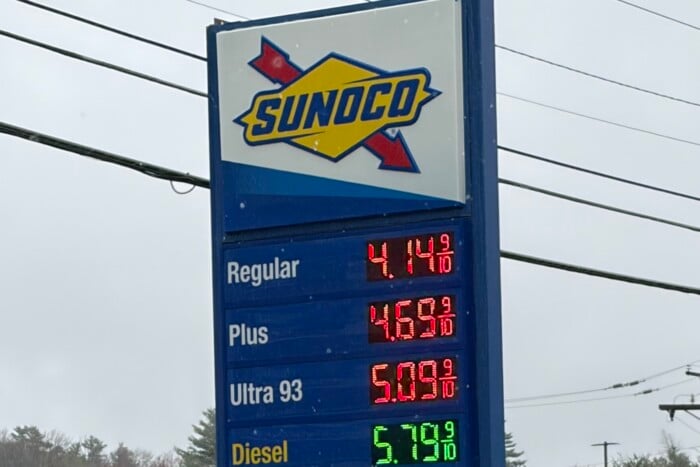
New Hampshire is feeling some economic indigestion at the start of the summer season, and the main culprit is gas. Six in 10 (61%) of respondents to a new University of New Hampshire polls are worried about the current and future price of gas, and a clear majority put the blame on President Donald Trump.
What ultimately shapes the future will be the people who continue to keep homes, businesses powered