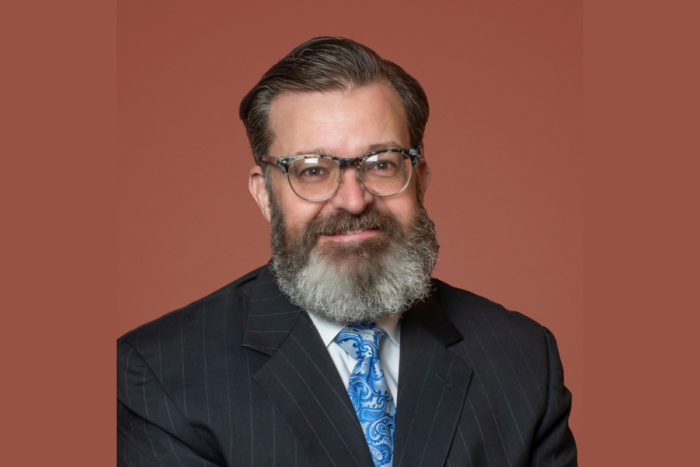
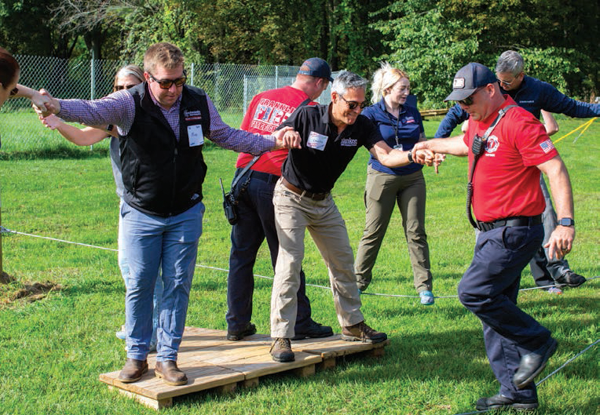
(Opinion) Leadership is measured by the doors you open
More than 20 years ago as a senior at Saint Anselm College, I found my way into a political advertising seminar held at the New Hampshire Institute of Politics.
HEALTH CARE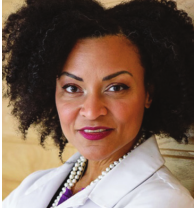
By: Dr. Marie Ramas
In medicine, we are trained to diagnose problems at their source. If a patient presents with symptoms, we look beyond the surface to understand the underlying cause. The same principle applies to our health care system — and right now, the diagnosis is clear.
We are creating instability in one of the most essential parts of that system: Medicaid.
In New Hampshire, Medicaid provides health coverage to more than 180,000 people. These are not abstract numbers. They are children receiving preventive care, seniors in long-term care facilities, individuals with disabilities and working families doing their best to stay healthy and productive. Medicaid is not a marginal program — it is a cornerstone of how care is delivered across our state.
And yet, we are entering a period of uncertainty. Recent federal and state policy changes, combined with rising health care costs, are putting real pressure on the system. Proposals that introduce new eligibility requirements, increase administrative hurdles or shift costs onto patients may appear technical on paper. In practice, they have predictable consequences: fewer people enrolled, more people losing coverage and greater strain on providers who are already operating at capacity.
This is not the fault of patients. It is not the fault of clinicians. This is a public policy issue.
When coverage declines, the effects ripple quickly.
Patients delay care. Chronic conditions worsen. Emergency departments become the default entry point into the system. Providers are forced to make difficult decisions about services, staffing and sustainability. In rural communities, where margins are already thin, even small disruptions can have outsized consequences.
We are already seeing signs of that strain: Hospitals, community health centers and long-term care providers across New Hampshire are facing workforce shortages and financial pressure. Behavioral health services remain in high demand. Maternity care is becoming harder to sustain in some areas. These are not future risks; they are current realities.
At the same time, there is significant attention on new federal investments aimed at transforming rural health care. These efforts are important and welcome. But we should be honest about what they can — and cannot — do.
Targeted investments cannot replace broad, stable coverage. When we reduce access to Medicaid through work requirements while trying to rebuild parts of the system through new programs, we are working at cross purposes. We cannot strengthen health care infrastructure while weakening the foundation that supports it.
The result is not transformation; it is fragmentation.
What is needed now is not more complexity, but more clarity. First, we must maintain stable and accessible Medicaid coverage. Policies that create unnecessary barriers to enrollment or retention ultimately increase costs elsewhere in the system. Coverage is not just about access; it is about continuity, prevention and long-term outcomes.
Second, we need to recognize the role Medicaid plays in sustaining providers. Reimbursement levels, administrative requirements and coverage stability all influence whether practices can remain open and whether services can be offered locally. This is particularly true in rural areas, where alternatives are limited.
Finally, we must align our policies with our goals. If we say we are committed to improving access, supporting rural communities and strengthening behavioral health, then our decisions must reinforce — not undermine — those priorities.
New Hampshire has a tradition of pragmatic problem-solving. We understand that health care is not an abstract debate; it is a system people rely on every day.
The question before us is not whether change is coming. It is whether we will make decisions that stabilize and strengthen our system, or ones that introduce new risks at a time when we can least afford them.
From a clinical perspective, the path forward is clear:
We can do better.
Dr. Marie Ramas, a board-certified family physician, has held clinical and leadership roles across primary care, addiction medicine and value-based care delivery. She currently serves as president of the New Hampshire Medical Society and vice chair of the New Hampshire Endowment for Health.
More than 20 years ago as a senior at Saint Anselm College, I found my way into a political advertising seminar held at the New Hampshire Institute of Politics.
New Hampshire is a remarkable place. We go first in the presidential primary. Our citizen legislature sends people to Concord who hold day jobs and show up anyway.
Plug-in solar has become one of the most successful clean energy projects in Europe. In Germany, an estimated 4 million households now use small, portable, “balcony” solar panels that plug directly into a wall outlet.
New Hampshire is home to 81,535 veterans, including 8,893 female veterans. They are our neighbors, co-workers, coaches, business owners, public servants, parents and friends. They have served our nation. Now the question is whether we are serving them with the urgency, coordination and compassion they deserve.
In one of the most expensive power markets in the country, sub-metered buildings hold a hidden asset.
Energy reliability and affordability are of paramount importance in New Hampshire.
One of the greatest honors for me as executive councilor for District One is representing the towns around Lake Winnipesaukee, one of New Hampshire’s most stellar natural resources.
The federal budget reconciliation law enacted last year was particularly designed to punish states that expanded Medicaid under the Affordable Care Act, as New Hampshire did through its Granite Advantage Program.

While major economic indicators are serving as caution tape for many organizations that are hesitant to make investments or take on risk right now, there is a very bright green light out there. There is also a fast-moving vehicle on the road: AI, and the frenetic adoption pace at which people now use it to find essential information. Organizations need to adapt to be seen and referenced by these tools.