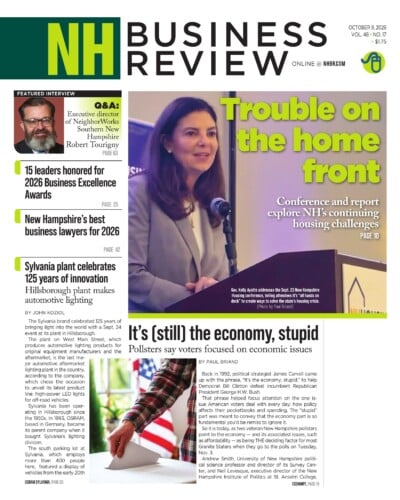
It’s (still) the economy, stupid
Back in 1992, political strategist James Carvell came up with the phrase, “It’s the economy, stupid,” to help Democrat Bill Clinton defeat incumbent Republican President George H.W. Bush.
Sections
Extras
Connect With Us
In mid-May, the U.S. House of Representatives passed its version of the National Defense Authorization Act (NDAA) for fiscal year 2017, and recently the U.S. Senate followed suit. The NDAA is the federal law that lays out the annual budget and expenditures for the U.S. Department of Defense (DOD), including all branches of the military.
Both the House and Senate versions of the NDAA included language instructing the U.S. Department of Defense to adhere to a long-established law known as the Berry Amendment. First passed in 1941, the Berry Amendment requires DOD to purchase — to the greatest extent possible – American-made clothing and textiles for U.S. soldiers.
Unfortunately, for more than a decade, DOD has not abided by this rule with respect to training shoes for new recruits. Since FY 2002, DOD has instead provided new recruits with cash allowances to purchase training shoes, which are not required to be American-made. The explanation: DOD asserted that it was difficult to find suitable athletic footwear that was made entirely in the United States.
However in recent years, American companies, such as New England’s own New Balance and Saucony, have made significant financial investments in equipment in order to produce footwear that is 100 percent American-made, and therefore fully compliant with the Berry Amendment.
In adding this Berry Amendment language to the NDAA, Congress has sent a clear message that DOD needs to drop their reasoning for circumventing the law, buy American with regard to training shoes, and support U.S. manufacturing jobs.
Here in New England, New Balance employs some 1,400 people at five manufacturing facilities throughout the region. When and if DOD follows the Berry Amendment and purchases American-made recruit training shoes, American companies like New Balance could compete for work to produce some 150,000 pairs of shoes for the military, potentially adding even more valuable New England jobs.
Inclusion of this important provision in the NDAA is the result of a strong bipartisan effort on the part of several New England lawmakers.
The law on this matter is clear, and it has been on the books for 75 years. The time has come for DOD to listen to Congress and follow the Berry Amendment — to ensure that our troops are wearing “Made in the USA” shoes as they train to defend our country and in doing so support American jobs.
James T. Brett is CEO of The New England Council.

Back in 1992, political strategist James Carvell came up with the phrase, “It’s the economy, stupid,” to help Democrat Bill Clinton defeat incumbent Republican President George H.W. Bush.

A new study shows that New Hampshire ranks ninth among states where residential mortgages are rising the fastest. The news doesn’t help ease the myriad concerns associated with the state’s ongoing housing crisis.

Businesses have spent years asking what AI can do for their employees. Fewer have asked what it would do for an intruder inside an employee’s account.

Many companies fall into the trap of innovation without realizing that not passing a data security audit will stall a deal right in its tracks.

Laws in other states, including in New Hampshire, are being used to hold businesses liable for their use of website tracking technologies

Getting cybersecurity wrong costs millions of dollars, customer trust, and sometimes the business itself.
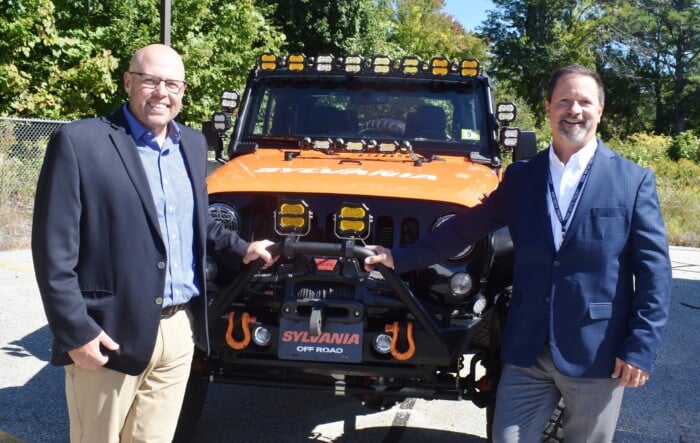
The Sylvania brand celebrated 125 years of bringing light into the world with a Sept. 24 event at its plant in Hillsborough. The plant on West Main Street, which produces automotive lighting products for original equipment manufacturers and the aftermarket, is the last major automotive aftermarket lighting plant in the country.

Cybersecurity requires a mix of technical depth, real-world experience, and the ability to think critically under pressure. That combination takes time to build, and most companies are competing for the same relatively small pool of proven talent.

Prompt injection is the AI era's version of social engineering, and it's already happening in the wild. If you're deploying AI tools in your organization and haven't thought seriously about this, you should.