(Opinion) NH just showed us what it wants. Let’s build it together

Zeina Eyceoz
Voters across New Hampshire sent a clear signal: They are looking for economic change. They are worried about the cost of living, the ability to simply get by and the gap between what hard work promises and what it actually delivers. For business leaders, that signal is a call to action.
Because what voters said they needed Nov. 3 is exactly what the employers we work with have been telling us all year. Workers cannot find homes they can afford. Parents are turning down jobs because childcare is out of reach. Recent graduates are choosing other cities because the math does not work here. These are not abstract policy debates. They are the conditions of daily life in New Hampshire, and they are directly connected to whether your business can grow. The time to act on them is now.
For a long time, the definition of business-friendly in New Hampshire has been too narrow. Low taxes matter, and we are genuinely proud of them. But a state that cannot house its workforce, cannot support working parents, and cannot build the next generation of skilled workers is not actually friendly to business. It is just cheap to incorporate in.
We held roundtables with dozens of employers across the state earlier this year. They were not asking for a handout or a political favor, instead they were describing a system that is not keeping pace with what they need to compete. And they were clear that they cannot solve it alone, no matter how creative or committed they are.
That is not a failure of business. It is a signal that the challenges we are facing are systemic, and systemic problems require systemic solutions. Business leaders understand this instinctively. You do not manage a supply chain or a workforce by patching one problem at a time and hoping the rest holds. You look at the whole system, find the throughline and invest in solutions that address root causes.
Housing, childcare, public education and energy are not separate issues with separate advocates and separate solutions. They are the infrastructure of a thriving community, and a thriving community is the infrastructure of a thriving business. When we treat them as isolated problems, we get isolated solutions that do not hold, and we end up competing with each other for the same limited resources instead of building something together that serves everyone.
At NHBSR, we have spent this year listening to employers describe that throughline in their own words. The employer who paid to hold a childcare slot open for months, waiting for a new hire to relocate and take over the payments. The recent graduate who weighed Manchester against Chicago and chose Chicago because the rent was lower. The large employer whose workers commute from South Boston to Portsmouth because they assumed it would be cheaper, and it was not. These are not edge cases. They are what business-friendly actually looks like when the foundation is missing.
Something notable emerged from the Nov 3 election. Gov. Ayotte, Democratic legislative leaders and voters across party lines all named the same priorities: housing, childcare and energy costs. That kind of alignment across a divided political landscape is rare. It is also an opening, and it will not stay open forever.
The coalitions and advocates who have been working on these issues for years have built something real.
What the business community can add is a different kind of credibility, the credibility of employers who are living these challenges every day and who have a direct stake in getting the solutions right. That credibility matters most when it shows up early, at the table where solutions are being designed, not after the fact when the decisions have already been made.
New Hampshire has always had its own way of getting things done. Practical. Community-rooted. Built on the belief that when people work together, they can solve just about anything. That tradition is worth building on, and there has never been a better moment to do it.
We move faster when we roll up our sleeves and build together. We always have. I know the business community is ready to show up for this moment the way this moment is asking us to.
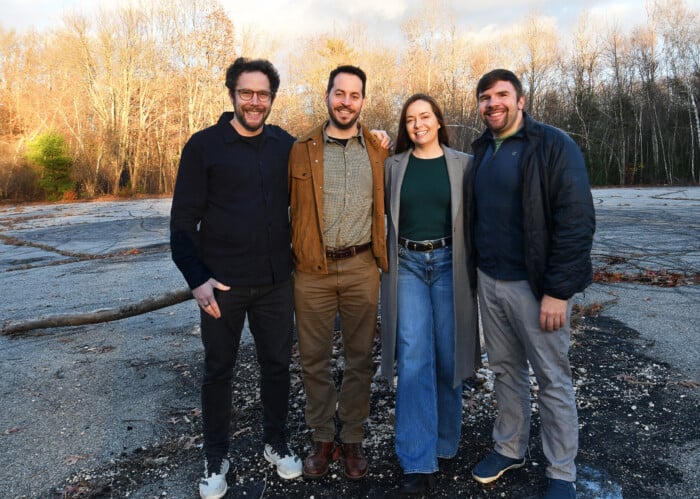
Zeina Eyceoz is executive director of New Hampshire Businesses for Social Responsibility. NHBSR represents more than 200 member businesses committed to building a more sustainable and prosperous New Hampshire.