In ESOPs, spreading the wealth is personal
Yankee Barn Homes strengthens its new employee-owned status through a healthy company culture
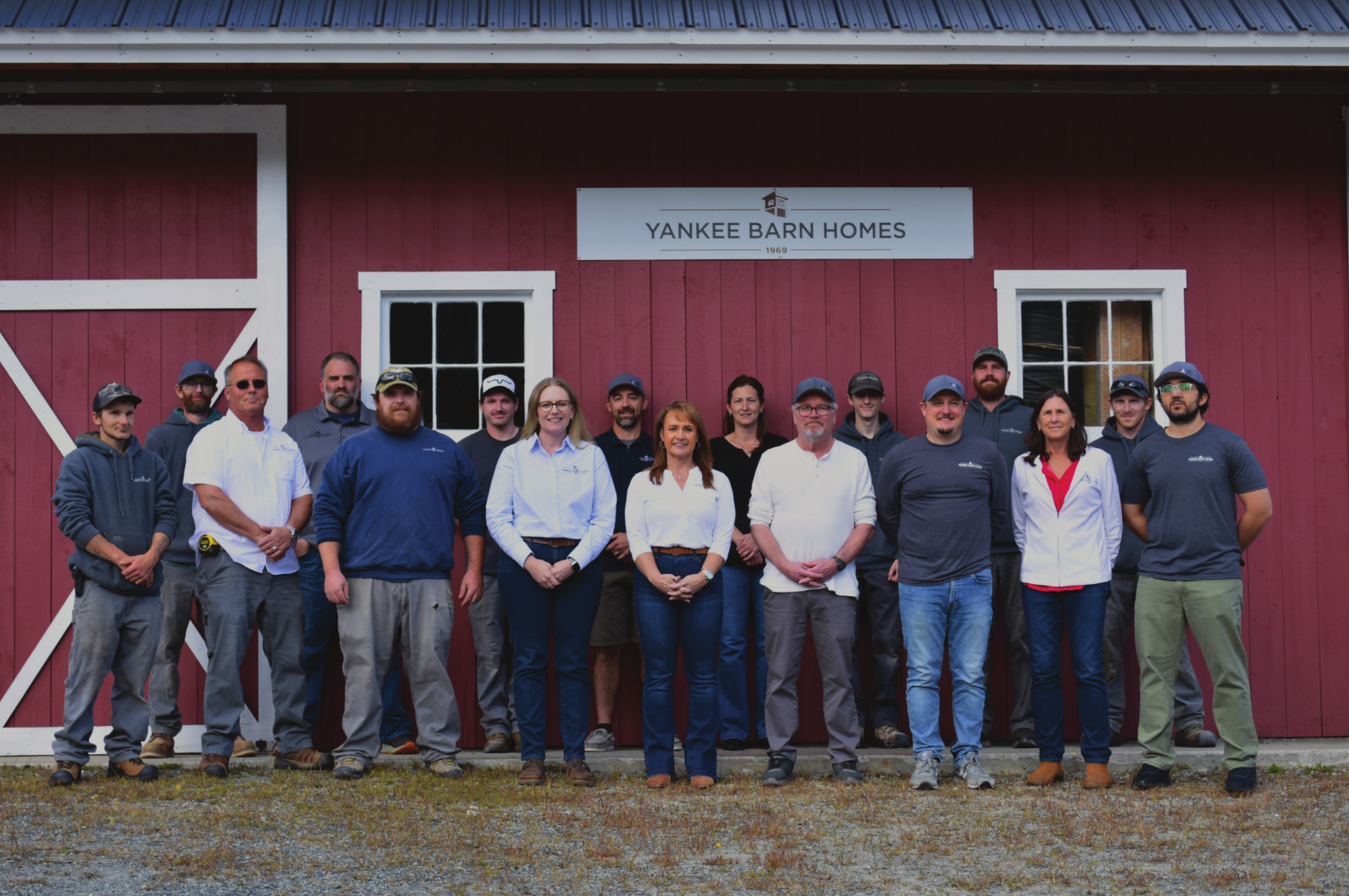
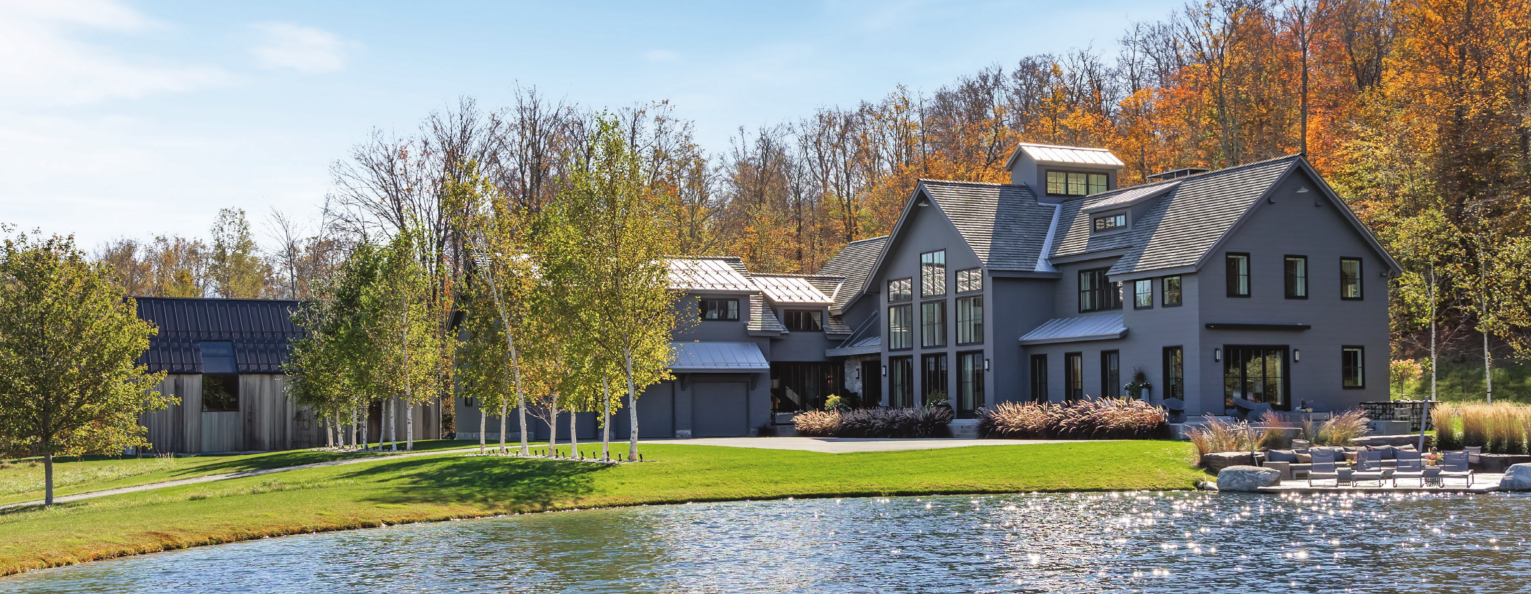
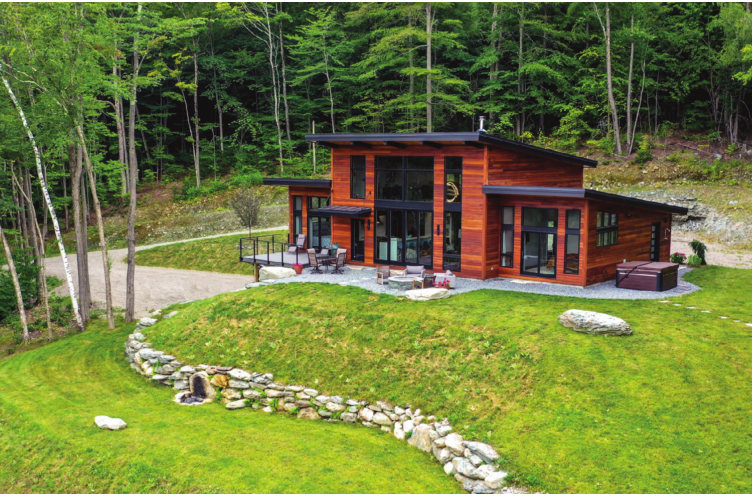
The owners of Yankee Barn Homes have converted the business to an employee-owned company through an employee stock ownership program. At right, examples of the Grantham company’s custom-built homes. (Courtesy photos)
Several years ago, Yankee Barn Homes’ then-COO Kerri Post started a new company tradition: Gratitude Day.
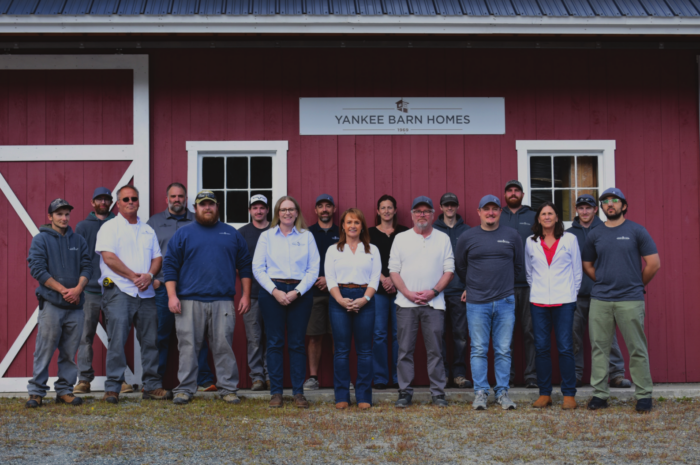
Every October, employees at the Grantham home-building firm gathered to learn about everyone’s roles in the company and how they all fit together as a team. It was Post’s way of promoting a healthy company culture. Plus, it was just a fun way to get together.
“Instead of just looking at somebody else and saying, ‘Oh, they should be doing X, Y and Z,’ you now understand what’s going on for everyone. It just helps make for a really strong team,” Post adds.
It may have seemed like a simple, fairly inconsequential work obligation, but Post, now the company’s CEO, was actually cementing the building blocks needed for the firm’s future success as a private, employee-owned company.
According to the National Center for Employee Ownership (NCEO), an employee stock ownership plan, or ESOP, is a benefit plan that gives employees company ownership through shares. Though similar to other retirement plans or a 401K, employees don’t need to buy shares or put any earnings aside in an ESOP. Company stock is allocated equally into employees’ accounts. Annual statements tell employees whether the value of those shares increases or decreases depending on the company’s performance. Employees can access those funds when they leave the company or retire.
“It is a retirement plan (that) holds stock in the company that the people work for.
And every company is worth something, right? And that value is attributed to those shares on a pro rata basis,” explains John Bentas, an attorney with McLane Middleton in Manchester.
Bentas, who has experience with implementing and administering ESOPs, says it’s also an exit strategy for owners considering retirement but who don’t want employees to potentially lose their jobs or see the company be split apart.
Yankee Barn Homes’ previous owners, Paul Marinelli and his partner Jeffrey Rosen, wanted the same for their company.
Several years ago, they started thinking about their retirement. While they initially considered selling to a private equity firm, Marinelli was concerned about the roughly 21 employees who could face layoffs. A private equity firm sale would also put the company itself at risk.
Further, Marinelli and Rosen originally bought the company in 2011 from a bank, in effect saving it, and rebuilt it into a successful firm. This time, they wanted to save it permanently.
“So I began to explore the possibility of creating an employee stock ownership trust and selling Jeffrey and my shares into that,” Marinelli says.
Converting to an ESOP is a lengthy process with additional administration costs, and involves hiring professional firms, including attorneys with ESOP knowledge, independent ESOP trustees, a valuation company, a third-party administrator (separate from the trustee) to monitor the benefit plan, the owners’ own attorneys and others.
Bentas explained some of the expenses that come with an ESOP transition.
“An ESOP is nothing but basically an ERISA trust governed by state law. Every trust has to have a trustee. A lot of times people engage a third party for that. Those are some of the administration costs that you get,” Bentas says.
According to Bentas, ESOPs are generally funded either through a seller’s note or are self-financed by the seller or a third-party lender that specializes in ESOPs.
Marinelli and Rosen chose a leveraged ESOP, which involves borrowing money from a bank that is loaned to the ESOP trust. The loan is often paid off over a series of 10 to 30 years.
Marinelli says Yankee Barn Homes incurred debt internally to fund the services needed for the transaction.
There are also several federal tax benefits for owners selling to an ESOP. Corporate income tax deductions and possible capital gains deferrals under IRS Section 1042 make ESOPs a valuable option for owners who want to see their company continue on without them.
Owners transitioning to an ESOP can also control how many of their shares they want to sell. In this case, Marinelli and Rosen sold 100% of their shares to the ESOP.
In 2023, Marinelli promoted Kerri Post as COO, and began stepping aside from daily duties. The formal process began in the spring of 2025; the transition closed in August 2026. On Sept. 1, Post became president and CEO of the company, now called Topek, dba Yankee Barn Homes, and the company converted from an LLC into a C corporation.
Employees were informed soon after about the company’s new status. Once they understood what their new ownership meant, the words “grateful” and “gratitude” often sprang to mind, Post says.
“That was the phrase of the day: ‘This is a very big deal,’” Post recalls.
Marinelli says all 21 Yankee Barn Homes employees (not including any part-time or contract employees) decided to stay with the company in light of the changes.

For now, Marinelli remains on the board and checks in on daily operations. But overall, he’s confident the ESOP will remain successful, because employees now see how their work increases profitability.
“It’s not a simple process, but now they were going to be owners of the company, and all of the rewards that come from a successful, profitable business would accrue to them,” Marinelli says.
“Making sure that they all understood that this was a very big deal — and they did — it just gives them an even greater responsibility and accountability that they are embracing,” adds Post.
She says a “mind shift” occurs when employees realize just how much they can positively affect the company.
“They know how meaningful it is — not just because it will come to benefit them financially in the future, but to know that two people, the prior owners, entrusted them to do this. It’s an incredible opportunity,” Post adds.
Besides other tax deferral benefits, promoting a strong company culture is a solid way to keep an ESOP company successful. Post’s creation of Gratitude Day years ago simply paved the path toward profitable employee ownership.
“We would retain employees, we would retain our company culture, we would also continue all of the work we have done to date to make us an efficient and profitable company, versus somebody new buying the company and not having any say over any of it,” Post says.
Marinelli says, before the transaction, the company experienced profitability “above industry standards.” And while he says it’s “impossible to estimate at this time” whether the ESOP will be successful in the future, Marinelli and Post are confident the company will stay on track.
“Our last three years have been very good years, and so this year looks like it’s going to be above our budget,” Marinelli says.
With a positive company culture already in place, Post agrees.
“The company may not be worth very much in the beginning because of those loans, but over time, the company value will increase, naturally, just over time, but also with growth,” Post says.