Navigating New Hampshire’s new solid waste site evaluation committee
Anyone who has taken a transmission line or a wind farm through New Hampshire’s Site Evaluation Committee knows the process is long, expensive and can be fraught with complication.
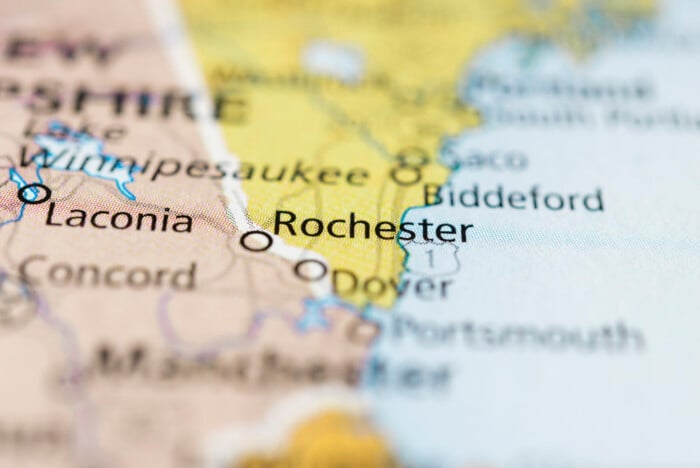
City officials are taking steps they hope will prevent data centers from locating in Rochester.
A proposed new zoning ordinance would limit the location of data centers in Rochester to the city’s Recycling Industrial zone.
“There are many unknowns that could be associated with this,” Mayor Chuck Grassie said. “It is not something we want here, so we want to make sure Rochester is protected.”
Waste Management owns most of the property in the Recycling Industrial zone, and Grassie added, “so nothing is going to happen there.” He noted state law doesn’t allow a permanent ban on data centers, so city leaders are pursuing the zoning change instead.
The City Council discussed the proposal during its Aug. 4 meeting. Rochester residents will get a chance to weigh in on it during a public hearing Aug. 18 at 6 p.m. at City Hall.
Artificial intelligence data centers have faced vocal opposition from citizens in New Hampshire and nationally over concerns about resources, waste and noise pollution.
Locally, in the town of Nottingham, residents earlier this year pushed back against Seacoast businessman Tom Moulton’s plan for a data center at an existing 200,000-square-foot warehouse.
Moulton at least temporarily pulled back the plan, but residents and local leaders have been meeting and seeking solutions over concerns Moulton could revive it.
Grassie said no applications have been submitted to the city for a data center. He said the city is being proactive, noting Rochester currently has no zoning ordinance dealing directly with data centers.
“I was at a social gathering and someone said to me the city has 180 acres of available land in the Industrial Park (zone) and would I be interested in a data center,” Grassie said. “I said, ‘Not a chance in hell.’ The next day I went to the city manager saying I wanted to put a moratorium in place; what can we do?” Grassie said City Manager Katie Ambrose came back with the idea of the zoning change. He said, according to state law, Rochester could put a moratorium on data centers, but it could last no longer than one year.
“We cannot ban data centers outright by law, but we did this with adult entertainment, allowing it only in (the Recycling Industrial zone),” Grassie said.
Grassie said city officials are extremely concerned about issues surrounding a data center, such as high water usage, environmental concerns, noise and traffic.
Ambrose said there are 12 properties located within the city’s Recycling Industrial zone. Seven belong to Waste Management, totaling 975-plus acres, including Turnkey Landfill. The other property owners are listed as Pike Industries, Aggregate Industries, Cemetery Association – c/o C. Boyden Thompson and the Brox Stephen M. Revocable Trust.
Grassie acknowledged Waste Management is scheduled to close the Turnkey Landfill in 2034, but said that might not happen.
Grassie said he had an informal discussion with Waste Management officials and feels pretty confident the company is not interested in pursuing a data center. He said city officials plan to meet more formally with Waste Management after the public hearing.
Waste Management officials did not immediately respond to a request for comment for this story.
Grassie said City Councilor Don Hamann will lead a task force to learn more about data centers and the city’s options.
“A lot of people want to be involved,” Grassie said. “We even had a high school student ask to be included. Personally, I think the state needs to pass a law that says data centers are not allowed in New Hampshire, but until then we can work to protect our city. … We need to be careful, or we could be brought to court, so if we get a good solid ordinance, it will make it near impossible to come here.”
Grassie said if the ordinance passes, a data center in Rochester’s Recycling Industrial zone would require a conditional use permit.
He said the council on Aug. 18 could advance the proposed ordinance to the city Planning Board, which will take time to consider it. “For now, no applications for a data center will be accepted by the city, and this will give us months to keep working on this,” he said. “I think this is the most effective way to stop this, at least for now.”
This article is being shared by partners in the Granite State News Collaborative. For more information, visit collaborativenh.org.

Anyone who has taken a transmission line or a wind farm through New Hampshire’s Site Evaluation Committee knows the process is long, expensive and can be fraught with complication.

Evan Clements and Precia Harthcock of Jaffrey love their 1926 home, but they acknowledge the drawbacks of houses built in that era. The room that is now their sitting room, for example, was once a porch that had been enclosed and is noticeably colder than other parts of the house. The second floor was much hotter than the first floor, and their kitchen was drafty.

Energy reliability and affordability are of paramount importance in New Hampshire.

With gasoline near $4 a gallon and healing oil prices expected to jump this winter, U.S. Energy Secretary Chris Wright on Thursday said clean energy initiatives are partly to blame for high prices of energy. Wright, the founder and former chief-executive of a Denver-based oil-services and fracking company, spoke within eyesight of a small solar array at the Raymond district office of the New Hampshire Electric Co-op.
City officials are taking steps they hope will prevent data centers from locating in Rochester.

With a new state law set to go into effect with the dawn of a new year in 2027, Granite Staters will be able to install so-called “balcony solar” panels for home use.

House Bill 707, signed into law by NH Gov. Kelly Ayotte, promotes expanding existing landfills, rather than building new ones, and also establishes a seven-member committee to evaluate landfill sites.
The recently formed New Hampshire Forum has been whittling down — from 18 to four to one or two — important issues that will be addressed in the 2027 session of the state Legislature.

Upcoming legislation may provide (somewhat) smoother permitting process for developers