(Opinion) In New Hampshire, your power bill is an asset hiding in plain sight
In one of the most expensive power markets in the country, sub-metered buildings hold a hidden asset.
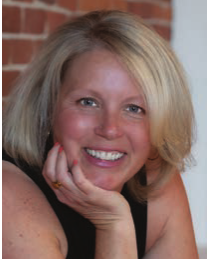
Sharon Gordon
By: Sharon Gordon
Picture two moments from an ordinary Tuesday: a tense budget meeting where a project you’ve spent months on gets picked apart in real time, and an hour later, your 4-year-old flat on the floor of the cereal aisle mid-tantrum. One feels professional; the other feels undignified.
Your nervous system doesn’t make that distinction. As far as your body is concerned, they’re the same event. Here’s why.
Your autonomic nervous system runs on two settings.
The sympathetic nervous system is the accelerator: It raises heart rate, sharpens focus, and floods the body with cortisol and adrenaline to meet a threat, real or perceived. The parasympathetic nervous system is the brake:
It slows the heart rate and lets the body recover. That switch doesn’t ask what kind of threat it’s facing before it responds.
A hostile email, a screaming toddler, a near-miss on the highway and a brutal workout all hit the same accelerator. Physiologists call the cumulative wear this produces allostatic load: the toll on the body from every demand it absorbs, regardless of where the demand came from. A stack of unread work emails, a mortgage autopay you’re hoping doesn’t bounce, an unresolved fight with your spouse, a short night of sleep and a brutal workout aren’t five separate problems; they’re five withdrawals from the same account.
This is the part that gets missed in most conversations about burnout, and it’s where wellness culture repeats the mistake it claims to solve. The instinct is to treat exhaustion as one more thing to optimize — a new supplement, a wearable device tracking your sleep score, a workout designed to look good on Instagram before it does anything for your nervous system. You can’t ashwagandha your nervous system into balance. Piling more onto an already maxed-out system isn’t recovery; it’s the same withdrawal in different clothes.
Sports medicine confirms this. A joint consensus statement from two leading professional bodies found that added intensity without recovery produces fatigue and decline, not resilience. I lived this pattern before I built a business around understanding it. There was a period when I absorbed the same unspoken equation everyone around me seemed to believe: harder is better, busy means productive, and rest isn’t earned until you’re completely spent.
I trained for races and took multiple hot yoga classes a week, certain I was doing something restorative. I wasn’t. My hair started falling out. I was working harder at my own health than at almost anything else in my life, and getting worse, not better. It took years of yoga training, and a rigorous clinical certification in yoga therapy, before I understood why. As a yoga therapist, I’m concerned about yoga classes that have become another version of the same demand. The classes I was taking then were exactly that: heated, loud, paced like a workout. Peer-reviewed research on yoga’s ability to lower allostatic load, published in journals including Medical Hypotheses and Frontiers in Psychiatry, points to a different practice entirely, one built on sustained attention and regulated breath, not a high-intensity workout dressed up as yoga. That gap is why I founded Sanctuary Yoga & Wellness.
None of this means professionals should stop exercising, that ambition is the enemy, or that this kind of practice is the only way to recover. It means asking a different question — not “what else can I add,” but “what am I actually doing that lets my nervous system recover?” For most professionals, the honest answer is almost nothing. Real recovery slows the breath, asks for sustained attention, and doesn’t need to be tracked, timed or performed for anyone. A 20-minute walk without a phone can do more for that account than another workout wedged between meetings and dinner. So can a yoga practice built around breath and attention, not the high-intensity version most studios sell now, even if it doesn’t feel “productive.”
Most high performers have been trained to treat exhaustion as proof of effort: no depletion, no real work done. That instinct is exactly backward. Depletion isn’t progress; it’s the bill coming due. You don’t close a deficit by spending more from the same account you’ve already emptied. The body needs an actual deposit, not another withdrawal in disguise, and that’s the work I built Sanctuary Yoga & Wellness around.
Sharon Gordon is a certified yoga therapist (C-IAYT), ayurvedic health counselor, licensed physical therapist assistant and founder of Sanctuary Yoga & Wellness in Exeter.

In one of the most expensive power markets in the country, sub-metered buildings hold a hidden asset.
Energy reliability and affordability are of paramount importance in New Hampshire.
One of the greatest honors for me as executive councilor for District One is representing the towns around Lake Winnipesaukee, one of New Hampshire’s most stellar natural resources.
The federal budget reconciliation law enacted last year was particularly designed to punish states that expanded Medicaid under the Affordable Care Act, as New Hampshire did through its Granite Advantage Program.
While major economic indicators are serving as caution tape for many organizations that are hesitant to make investments or take on risk right now, there is a very bright green light out there. There is also a fast-moving vehicle on the road: AI, and the frenetic adoption pace at which people now use it to find essential information. Organizations need to adapt to be seen and referenced by these tools.
When the next emergency comes, the most important question won’t be whether we have a plan; it will be whether we’ve already built the relationships that make the plan work
Every growing company hits a wall that has nothing to do with its market, its product or its strategy deck. It hits the limits of one person’s capacity — usually the founder’s — and stops.
For years, New England employers have identified one challenge that cuts across nearly every industry: Our region simply is not building enough homes to meet demand.

August 4 was a perfect New Hampshire day. Along Route 3, a tour of the wonderful New Hampshire Veterans Cemetery in Boscawen, a peaceful and impressive oasis everyone should experience, was followed by the groundbreaking ceremony for Phase II of the Military and Veterans Campus of Easterseals New Hampshire in Franklin.