2026 Outstanding Women in Business Event Photos
The 2026 Outstanding Women in Business event was held on September 15, 2026, at LaBelle Winery in Derry.

Les Otten wants to redevelop The Balsams into a four-season destination resort. (Courtesy photo)
With his America Skiing Company — which operated from 1994 to 2007 and ran nine resorts in New Hampshire, Maine, Utah, Colorado and California — Otten was an early pioneer of the corporate ownership model.
Otten was inducted into the U.S. Ski & Snowboard Hall of Fame class of 2023, recognizing his “profound impact on the entire industry as an innovator and visionary.” His company’s Ski America pass was one of the first to offer skiers and riders the opportunity to travel from resort-to-resort across the country, including Attitash Bear Peak in New Hampshire.
He has a firsthand perspective of today’s well-documented benefits and pitfalls of two megascale owners:
Vail Resorts Inc. with its Epic Pass and the Alterra Mountain Company with its Ikon Pass.
Vail raised the ire of New Hampshire Gov. Kelly Ayotte, a skier herself, when it tried to include what she saw as an income tax in pass renewals for next season.
Vail faces a labor-related lawsuit brought by 2,000 employees. Both Vail and Alterra have been sued on anti-trust grounds.
At age 76, Otten still has a hand in the industry with his ongoing development of The Balsams in Colebrook and his intention of creating an expanded ski area at the historic resort into the largest skiable acreage in the Northeast.
With all the documented issues associated with the big ski companies, and the prices they’re charging to ski, Otten has this general observation: “I honestly don’t think the people that are in leadership in some of these large institutions understand the impact of what they’re doing.”
“They’re sending a signal out that skiing is expensive and it’s for the ultra rich,” Otten said.
Vail and Alterra are the biggest corporate owners when it comes to ski resorts and passholders. Vail is publicly traded; Alterra is a private company.
Vail operates 42 resorts in four countries; there are some 2.3 million Epic passholders. In New Hampshire, Vail runs Attitash Bear Peak, Wildcat, Sunapee (as a lease from the state of New Hampshire) and Crotched Mountain.
Alterra has 70 resorts across 13 countries with about 1 million Ikon passholders.
Boyne Resorts, which owns and operates Loon Mountain in New Hampshire, is a key partner of Alterra, meaning skiers can access select Boyne-owned properties using Alterra’s Ikon Pass, which includes, in addition to Loon, Sunday River, Sugarloaf and Pleasant Mountain in Maine.
Walking up to the ticket window and buying a pass to ski that day is typically the most expensive option.
Skiing multiple days and buying a multiday pass, doing a day or multi-day purchase online, and seeking out special rates is a cheaper way to go.
Buying a season-long pass, the resorts and the pass companies will argue, is the least expensive way to go.
But therein lies the peril, according to a lawsuit filed against Vail and Alterra.
The lawsuit filed in Colorado in March alleges that both companies have deliberately inflated single-day lift ticket prices to push skiers and snowboarders into buying season pass bundles.
The highest-priced ticket is an adult skiing on a weekend or holiday. This past season, the adult tickets at the Vail-run resorts at Sunapee and Wildcat were $142 and $154 at Attitash Bear Peak.
Compare that with Cranmore at $119, Black Mountain at $100 and Gunstock at $109. New Hampshire-owned Cannon Mountain charged $114. A walk-up ticket for an adult at Vail-owned Deer Valley in Utah was $349 last season.
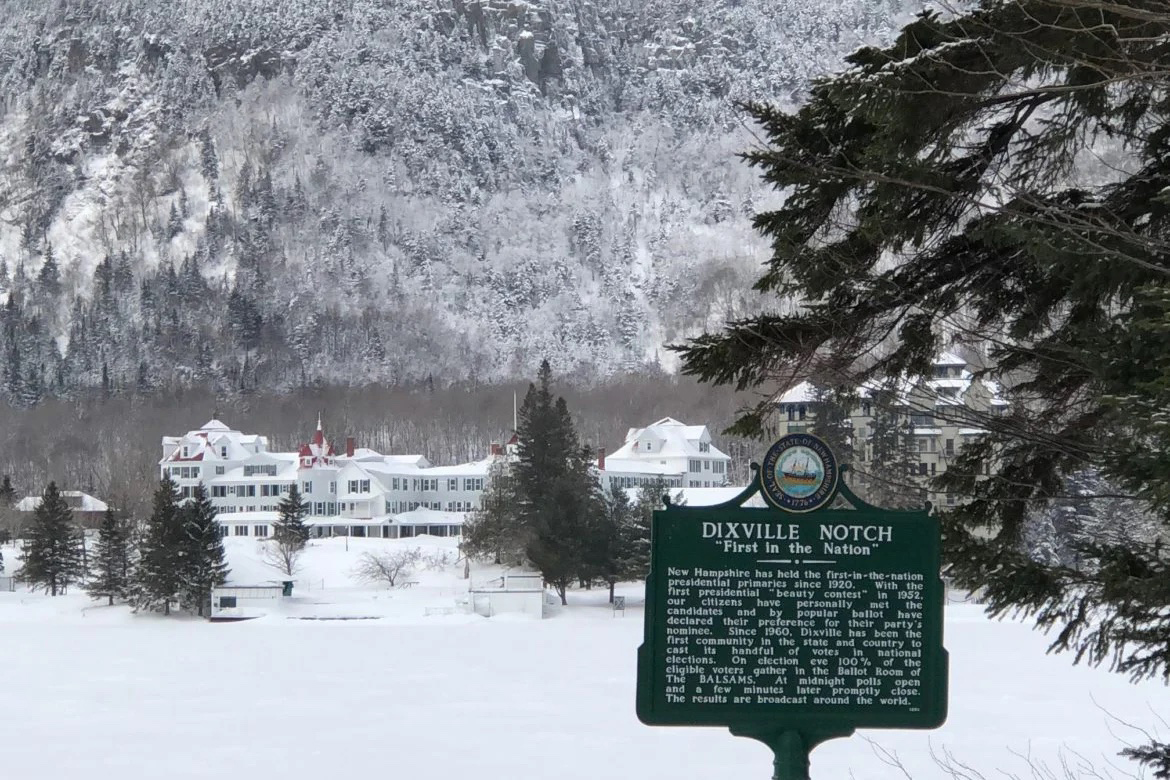
As he works on developing The Balsams into a four-season destination resort, Les Otten looks back at the trials and tribulations of corporate ownership of ski areas, which he pioneered. (NHBR file photo)
The lawsuit says the companies preyed on consumers’ belief that they were getting a deal by buying a season pass that would pay for itself after a handful of visits to the high-priced resorts. The suit alleges this isn’t accidental, that lift ticket prices were artificially inflated to force skiers’ hands on a season pass purchase.
Otten isn’t so sure the lawsuit has teeth. “I think the lawsuits are absolutely foolish. There’s no law that says that I have to sell my product at any price to anybody. I can price my products however I want,” he said. “Where this gets into trouble is if it can be proven somehow that these are monopolistic practices.”
Go find another, less pricey option, Otten argues. He likens it to golf. A round of golf at the famed Pebble Beach in California costs about $700. High-end golf courses charge upward of $150 in New Hampshire for a four-hour or so round of golf. But you can choose to play at another course for half that much.
“If I’m gonna pay around 100 bucks a day for eight hours of the use of the facilities that are available, I mean, it’s not excessive,” he said of the skiing alternatives.
Corporate owners, according to Otten, have four constituencies they have to please: first and foremost are the skiers, then the communities in which the corporate owners operate, then the ski area employees, then the shareholders.
Each constituency, according to Otten, has its own set of unique challenges: the quality of the skiing in terms of the snow, availability of open terrain as determined by ski patrol, employees and their ability to earn enough of a wage to live close to where they work, the communities and the effects an area has on local traffic and businesses, quality of the lift service, food and beverage quality and variety, among other issues.
Satisfying shareholders involved in ski resorts can be especially challenging, according to Otten.
“They’re publicly traded and that comes with a lot of issues,” Otten said. “These businesses are not designed to run well on a quarter-to-quarter basis because of the vagaries of snow and the vagaries of the economy and the things that can impact them.”
“The thing I think that got us at American Skiing Company was we were never going to go out of business. We just weren’t going to perform well based on formal, financial metrics that you have to live by if you’re a corporate entity,” he added.
Otten, as one of his principles, notes that the ski areas of corporate owners should remember that they are part of a community. While the ski area is selling food and renting skis, it’s likely someone in that ski town is also selling food and renting skis. Bethel, Maine, where Otten owned and expanded Sunday River into a destination resort, is normally a town of 2,600 people that can expand by an additional 12,000 skiers on a busy weekend or holiday.
“The constituency of locals, which is made up of businesses, local taxpayers and government, they need to be your friend,” said Otten, suggesting there ought to be local perks, such as a free ski day for the local teachers, for example. “There can be a huge mistake that gets made by underestimating the importance of the community.”
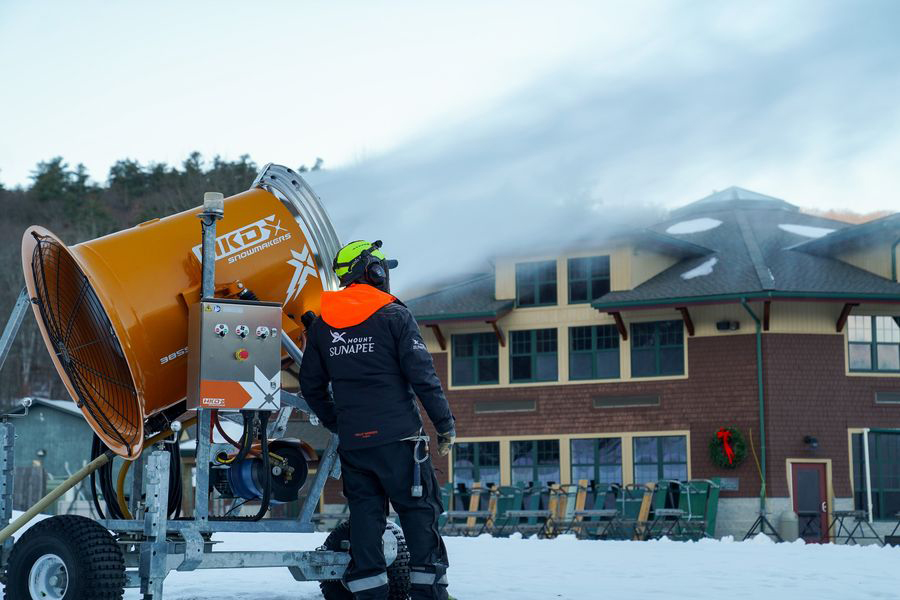
A worker at Mount Sunapee Resort in Newbury operates a snow gun. (Courtesy of Ski New Hampshire)
The perils of crossing the governor
Vail piqued the ire of Gov. Ayotte by announcing that ski passes would include a blended sales tax of 3.2%.
“New Hampshire is proud to have no sales tax, and we’re not going to let an out-of-state company try to sneak one in,” said the skiing governor, who spent one day during the last season visiting nine different ski areas during her “Super 603 Ski Day.”
Vail relented — a bit — by saying it would offer a New Hampshire-only pass, offering “passholders the option to limit their access to our New Hampshire resorts only and forgo a tax on their pass.” However, Granite Staters wishing to access the country-wide range of area options with the full-blown Epic Pass still have to pay the blended sales tax.
Some 2,000 current and former ski and snowboard instructors, in suing Vail Resorts, claim the company violated federal labor law by failing to pay for “off-the-clock” work and failing to reimburse job-related expenses. Vail counters that it has complied with all wage laws.
Done that, doing it again with The Balsams
Otten’s intent with The Balsams is to redevelop the grand hotel and surrounding area into a destination four-seasons resort. At the heart of the redevelopment is expanding the Wilderness Ski Area into a 2,200-acre mega-mountain with 23 lifts and the largest snowmaking capacity in the Northeast.
By comparison, Sunday River features 884 skiable acres across eight interconnected peaks.
He compares the project to what he did at the Canyons, adjacent to Park City in Utah. It evolved, under American Skiing Company ownership, from a small chairlift-served area to 4,000 skiable acres of terrain spread across nine peaks. It is now owned by Vail Resorts.
He described The Balsams project as “ever getting closer.”
“It’s an extraordinarily difficult project to put all the pieces together. We’ll be optimistic and sincerely hope that no one thinks ill of me for trying,” he said.
“It’s just a lot of patience and a lot of hard work on our part, from permitting to re-permitting to all the complexities of basically putting $400 million in the ground all at once,” he added.

A skier tests the powder at Cannon Mountain, a resort owned and operated by the state of New Hampshire. (Courtesy of Ski New Hampshire)
Other ski pass options
Every mountain has its own season pass option, priced along the scale of ages from boys/girls, teens, adults and senior citizens.
The full Epic Pass starts at $1,089 for adults, and the Ikon starts at $1,399.
They aren’t the only season passes available to skiers; other passes also offer a certain number of ski days at a collective of ski areas, some with blackout dates, some with none.
The Indy Pass offers two days skiing at more than 180 ski destinations across the United States, Canada, Europe and Japan, including Black Mountain, Cannon, Ragged, Tenney and Waterville Valley here in the
Granite State. The no-blackout pass starts at $399.
Created by Erik Mogensen, owner of Black Mountain, the Indy Pass covers smaller independent mountains that use his Entabeni Systems software and hardware created specifically for smaller, independent ski resorts. Indy Pass was created specifically by Mogensen to counter Vail Resorts and Alterra.
“Without these small places, the sport and culture of skiing would become very expensive and very exclusive. Skiing should not be a luxury good,” Mogensen told Ski Magazine in April.
The New England Ski Pass, which starts at $759, offers skiing deals at Loon here in Lincoln and Sunday River, Sugarloaf and Pleasant Mountain in Maine.
The Mountain Collective, starting at $669 and serving 27 destinations, has five mountains in the Northeast, none in New Hampshire.
For the next winter season, a new player has entered the market — Snow Pass, which is being sold for about $400 and covering an as-of-yet unspecified number of mountains, what’s being called a “curative mix” of ski areas in the Northeast, Midwest, West and Canada.
The 2026 Outstanding Women in Business event was held on September 15, 2026, at LaBelle Winery in Derry.

Annual summit scheduled as NH welcomes company from Massachusetts

Data from a NH Housing report focused entirely on New Hampshire dispels the notion that affordable housing development in a community depresses the property values of nearby residences

When most people think about New Hampshire’s seafood industry, they picture the quintessential fishing village with commercial boats landing lobster or cod.
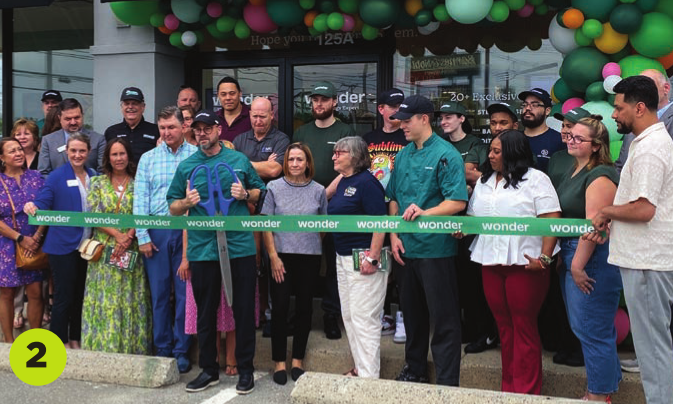
Business and event happenings around the state of NH

The Latest is a roundup of the comings and goings of the movers and shakers in NH's business community

If you live in Manchester or Concord, you probably don’t think twice about finding a doctor. There is a specialist within a few miles for almost anything you need. But if you live in Colebrook, or Lancaster, or any one of dozens of small communities spread across New Hampshire’s North Country, the picture looks very different, and the gap between those two realities is wider than most people realize.
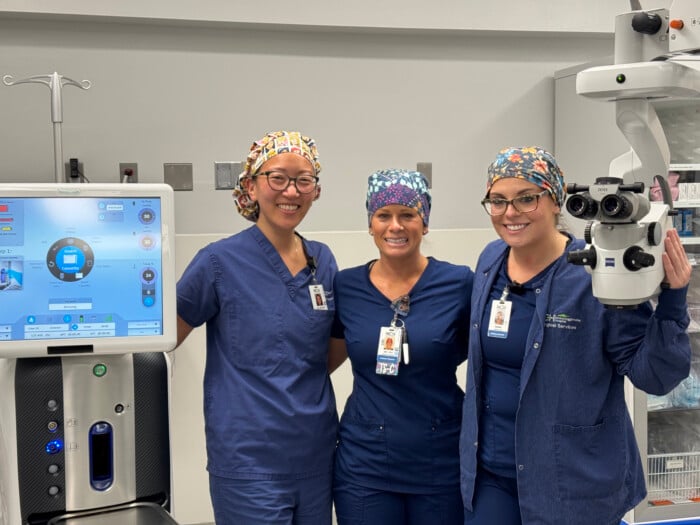
Androscoggin Valley Hospital (AVH), a member of North Country Healthcare in Berlin, performed its first cataract surgery in recent memory on August 20, 2026, a milestone made possible through the hospital’s partnership with North Country Ophthalmology, a physician-led alliance of board-certified MD ophthalmologists that began seeing patients at AVH in January.

Evan Clements and Precia Harthcock of Jaffrey love their 1926 home, but they acknowledge the drawbacks of houses built in that era. The room that is now their sitting room, for example, was once a porch that had been enclosed and is noticeably colder than other parts of the house. The second floor was much hotter than the first floor, and their kitchen was drafty.