The skilled trades
Graduation season and NH’s biggest opportunity

Brennan Ward
As caps and gowns come out across New Hampshire, thousands of young people are being asked the same question: What’s next?
For many, the default answer has long been a four-year college degree followed by an office job. That path remains valuable to many students. But it should no longer be treated as the only respectable route to success. One of the smartest opportunities in New Hampshire today may be found not behind a desk, but in the skilled trades.
Our state needs more workers in construction, electrical, plumbing and mechanical trades — badly.
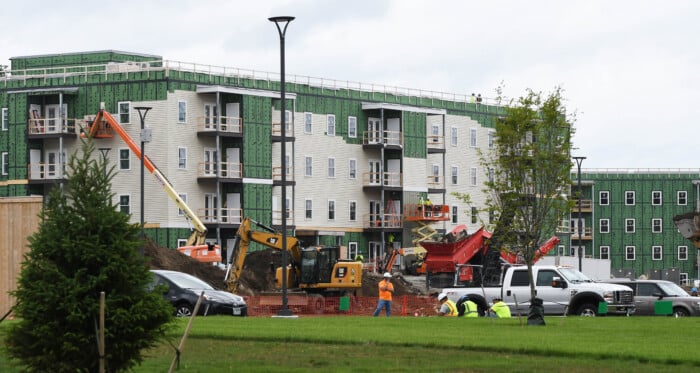
The shortage is already affecting housing construction, renovation timelines, business expansion and everyday repairs for homeowners. Ask anyone who has recently tried to schedule a contractor. Wait times are longer, prices are higher and qualified help is harder to find.
Why? Because New Hampshire’s skilled workforce is shrinking just as demand grows.
Like much of the country, New Hampshire faces an aging labor force. Baby boomers who built businesses, trained apprentices and kept communities running are retiring in growing numbers. At the same time, fewer younger workers are entering the trades pipeline quickly enough to replace them.
According to the New Hampshire Fiscal Policy Institute, the state’s labor force was approximately 776,000 in early 2025, with only about 25,000 unemployed workers available statewide. That means employers across sectors are competing for a limited pool of talent.
Construction is among the industries feeling the pressure most intensely. Associated Builders and Contractors reported that New Hampshire posted a construction unemployment rate of just 2% in September 2025, the third-lowest rate in the nation.
The challenge is even greater in New Hampshire’s North Country. Rural communities often have smaller labor pools, older populations and fewer nearby contractors. When one skilled worker retires, families and businesses may lose one of only a handful of local options. That creates an immediate opportunity for young workers willing to build careers there.
For graduates uncertain about taking on student debt or spending four more years in a classroom, the trades offer another route: Earn while you learn, build in-demand skills and enter careers that cannot be outsourced easily.
There is also something deeply satisfying about working with your hands and seeing the results of your labor at the end of each day. You can point to what you built, fixed or improved. That sense of accomplishment still matters.
My father used to say that some of the happiest people on Earth come home dirty every day because they know what they accomplished. There is wisdom and pride in that. Quality of life matters more than ever, and many young people are weighing that heavily in their life calculus.
Of course, working for yourself is not easy.
Owning a trade business comes with long days, payroll concerns, customer calls and nights spent doing paperwork after the physical work is done.
But the rewards can be substantial: independence, pride in ownership and the ability to build something lasting for your family. For many retiring owners across New Hampshire, there is another opening hiding in plain sight: business succession. A young tradesperson willing to learn the craft and business side could one day buy an established company rather than start from scratch.
That is why career and technical education, apprenticeships and mentorship matter so much right now. We should be elevating these pathways, not treating them as second-tier options.
My advice to graduates is the same advice I would give any young professional: find your craft. Find something you enjoy and are good at. Then find someone who knows more than you do and learn from them. Learn the technical side. Learn the customer side. Learn how to price jobs, manage people and build trust.
Skill alone can make you a worker. Skill plus business sense can make you an owner.
And if you are unsure what you want to do, that is perfectly normal. No one expects an 18-year-old to know exactly how they fit into the world. But don’t be shy about learning new skills. It is just as important to discover what you don’t want to do as what you do.
This graduation season, New Hampshire should celebrate every path that leads to productive, meaningful work. Some graduates will head to universities. Others should head directly into the workforce.
We need all of them. But right now, we especially need the builders, fixers and makers. Brennan Ward has nearly two decades of experience in public affairs and strategic communications, shaped by work in Washington, D.C., with deep roots in New Hampshire’s North Country. He can be reached at bward@novuspublicaffairs.com.

Beyond the anticipation of tee times and open fairways, the golf industry in northern New Hampshire is navigating a more complicated landscape than many realize. Like much of the economy, it is emerging from a post-COVID surge and settling into a new, less certain normal.

Celebrate the nation’s 250th birthday with an entrepreneurial spirit
U.S., Canada demonstrate the value of reliable partnership across the border

Without affordable housing, young people cannot afford to be here. Nowhere in the state is the need to attract younger populations more of an economic priority than in rural communities.

Managers would be wise to pay attention to what their reports have to say

Sustainable investing has undergone a reset. The excitement and lofty promises that accompanied the rise of ESG have given way to skepticism, political debate and a healthy demand for accountability.

Now that the filing period for political office is over, things have become a little clearer. Who is running and who is not, and choices facing the voters have become focused.

A roundup of news updates from public companies in NH and nationwide