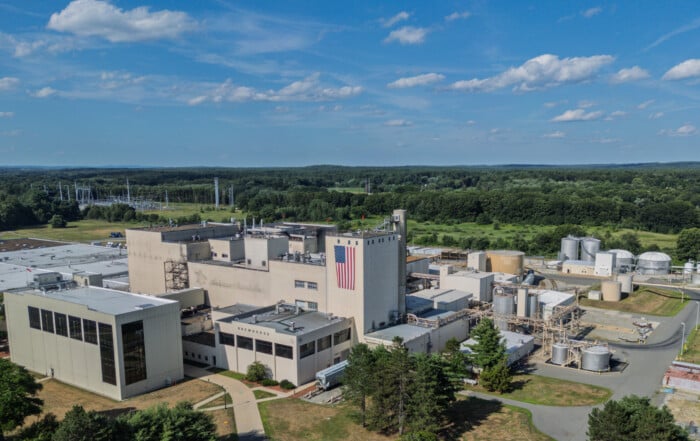
Peterborough sells contaminated South Municipal Well to NH Ball Bearings for $110,000
The Peterborough Select Board unanimously approved the $110,000 sale and the company’s conditions to shut down the site on Tuesday

As much as Gov. Kelly Ayotte disses neighboring Massachusetts, New Hampshire is reaping some benefits from its neighbor, namely people.
Ayotte has frequently said she won’t let anything “Mass up” New Hampshire — her way of saying she won’t let Massachusetts-influenced fiscal or social policies creep into policymaking here in the Granite State.
But the state owes its population growth, and some of the benefits it can bring, to its Bay State neighbor, according to a number of reports and analyses.
“New Hampshire has continued to rely on in-migration from other states, predominantly from neighboring Massachusetts, to grow its population,” the NH Fiscal Policy Institute (NHFPI) reported in February.
A January analysis by the Urban Institute shows that New Hampshire now has the 4th-highest median income out of all 50 states. Between 1970 and 2023, adjusted for inflation, the adjusted household income grew by 62.2%, from $59,721 to $96,838.
And that income growth is not necessarily for the reasons one might think, according to the study.
Whether or not a state had a sales or income tax (New Hampshire has neither) played no role in how well or how poorly a state grew its household income, according to the Urban Institute study.
Also, contrary to popular belief, states with colder temperatures (which New Hampshire has) and higher property taxes (which New Hampshire also has) performed better on the income rating.
Two socioeconomic factors worked in New Hampshire’s favor, according to the Urban Institute study.
It found that higher educational attainment and an increase in immigrant residents are associated with higher median-income growth. In New Hampshire’s case, the number of college bachelor degree–holders in the state increased by 30% from 1970 to 2023. And its foreign-born population increased by 2%.
Meanwhile, the Institute found the number of manufacturing workers declined by 23% during that period and the number of residents 19 and younger decreased by 18%.
The COVID pandemic triggered New Hampshire’s in-migration. The COVID virus arrived in the U.S. in early 2020, and a locked-down, work-from-home population shift here in the Granite State started in 2021 and continued through 2022.
Pre-pandemic net domestic numbers provided by a recent New Hampshire Fiscal Policy Institute report show an increase of between 4,000 and 5,000 people 2018 to 2020.
It leapt to an increase of 10,000 people in 2021 and another 11,500 or so people in 2022, tapering slightly to 8,000 in 2023, 9,000 in 2024, and 8,500 in 2025.

Report link: New Hampshire Continued to Rely on Migration from Massachusetts for Population Growth in 2025
“Domestic migration, or movement from other U.S. states, surged during the pandemic, likely driven by expanded remote work opportunities, potential early retirements and the ability for some households to relocate to second homes full time,” said NHFPI policy analyst Jessica Williams said in her analysis.
Drawing from U.S. Census Bureau data, the NHFPI showed an influx of some 55,500 people from Massachusetts between the years of 2018 to 2024. There was only a smattering of in-migration from other New England states, and some out-migration (people leaving New Hampshire), particularly to neighboring Maine.
“While net migration from Connecticut, Rhode Island and Vermont has varied, New Hampshire experienced larger net losses to neighboring Maine between 2021 and 2023,” said Williams.
“Rising costs of living and limited housing availability in New Hampshire, as well as some of the pandemic-related factors that spurred migration to New Hampshire from Massachusetts, likely influenced some Granite Staters to move northeast in search of more affordable costs,” Williams noted. “By 2024, however, net losses to Maine stabilized, returning closer to pre-pandemic levels, and net out-migration from New Hampshire to Connecticut increased to a level higher than the comparable figure for Maine in 2024.”
NHFPI said the state faces challenges with a population concentrated so heavily on those age 55 and older.
“… attracting and retaining younger families will be crucial for sustaining the state’s workforce and overall economy,” Williams said in her analysis.
“New Hampshire has gained population from young families, even after accounting for net losses; however, decreased affordability, particularly for housing and child care costs, could hinder population growth by discouraging potential in-migration and population retention,” she said. “If the state were to continue to rely on in-migration to grow its population and support its workforce, improving affordability for families with low and moderate incomes will be particularly important.”
Other analyses by NHFPI shows the population growth in the Granite State is predominantly driven by older residents retiring to the state rather than a high birth rate or influx of families.
Residents over 65, who make up 20.8% of the population, while the population of children under 18 has decreased since 2020, representing roughly 18% of the population.
The number of residents aged 65 and over increased to 291,526 (20.8% of the population) by July 2023, up from 18.8% in 2020.
About 15.3% of the population (213,876) was in the 55-64 age group in 2023, indicating a large, growing segment nearing retirement.
Which indicates that New Hampshire, according to WalletHub, is an attractive place to retire. WalletHub puts New Hampshire as the 9th most attractive state in which to retire.
To determine the best states to retire, WalletHub compared the 50 states across 46 key indicators of retirement-friendliness, from financial factors like tax rates and the cost of living to things like access to quality medical care and fun activities.
Other states with a better retirement ranking than New Hampshire included, in order: Wyoming, Florida, South Dakota, Colorado, Minnesota, Alaska, Delaware and Pennsylvania.
In terms of affordability, New Hampshire ranked 23rd and 20th for health care. Its best ranking, 8th, was for quality of life.
On the other side of the demographic ledger, there are concerns among younger residents.
The organization that advocates on behalf of young people, Stay Work Play, cited challenges to attracting and keeping a younger cohort in-state: rising housing costs, limited career mobility, access to child care and barriers to social connection.
Stay, Work, Play held a series of sitdowns — called the Policy & Pints pop-up series — in various regions to engage young people on the issues they face living in New Hampshire.
“Policy & Pints reinforced what we hear again and again: Young people want to stay in New Hampshire, they just need a fair shot to do so,” said Corinne Breton-Benfield, Stay Work Play’s executive director. “These conversations were about unprecedented tradeoffs young people are making just to afford to choose to live in New Hampshire. In a 50-state competition for talent, every pain point elevated should be a red flag and an incentive for policymakers to do something about it.”
According to Stay Work Play, these unresolved issues could drive more young people to choose competing markets for work and ultimately relocation out of the state.
The Policy & Pints results reflect closely on its 2025 Quality of Life survey that showed the following:
“For many young people, the aspiration to build a life in New Hampshire is strong, but the reality of making it work feels increasingly out of reach,” the organization said in a statement. “If the state hopes to remain economically competitive, culturally vibrant and maintain its high quality of life, leaders, businesses and communities must recognize their shared responsibility in creating clear, accessible pathways for the next generation to start and grow their lives in the Granite State.”
The Peterborough Select Board unanimously approved the $110,000 sale and the company’s conditions to shut down the site on Tuesday

The investment is the second installment of CMC’s $2 million, three-year commitment to the programs, bringing its total support to date to $600,000

Annual summit scheduled as NH welcomes company from Massachusetts

Data from a NH Housing report focused entirely on New Hampshire dispels the notion that affordable housing development in a community depresses the property values of nearby residences

If you live in Manchester or Concord, you probably don’t think twice about finding a doctor. There is a specialist within a few miles for almost anything you need. But if you live in Colebrook, or Lancaster, or any one of dozens of small communities spread across New Hampshire’s North Country, the picture looks very different, and the gap between those two realities is wider than most people realize.
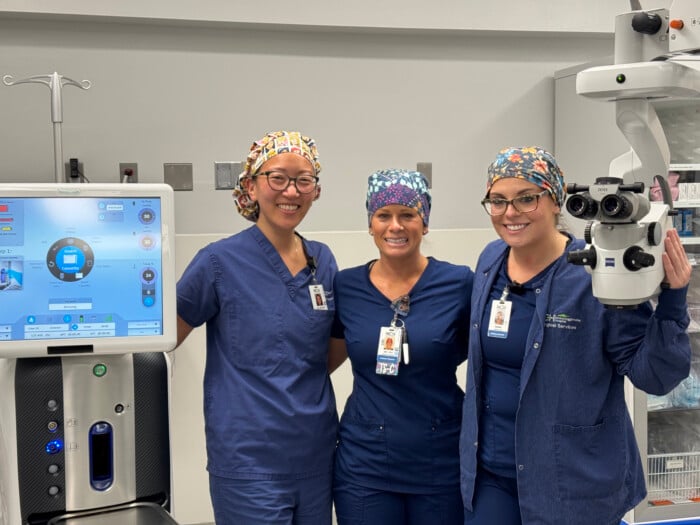
Androscoggin Valley Hospital (AVH), a member of North Country Healthcare in Berlin, performed its first cataract surgery in recent memory on August 20, 2026, a milestone made possible through the hospital’s partnership with North Country Ophthalmology, a physician-led alliance of board-certified MD ophthalmologists that began seeing patients at AVH in January.

Evan Clements and Precia Harthcock of Jaffrey love their 1926 home, but they acknowledge the drawbacks of houses built in that era. The room that is now their sitting room, for example, was once a porch that had been enclosed and is noticeably colder than other parts of the house. The second floor was much hotter than the first floor, and their kitchen was drafty.

The NH Tech Alliance is seeking applications from New Hampshire technology and life sciences companies for its 20th annual Product of the Year competition, which will showcase some of the state’s most innovative new products and significant product advancements.

F.L. Putnam (FLP), a growing financial services company based in Lynnfield, Mass., is bullish on New Hampshire.