Navigating New Hampshire’s new solid waste site evaluation committee
Anyone who has taken a transmission line or a wind farm through New Hampshire’s Site Evaluation Committee knows the process is long, expensive and can be fraught with complication.
The Rindge Zoning Board approved two special exceptions for connected development projects, which plan for a total of 52 new housing units off of Route 119.
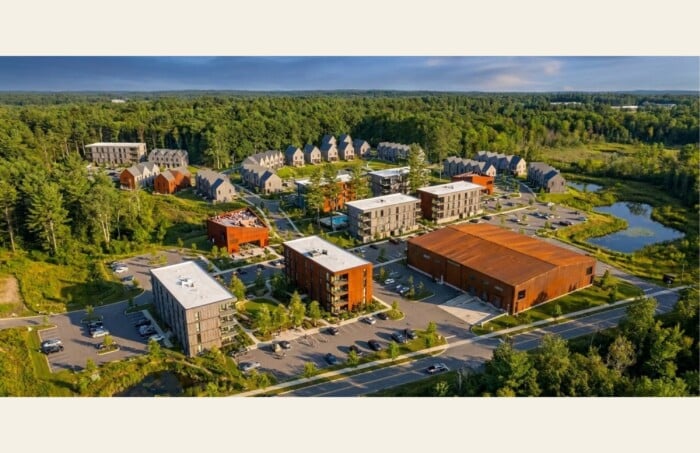
During its meeting Tuesday, April 28, the ZBA considered two requests for special exceptions, relating to the development of a large piece of property, totaling 242 acres. The plan calls for the property to be developed into 36 single-house lots, and a separate lot that will be developed into multifamily housing, with a total of four townhouse-style buildings, each with four units.
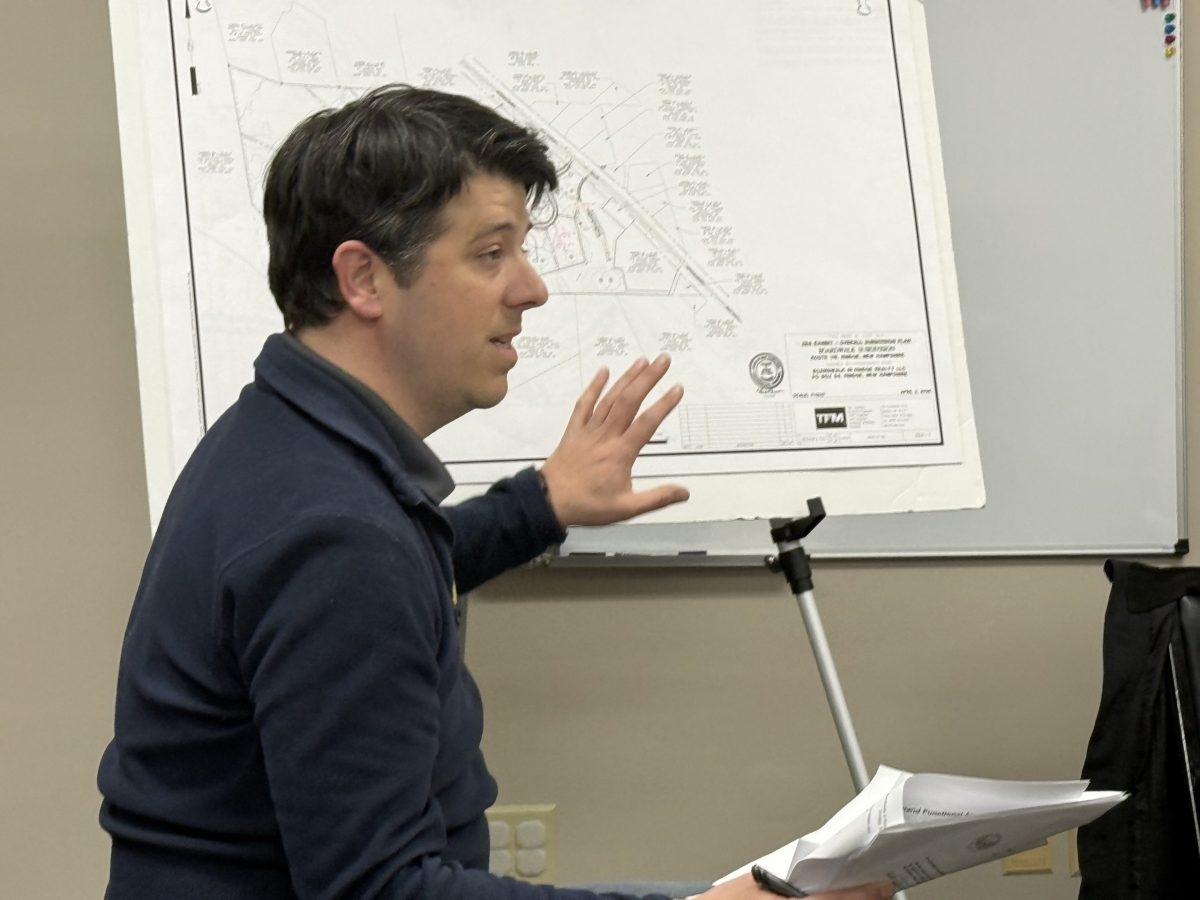
Nick Golon of TFMoran presents plans for a new development off Route 119. (Photo by Ashley Saari, Monadnock Ledger-Transcript)
The first requested special exception was to allow for wetland disturbance on the part of the property for single-family homes. The total wetland impact is about 0.38 acres, as well as work that will happen within the 50-foot wetland buffer during construction.
The second special exception is to permit the multifamily units.
Nick Golon, an engineer with TFMoran, speaking on behalf of the applicant, said that for both the single-family homes and the multifamily lot, the density of the development is well below the town’s maximum allowance. He said the addition of multifamily housing allows for “diversity of housing” that is needed in town.
The plan would have separate entrances for the single-family homes and the multifamily development. The homes would have their own parking, while the townhouses would have a single, shared parking lot.
Golon said the single-family development would increase traffic by about 44 cars during peak morning and evening hours, and the townhouses by about eight cars during peak hours, which he called “negligible” on what is already a main thoroughfare.
During public comment, abutter Loren Messina voiced several concerns, including discrepancies she had noted between the lot lines on her own deed and the plan, the impact of the disturbance of the land on the wetland and groundwater, and not having sufficient notice to review plans or do her own research into the impacts of the project on her property.
Other residents spoke of the impact of traffic on the area, including resident Jim Critser, who spoke of an increased traffic issue generally in the area, and Tom Coneys, who said that he wasn’t necessarily concerned about the impact of this specific development but of the “snow ball” effect of growing development in town.
Special exceptions must be granted if the applicant can prove that the application does not have a negative impact on issues like traffic, noise, property values, that it can preserve the attractiveness of the area, and has sufficient amenities such as water, sewer and parking on-site.
The board found that the first application for the wetland impacts met those criteria and approved it unanimously.
For the multifamily units, Chair George Carmichael sought to add a condition to freeze any further development of the property as a whole, including the multifamily and single-family lots. This was a point of contention among board members Phil Stenersen and Marty Kulla, who said they did not see the need for that restriction, and Stenersen voiced concerns that it may even be unlawful.
After discussion, the board took a vote on whether to add the condition, which was approved 3-2, with Kulla and Stenersen against. The board then approved the special exception unanimously, with the condition attached.
The plan for the developments will also require Planning Board approval.
This article is being shared by partners in the Granite State News Collaborative. For more information, visit collaborativenh.org.

Anyone who has taken a transmission line or a wind farm through New Hampshire’s Site Evaluation Committee knows the process is long, expensive and can be fraught with complication.
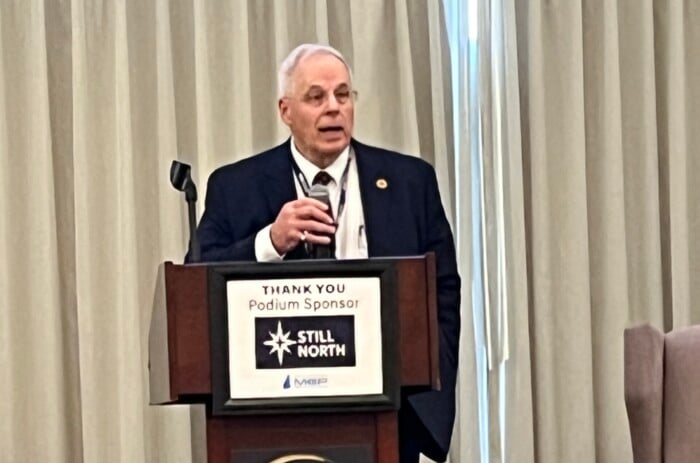
This year’s Advanced Manufacturing and High Technology Summit kicked off with a topic universal to all employers: how to build the workforce of tomorrow. The 24th annual event organized by the New Hampshire Manufacturing Extension Partnership on Oct. 9 featured a keynote panel discussion featuring representatives from the state’s university and community college systems.

Agritourism has become an important business option for many farms in New Hampshire and across the country. Exactly what is agritourism?

On a recent Friday at the Easterseals NH Military & Veterans Campus in Franklin, I found myself about 30 feet in the air. I was holding onto a pole and contemplating what suddenly seemed like a rather narrow log stretching out over a great deal of empty space toward another pole, which also seemed remarkably distant.

In recent years, New Hampshire families have faced persistent and growing challenges with affordability and accessibility as they navigate the early care and education landscape.

Published annually, “The Best Lawyers in America®” is an exhaustive search for the country’s top attorneys. Here is a compilation of the top attorneys who practice in New Hampshire in dozens of legal specialties related to the needs of businesses,…

Ramy Rahimi is the new vice president for research and development at the University of New Hampshire.

This year, NH Business Review marks the 24th anniversary of our Business Excellence Awards, which celebrate the initiative, creativity and tenacity of the Granite State’s business community.

Back in 1992, political strategist James Carvell came up with the phrase, “It’s the economy, stupid,” to help Democrat Bill Clinton defeat incumbent Republican President George H.W. Bush.