(Opinion) In New Hampshire, your power bill is an asset hiding in plain sight
In one of the most expensive power markets in the country, sub-metered buildings hold a hidden asset.
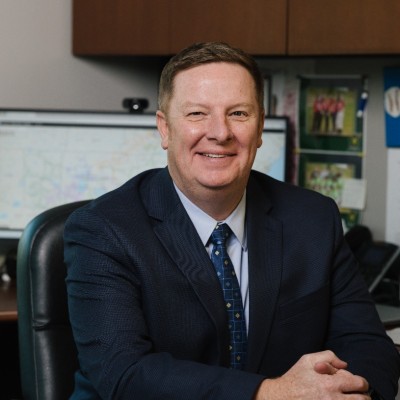
Kevin Sprague
BY KEVIN SPRAGUE
When people think about emergency response during a major storm, they often picture the moments that are easiest to see: flashing lights, utility trucks navigating debris-strewn roads, and line workers high above the ground in bucket trucks working in challenging conditions to safely restore power to homes and businesses.
But those visible moments are the final steps of a carefully built behind-the-scenes process, refined over decades, which was put into motion long before the storm that caused the outage even arrives.
Much of the most successful emergency management work occurs before the first snow falls or the earliest gusts of wind blow. It begins with relationships built over time, plans developed and tested before they are needed, and the people who know how to come together when conditions change and their communities are counting on them.
As incident commander for Unitil during major storms, I have the privilege of leading our organization’s response when severe weather strikes the communities we serve. My role is to ensure the right people have the information, resources and support they need to do their jobs safely and effectively, and to help keep our customers informed of what we are seeing in the field. A large part of this work to ensure the team is ready includes months, if not years, of training and preparation.
August is National Emergency Management Awareness Month, an opportunity to recognize a profession that often works behind the scenes and goes unnoticed. Emergency managers carry the heavy responsibility of anticipating risk, building partnerships, managing resources and preparing organizations for the unexpected. In today’s world, that work has never been more important.
The electric grid has become the backbone of nearly every aspect of daily life. Healthcare, communications, transportation, businesses, schools and public safety all depend on reliable power. Restoring service quickly and efficiently requires coordinating hundreds of people actively repairing and replacing damaged equipment, sharing accurate and consistent information, adapting to changing conditions, and working closely with other emergency managers and first responders across multiple communities and states.
One of the things that makes me most proud of Unitil is that the emergency response ethos is part of the fabric of the entire company. Everyone has a storm role. Some continue the essential work they perform every day, while others step into assignments outside of the scope of their normal duties that support field operations, manage logistics or assist customers.
When the organization shifts into storm mode, training from annual exercises where we simulate massive weather events help to create a shared understanding of who does what and builds trust that each person will carry their part. It is this close coordination that allows hundreds of employees to move in the same direction at the same time.
And when that happens, the work takes on a different rhythm.
Offices become temporary operations hubs. Teams work in shifts around the clock, handing projects off to the next team to keep the restoration process going. Conversations continue late into the night. Employees volunteer to make another pot of coffee, exchange updates and stay close to the work, because being present matters when conditions are changing quickly. As the storm unfolds, we all feel a shared responsibility to the communities we serve and to the colleagues putting their lives on hold and sitting in the room with you, away from their own families, in the middle of the storm.
Throughout the year, our emergency management professionals work alongside municipal leaders, emergency management agencies, first responders and other partners across Maine, New Hampshire and Massachusetts. They help coordinate exercises, refine emergency plans, strengthen communication protocols and identify opportunities for improvement.
Every storm teaches us something new. Afterwards, we evaluate what worked, where we can improve and how to better serve our customers the next time. Emergency management is a profession built on continuous learning, because no two emergencies are exactly alike.
One lesson, however, remains constant: Resilience isn’t built during a storm; it’s built on the countless ordinary days when people from different organizations choose to train together, solve problems together and build trust before they ever need to rely on one another.
During National Emergency Management Awareness Month, I hope we recognize not only the first responders we see during emergencies, but also the emergency managers whose work often goes unseen, including Unitil’s own emergency management professionals. They are the connectors, planners and coordinators who build the relationships that help communities prepare, respond and recover.
Because when the next emergency comes, and it will, the most important question won’t be whether we have a plan; it will be whether we’ve already built the relationships that make the plan work.
Kevin Sprague is senior vice president of electric operations for Unitil.

In one of the most expensive power markets in the country, sub-metered buildings hold a hidden asset.
Energy reliability and affordability are of paramount importance in New Hampshire.
One of the greatest honors for me as executive councilor for District One is representing the towns around Lake Winnipesaukee, one of New Hampshire’s most stellar natural resources.
The federal budget reconciliation law enacted last year was particularly designed to punish states that expanded Medicaid under the Affordable Care Act, as New Hampshire did through its Granite Advantage Program.

While major economic indicators are serving as caution tape for many organizations that are hesitant to make investments or take on risk right now, there is a very bright green light out there. There is also a fast-moving vehicle on the road: AI, and the frenetic adoption pace at which people now use it to find essential information. Organizations need to adapt to be seen and referenced by these tools.
When the next emergency comes, the most important question won’t be whether we have a plan; it will be whether we’ve already built the relationships that make the plan work
Every growing company hits a wall that has nothing to do with its market, its product or its strategy deck. It hits the limits of one person’s capacity — usually the founder’s — and stops.
For years, New England employers have identified one challenge that cuts across nearly every industry: Our region simply is not building enough homes to meet demand.
August 4 was a perfect New Hampshire day. Along Route 3, a tour of the wonderful New Hampshire Veterans Cemetery in Boscawen, a peaceful and impressive oasis everyone should experience, was followed by the groundbreaking ceremony for Phase II of the Military and Veterans Campus of Easterseals New Hampshire in Franklin.