Navigating NH’s new solid waste site eval. committee
Anyone who has taken a transmission line or a wind farm through New Hampshire’s Site Evaluation Committee knows the process is long, expensive and can be fraught with complication.
The commercial office market in New Hampshire is in a bit of a holding pattern — there’s no new construction in the pipeline, landlords are holding the line on rents, and companies aren’t making big moves to either move into or out of the space they have.
That’s the topline summary of a 2026 second quarter report on the market from Colliers.
Its author, Kristie Russell, Colliers’ research director, said the market tightened slightly with a vacancy rate of 10.9% statewide, down from 11.7% in the first quarter of this year, and down from 13.7% from the same quarter last year.
“With no new office construction in the pipeline and few, if any, additional buildings expected to convert to residential use, inventory should hold steady. Continued demand against a flat supply could tighten the market further in the coming quarters,” she said.
An example of the conversion she referenced is the former Liberty Mutual campus in Dover, which is being redeveloped by Brady Sullivan Properties into a mixed-use residential village called the Village at River’s Edge. The 218-acre property is slated for up to 500 apartments, commercial spaces, restaurants, and outdoor amenities.
Meanwhile, in a separate report dedicated to the industrial/warehouse market, the Colliers analyst said the quarter is marked by “measured resilience.”
“Demand keeps broadening, from Massachusetts relocations to in-state expansions, even as elevated interest rates and longer financing timelines add caution to the pace of deals. New Hampshire’s industrial market remains well positioned heading into the second half of the year,” said Russell.
An example is the relocation of Analogic, from its original base in Massachusetts to Salem, along with its 500 some jobs.
A roundtable with Colliers brokers, with Russell serving as moderator, revealed a particular interest among both industrial and office sectors in the Interstate 93 corridor.
“Interest from Massachusetts-based companies, generally privately held, in relocating to New Hampshire has intensified in the industrial vertical, and now we’re seeing it in the office market as well,” said Robert Rohrer, the New Hampshire brokerage managing director for Colliers.
Added Cassandra Farley, a senior associate at the Colliers office in Manchester: “The draw is pretty clear. Our business-friendly environment, lower tax burden, and generally lower occupancy costs make a compelling case. And it’s not just Massachusetts companies coming north. Many New Hampshire companies want to be located as close to the Massachusetts border as possible, particularly along the I-93 corridor.”
Office space is separated among three types: Class A, Class B, Class C — think Papa Bear, Mama Bear and Baby Bear.
With Class A at the top of the group in terms of amenities, and Class C at the bottom, Class B is the middle ground, usually older buildings (often 10 to 20+ years) or former Class A buildings that have aged, with standard-quality finishes, reliable infrastructure, and average market rents without luxury amenities.
The Colliers report on offices said Class B has been the market’s “real demand driver.”
Class B rents are about $20 per square foot, compared to $24+ for Class A.
“In the New Hampshire office market especially, well-maintained, move-in-ready space continues to perform, while older properties often require more competitive pricing, capital improvements, or redevelopment considerations to generate activity,” said Laura Nesmith, Colliers senior associate in the Manchester office, during the roundtable.
Farley added: “Businesses considering expansions, relocations, or new leases are evaluating multiple alternatives before committing. Many are uncertain about future economic conditions, labor costs, and growth projections.”

Anyone who has taken a transmission line or a wind farm through New Hampshire’s Site Evaluation Committee knows the process is long, expensive and can be fraught with complication.
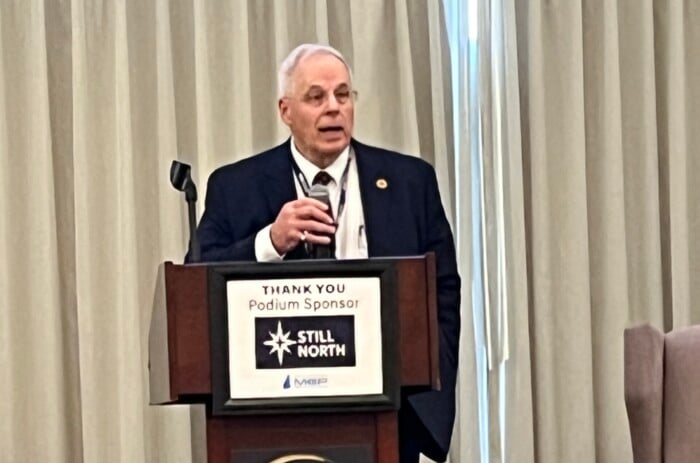
This year’s Advanced Manufacturing and High Technology Summit kicked off with a topic universal to all employers: how to build the workforce of tomorrow. The 24th annual event organized by the New Hampshire Manufacturing Extension Partnership on Oct. 9 featured a keynote panel discussion featuring representatives from the state’s university and community college systems.

Agritourism has become an important business option for many farms in New Hampshire and across the country. Exactly what is agritourism?

On a recent Friday at the Easterseals NH Military & Veterans Campus in Franklin, I found myself about 30 feet in the air. I was holding onto a pole and contemplating what suddenly seemed like a rather narrow log stretching out over a great deal of empty space toward another pole, which also seemed remarkably distant.
In recent years, New Hampshire families have faced persistent and growing challenges with affordability and accessibility as they navigate the early care and education landscape.

Published annually, “The Best Lawyers in America®” is an exhaustive search for the country’s top attorneys. Here is a compilation of the top attorneys who practice in New Hampshire in dozens of legal specialties related to the needs of businesses,…

Ramy Rahimi is the new vice president for research and development at the University of New Hampshire.

This year, NH Business Review marks the 24th anniversary of our Business Excellence Awards, which celebrate the initiative, creativity and tenacity of the Granite State’s business community.

Back in 1992, political strategist James Carvell came up with the phrase, “It’s the economy, stupid,” to help Democrat Bill Clinton defeat incumbent Republican President George H.W. Bush.