(Opinion) Federal housing education cuts put NH homeownership further out of reach
New Hampshire is experiencing an unprecedented housing crisis as the gap between housing prices and wages continues to widen
While there’s an off season for New Hampshire skiers, there’s no off button for the state’s ski areas as they’ve been busy during the last several months with infrastructure improvements in anticipation of their December opening.
From expanded snowmaking to new lifts, from new management to new terrain, the ski areas have been hard at work against winter weather predictions that have been, well, all over the map because of a meteorological phenomenon called Super El Nino.
“New Hampshire’s ski areas have consistently demonstrated their commitment to reinvesting in their mountains,” said Jessyca Keeler, president of Ski New Hampshire. “These improvements not only help ski areas make the most of winter weather and deliver a better experience for guests, but also strengthen the long-term sustainability of an industry that plays an important role in our state’s economy and communities.”
Operators are hustling toward an early December opening, and here’s a look at who’s been doing what:

This aerial view shows the new 21-million-gallon reservoir at Pats Peak, part of an historic investment in upgrading its snowmaking capabilities. (Courtesy photo)
Pats Peak in Henniker has made its biggest investment in its history with a major expansion of its snowmaking system that includes a new 21-million-gallon snowmaking reservoir, accompanied by an additional 3,000 gallons per minute of pumping capacity, bringing total capacity to nearly 8,000 gallons per minute.
“As a family-owned ski area, we’re committed to continually reinvesting in the mountain,” said Kris Blomback, Pats Peak general manager. “These improvements allow us to open terrain faster, recover more quickly from changing weather conditions, operate more efficiently, and continue delivering the reliable snow conditions our guests have come to expect.”
As it prepares to celebrate its 90th year, Gunstock Mountain Resort made about $4.5 million in improvements for the upcoming season that included $1.4 million for expanded snowmaking, more than $2 million to chairlifts (a new drive and chair-spacing system and control system for the Panorama life, for instance), and another $1.1 million to equipment, facilities and maintenance. It also has cut some new glades.
Gunstock is publicly operated by the Gunstock Area Commission on behalf of Belknap County, which owns the resort. In October, the commission presented the county with a check for about $397,000. By law, Gunstock pays 1.75% of the mountain’s yearly gross proceeds to Belknap County.
Black Mountain in Jackson has added more terrain from the summit, and is in the process of adding a mid-station on the East Bowl Triple. There’s more snowmaking and more parking and the Inn at Whitney Farm, which was owned separately, is now part of the Black Mountain operation, owned by Erik Mogensen, the CEO of Entabeni Systems and director of the Indy Pass.
Stay Work Play NH in September named Mogensen as its entrepreneur of the year as part of its Rising Stars Awards for driving innovation, investing in New Hampshire, and keeping Black Mountain open and accessible.

Black Mountain owner Eric Mogensen operates the heavy equipment, right, in the placement of infrastructure for a new mid-station on the East Bowl Triple. (Courtesy photo)
Attitash Mountain Resort and Wildcat Mountain, part of the holdings of Epic Pass, said its Improvements include the replacement of key snowmaking pipes at both resorts, strategic relocation of existing snowguns and additional equipment at Wildcat.
Wildcat will receive a new air transducer designed to improve the efficiency and responsiveness within its air system while Attitash will add new low-energy snowguns on the Saco Trail. The resorts are also prioritizing snowmaking improvements on key terrain, including Wildcat’s Lynx Trail.
King Pine announced long-term plans for expanded trails and a new base lodge with live music and event space targeted for completion by 2030. This winter upgraded snowmaking, a refreshed tavern, new guest lockers and updated trail signage are planned. King Pine also joins the Indy Pass as a full member this season.
There have been a number of moves across the management chessboard: Jace Wirth stepped down as general manager at the state-owned Cannon Mountain at Franconia State Park to take the GM job at Bretton Woods. Deirdre Riley is the new vice president and GM at Attitash/Wildcat, replacing Brandon Swartz, who crossed state lines into Vermont to become the new GM at Smuggler’s Notch. King Pine and its associated properties at Purity Spring Resort have new managing partners – Ali Hoyt and Paul “PJ” Morra. Alex Wickstrom is back at Ragged Mountain as GM after spending four years heading up mountain operations at Loon; he previously worked at Ragged as its operations director.
Loon Mountain in Lincoln announced plans for a major expansion in terrain that will require U.S. Forest Service approval. The plan proposes to add 280 acres of skiable terrain on a fourth mountain peak.
“If the full vision is ultimately approved and executed, the project would bring Loon to 955 skiable acres — more than double the terrain you ski today.,” Brian Norton, Loon president and general manager, said in a statement.
“This new peak delivers on progression — from classic, winding New England trails and wide-open cruisers to challenging tree skiing. I picture many guests spending an entire day on this one peak alone,” he added.
This comes on the heels of last year’s announcement by Waterville Valley to add a new gondola system, 32 acres of traditional ski terrain (across six new beginner and intermediate trails) and 200 acres of gladed terrain.
Proctor Academy is already skiing in November, thanks to its snow farming efforts during the off season. Before getting into the warmer months last season, it farmed 250,000 cubic feet of snow then covered it all with specialized insulating panels and tarps to preserve it during the warm months, expecting to keep about 80% of what was farmed.
While there’s a lot operators can control, they can’t control the weather — whether it snows, whether it’s cold enough to make snow, whether it’s a freeze/thaw kind of season.
Last season, weather conditions were very favorable — consistent snowmaking was buttressed by consistent snowfall that held together as the temperatures held to keep the snowpack from melting away.
That was enough for 2,283,539 skier visits during the 2025/26 season, making it the fourth-best season in the past 20 years. The season trails only the exceptional winters of 2010/11, 2000/01, and 2007/08.
“Early-season snowfall and consistently favorable snowmaking temperatures in the Northeast during peak snowmaking periods allowed New Hampshire ski areas to establish a deep, resilient base of snow that supported exceptional conditions throughout the winter,” said Keeler.
“Combined with the continued investments our members have made in snowmaking, grooming, lifts, and guest amenities, these advantages helped drive the increased skier visits we observed in the Granite State last winter,” she added.
With advances and investments in snow making, operators hope they can keep the skiing and riding terrain with enough cover to withstand whatever snow, rain and temperature fluctuations Mother Nature throws at them this season.
NOAA and regional forecasters predict a wetter and warmer pattern for the region, shaped by the Super El Nino climate pattern which occurs when sea surface temperatures in the central and eastern equatorial Pacific Ocean rise by 2°C (3.6°F) or more above the long-term average. That rise in ocean temp thousands of miles away can have a dramatic effect on the storms that travel west to east.
It could mean snow in the higher elevations, slush in the lower elevations.
The Old Farmer’s Almanac, meanwhile, gives a long-range general prediction of cold and snow in the southern part of the state, mild and dry in the northern reaches.
While operators are mindful of the upcoming weather vagaries, their focus remains on using every opportunity the weather affords to get and keep snow on their terrain.
“A model like a very strong El Niño represents a probability,” Wirth said to WMUR in a special report it did on the Super El Nino’s possible local impacts. “It doesn’t necessarily represent what skiers will see on the ground. Our teams prepare for changing conditions all throughout the summer and are ready for anything throughout the course of the winter.”

New Hampshire is experiencing an unprecedented housing crisis as the gap between housing prices and wages continues to widen

Retirement raises many questions for business owners, but one of the biggest may be: What happens to everything I’ve built when I’m ready to leave?

There are a lot of democrats and republicans that aren’t happy with the tariffs, but those who have lost great jobs and never found anything comparable think it’s about time we do something.

Your future leaders aren't, missing, they're waiting to be developed.

An innovative economic development initiative in New Hampshire starts on Jan 1, "a powerful tool to attract private investment, create jobs and strengthen communities across New Hampshire," Gov. Kelly Ayotte says.

As the last votes are counted and the dust begins to settle on New Hampshire’s 2026 election, a few things deserve to be said.
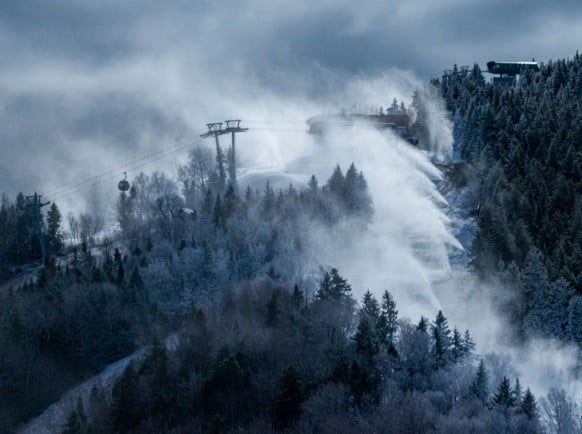
Will a Super El Nino influenced winter forecast cooperate?

This year’s NH Tech Alliance Product of the Year winner was sparked by a discussion at a Bible study in 2018, Phoenix Tailings CEO Nick Myers told an audience Thursday in Concord. The Exeter company Myers founded with Thomas Villalón — seeded with their combined life savings of $7,000 — now competes with China to produce rare earth metals needed for global technology products, including smartphones, data centers and fighter jets

Granite Edvance's president and CEO discusses how the organization helps prepare students and families for their college education and its financing