(Cook on Concord) Funding our higher education system
Lack of financial support poses consequences
Brad Cook
Regardless of the results of the 2026 election (unknown as this issue went to press), the Legislature and executive administration will have to address higher education in the state, especially our public institutions.
The woeful underfunding, both of the University System of New Hampshire and the Community College System, poses issues.
Higher education faces serious headwinds, especially in New England. A socalled “demographic cliff” is being reached, as the number of high school graduates in the region drops 28% or more in 2028, from the level 20 years before.
That means fewer customers being chased by the same providers. At the same time, reduced federal student aid funding and stricter standards challenge affordability for students from lower-income families.
Recent trends have seen many students of college age questioning the value of a college degree.
New Hampshire high school graduates have a multitude of choices if they want to go to college. The first choice is whether to go to a traditional four-year institution or to start in a community college. Then there is the choice of in-state and out-of-state schools, with many of the out-of-state public institutions offering tuition which matches or is lower than New Hampshire in-state tuition.
Students now have the choice of inperson or online education, with the same degrees at the end.
Administrations and college boards of trustees face those issues as they seek to serve their mission of educating students, and the reality of having to survive. Several New England colleges close their doors every year, and the regulators sharpen their examination of the financial condition of those institutions that continue.
While this may seem to be an issue more for private, nonprofit colleges, it also is a reality for public institutions. In fact, the federal Department of Education is reportedly requiring regional accrediting commissions to require warnings on the websites and in the materials of colleges they find in economic jeopardy, starting next year, which will not be helpful to schools striving to survive.
Looking at the University System of New Hampshire, the board of trustees has taken several steps to face the challenges.
The Chancellor’s Office, formerly located in a separate facility, relocated to the campus of the NH Technical Institute a couple of years ago to save costs.
Earlier this year, the board voted to combine the position of UNH president and chancellor, starting at the end of the term of present Chancellor Catherine Provencher next July.
Other actions have been to shift the administration of UNH Manchester to Durham, and have the online operations centered there, not at the former School of Professional Studies, which was the combination of Manchester and online. New leadership at the law school also has occurred, along with the departure of Dean Mike Decelle of UNH Manchester. Many programs have seen tighter budgets.
On the more positive side, both UNH and the other System colleges, along with the Community College System, have announced programs of financial aid so that in-state students with qualifying academic records, and from families with less than $100,000 in family income, get free tuition, while still having to pay the room, board and fee costs. Still, this is a savings of half of the cost of college, or more, and is good for all four years, as long as the student maintains an appropriate GPA. This program matches the announced aid offered similar students by private schools such as St. Anselm College.
This fall, UNH saw an encouraging 5% increase in enrollment of new students, and anyone visiting the flagship campus in Durham sees construction of buildings in partnership with private industry, research facilities for space and ocean exploration and other impressive programs.
The Development Office efforts raise millions of dollars in contributions and grants help pay for the operations. This facility clearly is the gem in the crown of New Hampshire institutions, and must be preserved and improved.
However, with limited state support and other challenges facing higher education, what the other components of the University System will look like, how online and alternate delivery systems will work, and how to pay for them all are challenges the trustees face, and the incoming legislators and governor, whoever she is, must face head-on.
Public higher education is an opportunity for the state, its economy and young people. It is not the enemy.
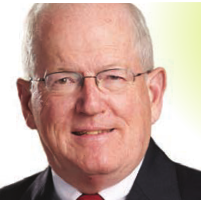
Brad Cook is a Manchester attorney. The views expressed in this column are his own. He can be reached at bradfordcook01@gmail.com.