In a recent ad, a candidate for Congress claimed that “two families have controlled New Hampshire politics for the last several decades,” or something to that effect.
That rather curious claim referred to the alleged dominance of New Hampshire politics by the Shaheen and Sununu families, and got me thinking about all those who have served in the Legislature, U.S. Senate and governorship since I started noticing in about 1966.
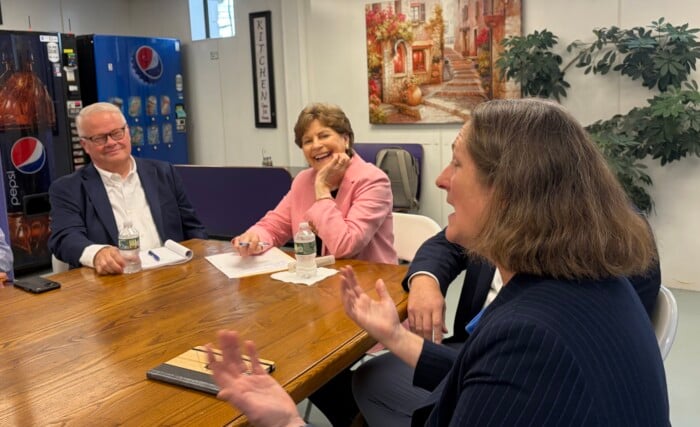
First, the notion that any family has or could dominate New Hampshire politics has to be dismissed. Sen. Jeanne Shaheen is the only family member who has been elected to state or federal office to date. She served in the New Hampshire Senate for several terms, was governor for three terms, and is about to complete her third term in the U.S. Senate, certainly a distinguished career. Her husband was U.S. attorney, an appointed position, and has had a career in politics, but not elected. Their daughter is a candidate for Congress, having served as a city elected official.
The Sununu family has a more pervasive family involvement, with John H. Sununu having served as governor for three terms after serving as a state representative and having run for the GOP nomination for the U.S. Senate in 1980, as chief of staff of the George H.W. Bush White House, and as chair of the Republican State Committee. John E. Sununu was a congressman, then a one-term U.S. senator, and is running for that position again. Chris Sununu, another son, was New Hampshire’s second four-term governor.
That is a significant contribution to the state, but hardly dominance in a system with two U.S. senators, two members of Congress, a governor, 24 state senators and 400 House members.
During the general time the Sununu and Shaheen families have been in politics, starting in the mid-1970s and continuing to this day, however, think of all the other influential governors and U.S. senators New Hampshire has had.
Since my first participation, when Democrat John W. King, New Hampshire’s first three-term governor was running for his third term, we have had moderate Republican Walter Peterson, conservative Republican Meldrim Thomson, Democrat Hugh Gallen, Republicans John H. Sununu, Judd Gregg and Steve Merrill, Democrat Shaheen, Republican Craig Benson, who succeeded in being the only governor to be defeated for a second term since 1950, four-term Democrat John Lynch, two-term Democrat Maggie Hassan and Republican four-term Governor Chris Sununu, prior to the present GOP governor, Kelly Ayotte. While Sununus and Shaheen served for 20 of those 60 years, they hardly owned or dominated New Hampshire politics.
Likewise, in the U.S. Senate, in 1966, our U.S. senators were Thomas McIntyre and Norris Cotton, a Democrat and Republican, respectively. After them came John Durkin and Gordon Humphrey, Democrat elected in 1975 and Republican elected in 1978. Durkin was replaced by Warren Rudman in 1981, and Humphrey by Bob Smith in 1990. Judd Gregg replaced Rudman in 1992, and John E. Sununu beat Smith in the primary and Shaheen in the general election in 2002. Shaheen returned the favor by defeating Sununu in 2008 and has served ever since. Gregg retired and was succeeded by Ayotte in 2010, and Hassan defeated Ayotte in 2016, serving since then.
So, calculating the control allegedly exercised by Shaheen in the Senate, she served for 18 of 120 years of the terms since 1960, and Sununu served for six of those years. Hardly dominance by two families.
So what? The point is not just that the claim in the political ad is nonsense, but more importantly that New Hampshire, with all of the offices and elections it holds, in incapable of being dominated by any particular person or family, although the influence of powerful or persuasive people or families, or money centers, certainly had temporary influence.
400 House members, 24 state senators, five Executive Council members, along with all of the county and local officials makes dominance problematic.
Of course, there are recurring family names in politics here, as elsewhere. Charles Bass was a congressman in the same 2nd Congressional District his father, Perkins Bass, represented. Judd Gregg’s father, Hugh Gregg, served as governor from 1952-1954 and tried for election again in 1966. Gov. Robert P. Bass was governor in 1912 and was followed by Gov. McLane, whose progeny also served in New Hampshire political office with Malcolm McLane as an executive councilor and independent candidate for governor in 1972 and his daughter Annie McLane Kuster serving in Congress.
All of this is natural, but again, it does not indicate “control,” and those who falsely make that accusation, do the process and history a disservice.
It is getting to be crunch time in examining the candidates for office in the upcoming state primary. It is time to ignore the ads and do some research into what candidates really believe, what experience they have and how the intend to serve and get along with each other. Take the time.
Your state and nation depend on it.
Brad Cook is a Manchester attorney. The views expressed in this column are his own. He can be reached at bradfordcook01@gmail.com.