Statewide access to highspeed internet has arrived
Last month, an update of the state’s broadband dashboard shows we have reached 99% access, with less than 5,000 addresses in New Hampshire unserved.

Almost four years ago, here in the pages of NH Business Review, I wrote about the state’s strategy for the buildout of the state’s broadband network infrastructure (high-speed internet). Our goal was to reach 100% access to broadband for every listed address in the state.
Last month, an update of the state’s broadband dashboard shows we have reached 99% access, with less than 5,000 addresses in New Hampshire unserved. This is an incredible accomplishment and likely puts New Hampshire as one of the first states — if not the first — to reach this point.
In the economic competition among states, this gives New Hampshire a tremendous advantage that needs to be widely known and understood so we can take full advantage. Those advantages are broad:
Economic and community revitalization.
Particularly since COVID, so many facets of our everyday lives have moved online. Homework for our kids, paying the bills, watching TV, performing our work and connecting with healthcare. Given this, the installation of high-speed internet across the state absolutely provides a value to our everyday activities, and now with artificial intelligence increasingly becoming part of that everyday life, that access just becomes even more relevant.
Having a fully wired state puts New Hampshire at the top of the list for remote workers looking to take full advantage of a combined higher quality of life without leaving their job. This aspect of our workforce is still new, accelerated by COVID, but it changes the dynamic for how communities can and should present themselves externally. Towns that see this advantage and put it to use will see economic benefit.
And the remote worker prospect is real.
Back during the COVID pandemic, we saw a wave of people finding a new home in New Hampshire. According to the Carsey Institute at UNH, NH’s population grew by 17,700 between April 2020 and July 2022, and the entire gain came from migration — 21,600 more people moved in than left. This happened despite deaths outnumbering births in nine of the state’s 10 counties.
The pandemic-era migrants weren’t just more numerous, they were higher-income: Households moving into NH between 2020 and 2022 earned an average of $111,000/year, versus $87,000 for households leaving — a net income gain to the state that roughly tripled, from $1.1 billion (pre-pandemic three-year period) to $3.3 billion during the pandemic years.
While this trend slowed starting in late 2023 and 2024, the reality is that the appetite exists for the types of combinations New Hampshire offers remote workers, and now with even more towns being wired for high-speed broadband than in 2022, this opportunity needs to be part of our policies and planning.
Another benefit to consider is the impact on property taxes. Property tax relief is often framed as a spending problem (and it absolutely can be), but it is just as much a revenue problem — and broadband access speaks directly to the revenue side of that equation. New Hampshire’s own experience during the pandemic shows what’s possible when remote work meets a wired state: Those higher-earning households that came after the pandemic are new taxpayers, not just new residents, and every one of them helps spread the cost of local services across a broader base rather than concentrating it on the families already here.
A fully connected New Hampshire doesn’t just make our existing homes worth more; it makes our towns a more credible place for the next taxpayer to choose.
With this major infrastructure upgrade now practically done, we need to seriously start thinking about how we are going to make the most of this investment and all its benefits. It’s about advancing planning initiatives and economic policies to take full advantage of it. Given recent activity in rural health programming, those initiatives should consider how to use this new infrastructure when developing programs like telehealth expansion. There is also still a significant amount of federal “non-deployment” funding available to the state to do things like closing the gap between having access to broadband and actually using it to improve lives. How we invest those funds also needs to amplify this new competitive advantage.
A significant new infrastructure tool is now available to towns, residents and businesses across the state. Let’s be sure to use it to our advantage.
Taylor Caswell has led economic policy agencies on the state and federal level for decades, most recently serving as New Hampshire’s commissioner of business and economic affairs. You can reach him at linkedin.com/in/taylorcaswell.

Last month, an update of the state’s broadband dashboard shows we have reached 99% access, with less than 5,000 addresses in New Hampshire unserved.
Without affordable housing, young people cannot afford to be here. Nowhere in the state is the need to attract younger populations more of an economic priority than in rural communities.
Next month, the United States, Canada and Mexico begin the formal joint review of the USMCA trade agreement. Under the original agreement, a review is required, and while there is no likely outcome that…
Proposals gaining traction in Concord would weaken local government
New Hampshire has long acknowledged outdoor recreation as an asset. We speak of it in terms of quality of life, tourism appeal and regional character. That framing, while not inaccurate, is no longer sufficient.

Cambridge Trust President Susan Martore-Baker discusses the nuances of philanthropic giving ahead of the holiday season
Author, leadership coach and veteran of 27 years in the Army, Robert Campbell speaks on his 'Battlefield to Boardroom' book series and how companies can become veteran-ready
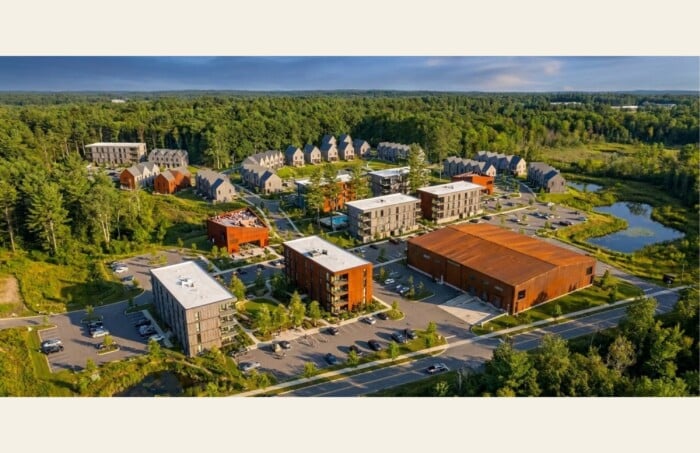
A tech-entrepreneur turned venture capitalist is eyeing one of the largest undeveloped tracts in Manchester for a community where tech- and startup-minded people would live and work. Freedom Village would be located on 250 acres of mostly wooded land at Hackett Hill, which is located in the northwestern corner of Manchester.
Business and event happenings around the state of NH