Connecting the dots
At Northeast Delta Dental, our mission guides us to prioritize social impact, essentially the good we can do in our community with the resources we have available.

MICHAEL SHEARIN
Sustainable investing has undergone a reset. The excitement and lofty promises that accompanied the rise of ESG have given way to skepticism, political debate and a healthy demand for accountability.
In my view, that reset should be welcomed. It has stripped away much of the hyperbole while leaving intact a simple truth: Sustainable investing remains a sensible and productive approach to allocating capital.
At its core, sustainable investing has never been about sacrificing returns for ideals. Rather, it is about understanding risks, identifying opportunities and aligning capital with long-term realities.
ESG — environmental, social and governance — provides a framework for evaluating factors that may influence a company’s resilience and competitiveness. Negative screening enables investors to avoid businesses that conflict with their values, while impact investing directs capital toward enterprises delivering measurable environmental or social outcomes alongside financial returns. Beyond investment outcomes, sustainable investing offers something less frequently discussed: a lifetime knowledge return. It encourages curiosity and continuous learning. Investors are drawn into studying energy systems, health care, demographics, artificial intelligence, geopolitics and global development. Questions surrounding energy transition, food security, supply chains and climate resilience become more than headlines; they become relevant investment considerations.
Sustainable investing also complements two other powerful ways individuals express their values: through their consumption decisions and civic engagement. The products we buy, the causes we support, and the policies and communities we advocate for all shape the world around us. Together, how we invest, consume and engage as citizens forms a powerful framework for translating values into action. Sustainable investing is one dimension of a broader commitment to stewardship and informed participation in society.
Perhaps the simplest way to think about sustainable investing is to imagine a friend asking you for $10,000 to invest in a small business. Would you write the check without asking questions? Of course not. You would want to understand the business, its values, products, prospects and the problems it seeks to solve. Why should investing through a stock, mutual fund or ETF traded on a public exchange require any less scrutiny?
Fortunately, investors have tools to help answer those questions. ESG scores and the United Nations Sustainable Development Goals (SDGs) — 17 globally recognized objectives intended to advance long-term economic, environmental and social well-being — provide useful frameworks for evaluating alignment with personal priorities.
Corporate sustainability reports offer another resource. Investors should judge them critically. Are the goals meaningful or merely performative? More importantly, what progress is being demonstrated?
The reset in sustainable investing was never a repudiation of the idea; it was a rejection of exaggeration. The premise that capital should seek productive businesses capable of creating durable value while helping solve meaningful problems remains compelling. The power of capital to drive change is beyond dispute. If investors can direct trillions of dollars toward AI infrastructure and data centers, the same force can support healthier, more just and economically productive outcomes.
Sustainable investing may no longer command the headlines it once did, but mature ideas rarely need hype. In fact, sustainable investing is increasingly becoming indistinguishable from sound investing.
Both seek resilient businesses, thoughtful risk management, productive capital allocation and enduring value creation. Investing with an awareness of risks, values and long-term consequences is not a political statement. It is stewardship. And stewardship, like good investing, tends to endure.
Michael Shearin began his financial services career in 1992 and helps individuals and families navigate complex financial decisions. A founding partner of the Elm Street Group, Mike leads the team’s investment management. He is a certified financial Planner, an accredited domestic partnership advisor and holds a Master of Science in Personal Financial Planning.
At Northeast Delta Dental, our mission guides us to prioritize social impact, essentially the good we can do in our community with the resources we have available.
Sustainable investing has undergone a reset. The excitement and lofty promises that accompanied the rise of ESG have given way to skepticism, political debate and a healthy demand for accountability.
Small and medium-sized enterprises (SMEs) make up the majority of businesses in NH and play a vital role in driving economic growth, innovation and job creation.
Mental health literacy as a workplace sustainability strategy
New Hampshire should be a place where businesses have every structural advantage to compete and grow — built on the workforce, infrastructure and policies that make it the best state in the nation to…
In construction, sustainability is still too often defined by project type, certification or client mandate. If a job is labeled “green,” we assume the contractor is sustainable by default. But that framing misses the point.
When the path forward isn’t clear and feelings of overwhelm or despair are near, finding anchors in gratitude, horizon and context can steady our leadership through almost anything.
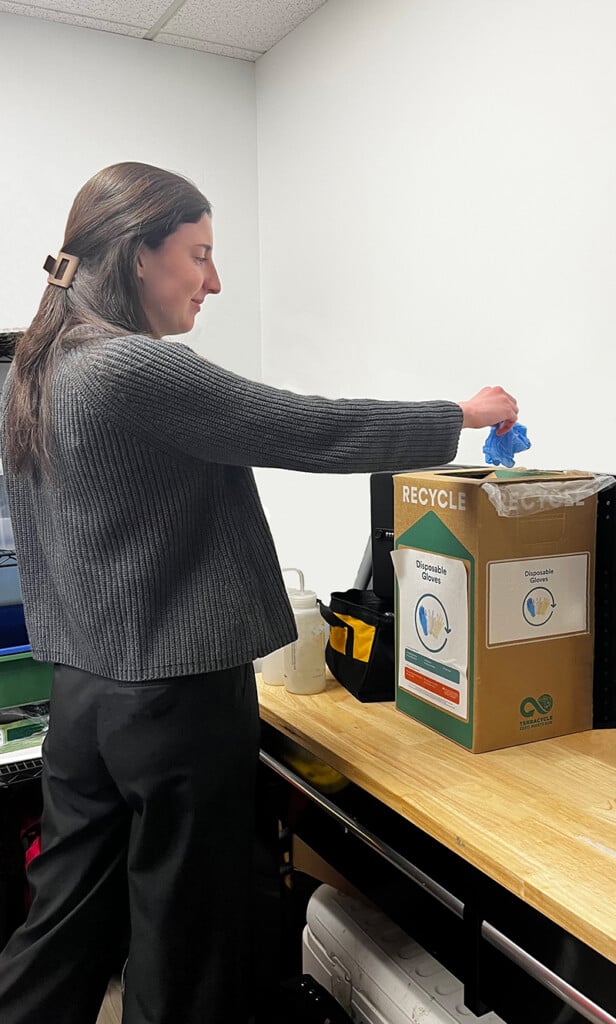
Sanborn Head’s ‘Go Green Team’ practices sustainability at the engineering firm

NH is confronting a medical crisis, but there are ways to effect positive change