“I’m bid $580,000. Do I hear $600,000?”
New Hampshire’s rise in single-family home prices can come across like a fast-paced auction. Just when you think the price might level off, a higher price is offered. And the question becomes: What is the ceiling for a median priced single-family home in the Granite State?
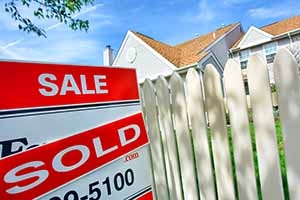
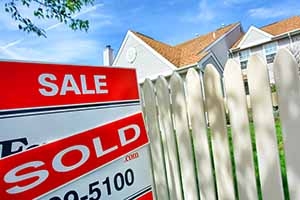
In May, that threshold reached another all-time high at $579,900, according to data from the New Hampshire Association of Realtors (NHAR). That breaks the previous high mark of $569,000 in June of last year.
SHUTTERSTOCK
It wasn’t that long ago — March 2024, in fact — that the single-family median price reached a milestone $500,000. The May 2026 record is $79,900 more, a 16% increase in 26 months.
Since January, the median has risen almost $40,000, a 7.4% bump.
NHBR asked Joshua Greenwald, NHAR president, whether $600,000 is a possibility in the near future.
“We stay away from specific predictions, but at this rate it’s fair to say it wouldn’t be surprising,” said Greenwald, owner/broker of Greenwald Realty in Nashua. “More important than any particular number is the fact that buyers, particularly first-time buyers, are becoming increasingly priced out of the housing market.”
He used the example of the 28% rule — that, ideally, a borrower should spend no more than 28% of their gross monthly income on housing. With that in mind, Greenwald gave the following examples of the income required to afford a median priced home of $580,000, $10,400 in property taxes (based on a statewide average), and a 6% mortgage:
- With 10% down, a buyer would need a household income of $177,000 per year;
- With 20% down, a buyer would need a household income of $160,000.
“Those numbers speak for themselves in terms of affordability, particularly for first-time buyers who may not even be likely to come up with the $58,000 (10%) to $116,000 (20%) down payment in the first place,” Greenwald told NHBR.
Despite the high prices, Greenwald said prospective buyers aren’t being scared away.
The NHAR recorded 1,500 pending sales in May, the highest monthly total in four years that suggests continued momentum heading into the summer market, historically the busiest season for real estate sales.
“The encouraging news is that buyers have not stepped away from the market,” Greenwald said. “Pending sales activity demonstrates that demand remains exceptionally strong, even as many households struggle with limited inventory, higher mortgage rates and rising prices.”
While housing inventory continues with modest improvement, the pool of available homes remains well below historical norms. There were more than 2,400 single-family homes for sale statewide in May, according to the NHAR, compared to 2,156 during the same month last year.
Even that is significantly lower than pre-pandemic levels, when approximately 4,600 homes were on the market in May 2019.
“The state’s months’ supply of inventory remained essentially unchanged from a year ago at 2.3 months. A balanced market — where buyers and sellers have relatively equal negotiating power — is between five and six months of supply,” said Greenwald.
“While inventory has improved from the record lows we experienced several years ago, New Hampshire remains far from a balanced housing market,” he added. “Until we significantly increase the number of homes available for purchase, affordability will remain a challenge for many Granite State families.”
Other trends from May include NHAR’s recognition of another record — a median sales price of $720,000 for a single-family in Rockingham County, the highest ever recorded for any New Hampshire county.
The Rockingham County market is heavily influenced by the Seacoast region, and the board of realtors there said that for the fourth straight month the median price improved, coming in
at $942,500, up 7.4% from the previous year.
The Seacoast Board of Realtors take its data from the 13 same towns of Exeter, Greenland, Hampton, Hampton Falls, New Castle, Newfields, Newington, North Hampton, Newmarket, Portsmouth, Rye, Seabrook and Stratham.
The board reported the region set a May record for $1 million-plus sales with 36. The biggest sale came at 55 Shipwright Way in Newington at $3,929,356. The transaction was one of five May sales that topped $3 million dollars.
“Buyers are out in force, and the outlook for June remains equally positive,” said Ryan Kaplan, president of the Seacoast board and a broker with Compass Real Estate in Portsmouth.
Million-dollar homes aren’t the outliers in New Hampshire anymore.
Also among the May trends, NHAR made a social media observation that the number of homes in the state that have sold for $1 million or more has more than doubled over the past five years, and they now represent approximately 15% of all home sales statewide.
From May 2025 through April 2026, there were 1,199 million-dollar home sales across New Hampshire, compared to 542 during the same period five years earlier — a 121% statewide increase.
In Hillsborough County alone, according to the NHAR, million-dollar sales increased 373% over the past five years. Strafford County had 10 such sales five years ago, and 64 over the past 12 months.
“The trend highlights how higher-end home sales are no longer limited to traditional coastal or vacation markets,” said the NHAR, “but are increasingly occurring throughout southern and central New Hampshire as demand and home values continue to rise.”
On the townhouse/condominium side, the highwater mark remains $449,950, reached in May of last year. This May’s median was $429,900, according to NHAR data.
The condo median price started the year in January at $410,000 and was $400,000 in April, meaning the price rose 7.5% in May.
Mortgage activity
ATTOM, curator of national real estate analytics, reported that in the first quarter of this year (January, February, and March) new mortgages were down 6.4% compared to Q1 2025 in the Manchester/Nashua Metropolitan Statistical Area (MSA). They were down 33% from the previous quarter and 68.3% behind the peak period of Q3 2021.
For all loan originations, however, that MSA saw a 10.4% increase over the prior year. The loan activity includes mortgages, refinances, and HELOCs (Home Equity Line of Credit). ATTOM reports loan activity was off 22.1% from the previous quarter and 77.2% off the peak in Q2 2004.
“Purchase, refinancing and home-equity lending all posted declines from the previous quarter, continuing a seasonal trend we’ve seen during the start of the year over the past four years,” Rob Barber, CEO of ATTOM, said of the trends nationally. “However, purchase activity stood out with home-buying loans falling to a 12-year low, as elevated home prices and higher mortgage rates continued to strain affordability for many buyers.”
Another national curator of economic data — WalletHub — reported in May that mortgage delinquency is on the rise in the state. New Hampshire ranks seventh among states where mortgage delinquency is increasing the most.
New Hampshire, according to WalletHub analyst Chip Lupo, has a relatively moderately low rate of mortgage delinquency at 6.5% in Q1 2026. But, from Q4 2025 to Q1 2026, it saw its share of delinquency increase by 3.3%, a ratio that puts it among the highest in the country.
“The concern is the upward trend,” said Lupo to NHBR. “Even relatively small increases can signal growing financial strain among homeowners, and that can have long-term consequences, especially since mortgage payments are reported to the credit bureaus as delinquent once they are 30 days past due.”
“From a broader context, New Hampshire shows mixed economic signals, with the state’s economy ranking 13th overall but lagging behind for some growth indicators. It also has a relatively high state and local tax burden compared to some peers, which can add pressure to household budgets,” added Lupo. “Overall, the ranking points less to a crisis and more to a gradual increase in financial stress, even in a state with otherwise solid economic fundamentals.”
Housing legislation
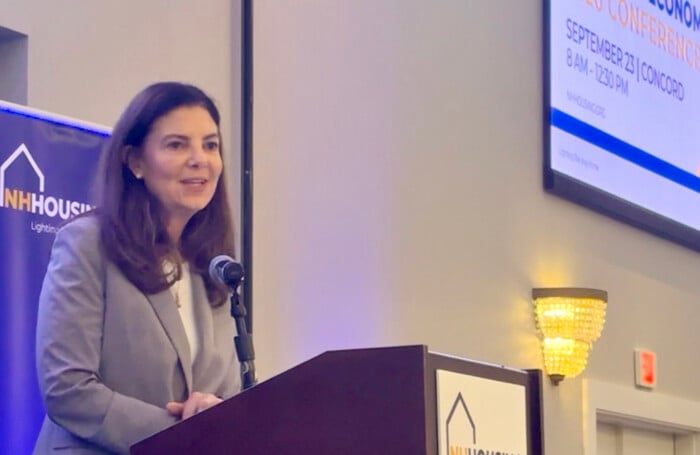
As the 2026 edition of the New Hampshire Legislature comes to a close, a couple of housing-related bills have made their way to Gov. Kelly Ayotte for her consideration.
SB 564 prohibits municipalities from imposing specific restrictions on road lengths and housing lot caps on dead-end streets, provided they comply with the state fire code. The bill also requires municipalities to allow utilities, such as septic systems and electric distribution, within designated open space or perimeter buffer areas of subdivisions, so long as the area is not wetlands or protected shoreland.
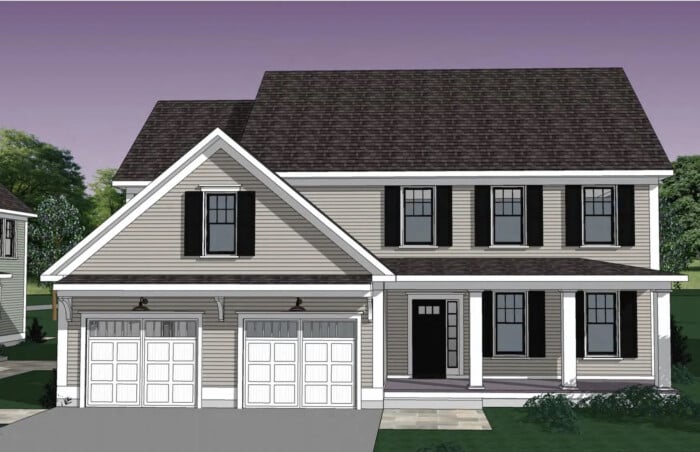
HB 1588 is a conference committee agreement that combines the original House bill intent (to create special assessment districts to finance infrastructure for new housing development) and a Senate rewrite (to add protections for mixed-use and multifamily development in commercial zones).
In a committee report, state Rep. Joe Alexander (R-Goffstown) said: “This bill allows municipalities to establish voluntary Special Assessment Districts to fund infrastructure improvements needed for new housing development. … It also allows municipalities the authority to regulate accessory parking for vehicles, as long as they do not mandate garaged parking spaces. Additionally, it prohibits municipalities from imposing extra requirements for multifamily housing within commercial districts existing as of July 1, 2026, with certain exceptions.”