Driven by defense
Military related manufacturing showcased in NH
New Hampshire’s growing role in military and security related manufacturing was on display June 3 in Nashua.
About 200 people, representing advanced manufacturing interests both in the state and regionally, registered for the Northeast National Security Conference that organizer Julie Demers said goes “beyond traditional defense that people would think of.”
Demers is executive director of the New Hampshire Tech Alliance, in its second year of organizing the security conference, which had to move to the larger Nashua Event Center this year because of the overwhelming response to last year’s inaugural event at Saint Anselm College in Manchester.

Leonard Lublin, deputy general manager of BAE Systems’ FAST Labs, addresses the audience at the second annual Northeast National Security Conference, held June 3 at the Nashua Event Center. (Paul
Briand photo)
“I think one of the things that this conference is trying to promote is the fact that it’s not just the traditional sense when you think of defense — weapons, arms, things like that. It’s really the technology behind it, and there are a ton of opportunities for supporting technologies to accelerate national security priorities,” Demers said.
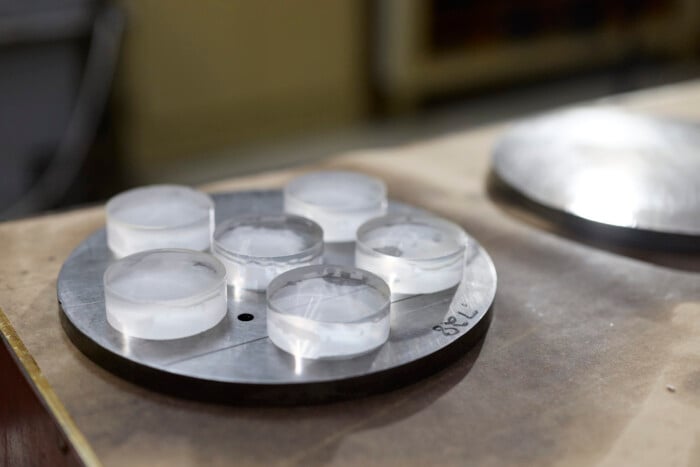
Advanced manufacturing, a term that Demers associates with “the integration of technology into the manufacturing floor,” has broad applications when it comes to military and security interests, from electronic warfare systems produced by BAE here in the state to optical fabrication by Bond Optics in Lebanon.
Its reach stretches not only to the big and not-so-big players on the manufacturing side, but also to the state’s educational institutions.
Aerospace and defense related industries encompass about 300 companies across the state with 10,500 direct employees, according to data from the New Hampshire Department of Business and Economic Affairs (BEA). Their combined economic output of about $7.5 billion represents 3.6% — and growing to 4% — of the state’s gross domestic product, according to the BEA.
But continued growth, according to participants in the day-long Tech Alliance conference, depends on collaboration: among the companies that need to get out of their silos and between educational institutions — from high schools to community colleges to four-year and graduate schools — and the companies that need both an educated and skilled workforce.
And it can’t happen in a New Hampshire silo. Speakers emphasized the need that addressing what was frequently referred to as “warfighter needs,” making economic progress, and creating the appropriate workforce requires regional collaboration.
“It’s not just about the technology, think about the whole system, about how all the pieces have to come together to deliver capability in the hands of our warfighters to actually address these unmet challenges and needs, and really partner and get curious about all the different dimensions required to achieve that,” said Leonard Lublin, deputy general manager of BAE Systems’ FAST Labs.
BAE Systems recently announced an $85 million upgrade to enhance aerospace programs at its campus in Hudson. The company employs more than 6,700 people in the Granite State at its main campus in Nashua and also has operations in Merrimack and Manchester. The company’s products include F35 fighter jet components.
The need for collaboration was underscored by Randy Mackee, executive director of the NH Aerospace and Defense Consortium.
“We continue to use the things that make New Hampshire great as a state and as a manufacturing base, but we can’t do it alone,” he said in a media interview before the conference.
“If we incorporate the Northeast region and we begin to look at this problem regionally, not just in the state of New Hampshire, it gives us all greater opportunity for growth,” he added.
The organization, though based in Concord with a New Hampshire name, serves the Northeast region from the Granite State into Canada, Pennsylvania, New York, and the other New England states.
Mackee was joined in a panel discussion about regional collaboration by Demers; Jennifer MacDonald, MD, chief operating officer of the Advanced Regenerative Manufacturing Institute (ARMI) in Manchester; Chris Torina, director of entrepreneurship and director of the National Security Innovation Hub at Northeastern University’s Roux Institute. The panel was moderated by Tom Fournier, founder and principal of OrgNxt LLC and a co-chair of the conference.
‘Get out of the silo’
While each military/security contractor has a specific role to play with the production of a certain item, they are part of an entire ecosystem dependent on each other for economic growth.
“Flat out, get out of the silo, break down the wall, quit thinking that you’re special, and just start talking about what capabilities you have or what capabilities you need, and amazingly you will find it,” Mackee said.
A good example of a locally grown ecosystem is ReGen Valley in the Manchester area — the name given to a government-recognized U.S. Tech Hub of regenerative medicine and biofabrication initiatives, many with military applications, ARMI among them.

How military and security companies in New Hampshire and the region can connect and collaborate was a topic of discussion the June 3 Northeast National Security Conference, held June 3 at the Nashua Event Center. Participating in the discussion were, from left, panel moderator Tom Fournier, founder and principal of OrgNxt LLC and a co-chair of the conference; Julie Demers, executive director of the New Hampshire Tech Alliance, which organized the event; Randy Mackee, executive director of the NH Aerospace and Defense Consortium; Jennifer MacDonald, MD, chief operating officer of the Advanced Regenerative Manufacturing Institute (ARMI) in Manchester; and Chris Torina, director of entrepreneurship and director of the National Security Innovation Hub at Northeastern University’s Roux
Institute. (Paul Briand photo)
ARMI is a nonprofit, Department of Defense-backed public-private partnership headquartered in Manchester’s Millyard. Its work, through BioFabUSA, on human cell/tissue regeneration and large-scale manufacturing has applications for military personnel as well as the general population.
“Six in 10 Americans currently live with at least one chronic illness, and four in 10 live with at least two,” MacDonald said. “To state the obvious, our warfighters experience a higher burden of traumatic injury than the general population, and then deal with those follow on effects for a lifelong scenario.”
“What we exist to do, and the reason the Department of War invested in ARMI,” she added, “is to make sure that next generation technologies are reaching the war fighter, but that six in 10 also means there’s a readiness component to this, the ability to attract new enlistments into our military, the ability to keep those enlisted personnel healthy for the various types of deployments, the various types of service needs that are going to be necessary is critical to our ability to be flexible, and the manufacturing in biotech is the key and important piece.”
Keeping ARMI’s work, and that of others in the military/security field, on-shore rather than off-shore is important, through collaboration, according to MacDonald.
“Whether you’re an individual company or an individual investor or an individual researcher, or you’re leading an organization, means actively deepening relationships that sustain over time,” said MacDonald. “I think a lot of collaboration, or getting out of a silo, can be framed as just networking, surface level exchange of a card. It takes more than that to make sure that we’re actively collaborating and moving things in a positive direction for the region.”
Fournier underscored the collaboration theme by noting the region doesn’t have a problem with innovative ideas when it comes to addressing military and security issues; it has a problem with the integration of those ideas into a whole solution.
“It takes a special place to have innovation — we have that. We just need to work on our integration,” he said.
The education/workforce component
Examples abound of how educational institutions are responding and are involved in helping create a workforce that responds to military and security needs.
Michael Fischer, president of York County Community Hospital in Wells, Maine, cited its relationship with the Portsmouth Naval Shipyard.
“We created a Center of Excellence in Manufacturing and Trades specifically to help address some of the shipyard’s needs,” said Fischer, who spent 12 years associated with Great Bay Community College in Portsmouth.
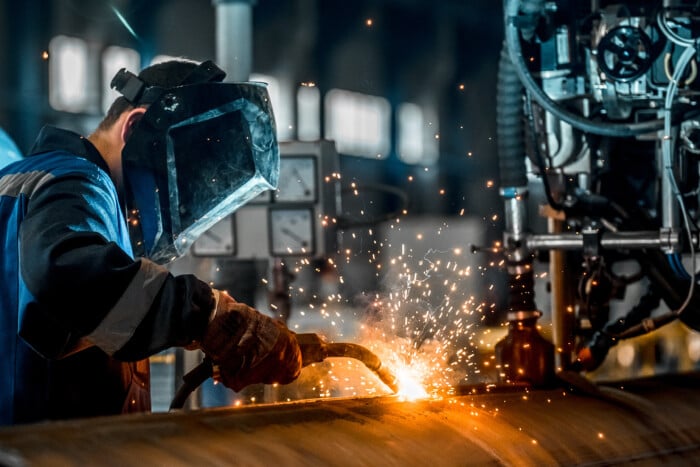
CEMT is a 10,000-square-foot facility in Sanford, Maine, designed to train skilled workers for local defense, manufacturing, and trade industries, specifically in the electrical, welding, and pipe-fitting trades. Their collaborative work extends not only to the Portsmouth
Naval Shipyard, but to the Pratt and Whitney fighter jet engine facility in South Berwick, Maine, and the General Dynamics shipyard at the Bath, Maine, Iron Works.
“It’s like, tell us your needs, we’re going to custom create it with them,” said Fischer, noting that the Portsmouth shipyard helped build the pipe-fitting lab. “So it’s really all collaborative; it’s special.”
Kimberly Eckenrode, professor and Business Department chair at Nashua Community College, encouraged manufacturers to reach out to the state’s community college system.
“I am happy to connect you because we are the secret in New Hampshire that you do not know, that we have very great people who can, who are untapped resources for you,” she said.
Besides a session on collaboration, the conference featured breakout sessions on ocean and space related research and activity.
Gov. Kelly Ayotte has been promoting the state’s military/security sector, as evidenced by a visit May 28 to Citronics. She said in a statement that the company has “helped make our state a hub for advanced manufacturing.”
Citronics, based in Milford, is a contract manufacturing company serving robotics, military, security and medical technology companies in the production of such items as night vision systems, threat detection devices, and ruggedized unmanned ground and submersible vehicles.
The employee-owned company had a booth at the conference. Ayotte served on its board of directors in the time after she was a U.S. senator and before she became governor.