Q&A with First Factory Chief Operating Officer Don Gregori
Don Gregori’s journey to become chief operating officer for a multinational technology company began with earning a liberal arts degree.

Meghan Shue, Executive Vice President and Head of Investment Strategy and Portfolio Construction, Wilmington Trust
Meghan Shue knew she wanted to work in finance as early as high school, setting a goal in college to land a job on Wall Street. But she faced a few curveballs, including a global financial crisis that hit just as she graduated with degrees in operations research and financial engineering.
“Financial engineering was a pretty dirty word at the time, so there were not a whole lot of people banging down my door,” says Shue, head of investment strategy for Wilmington Trust, the wealth arm of M&T Bank.
“I sort of stumbled into wealth management, and it’s been the best thing that happened to me, because being an investment nerd is great, but if I can connect it to people and what they actually care about, which is their families and their businesses and their charitable goals, it just creates so much more meaning to what I do.”
Shue recently appeared as a guest on NH Business Review’s “Down to Business” podcast. The article is adapted from that interview.
Q. Wilmington Trust is the wealth arm of M&T Bank. Tell us a little bit about that relationship.
A. Our function is to help our clients with all of their wealth management needs, whether that’s trust and estate planning, financial planning, or in my case, investments. My role is to help set our overall strategy from an investment perspective for our clients and then help to give them advice on building portfolios that we then take into account when we’re dealing with their individual goals and different challenges and situations.
Q. Can you give us a snapshot of the economy in your view?
A. What we’re seeing today are a number of different long-term structural economic forces, demographics intersecting with shorter-term forces that are causing quite a bit of angst and disruption, but also some optimism, like AI. On top of that, we’re sprinkling a dose of policy uncertainty with an administration that is definitely pushing the boundaries in some different ways.
It puts us in an environment where historical precedent is not necessarily indicative of what’s going to happen in the future. And much like being in a lab setting where we’re mixing things together and we’re not sure how it’s going to turn out, we’re relying very much on observation.
Where it’s different today is that, in a well-structured experiment, you are tweaking only one variable at a time. And the economy is not like that. There’s a lot of different things going on.
If we’re looking at weakness or some fragility in the labor market, for example, it’s not entirely clear whether it’s because of changes to immigration or changes to job demand from AI or maybe just overall slowing of the consumer.
All of that makes our job a little more challenging. But at the top level, we’re looking at a pretty balanced outlook for the economy, expecting a little bit of slowing versus last year … we think we’re probably more in a 1% GDP growth environment.
Q. AI seems to be a disrupter where it’s often unpredictable. Tell us more about your view on that.
A. Just like we’ve had periods of economic experimentation in the past, we’ve definitely had periods of technological disruption. And it’s always a little uncertain. What’s key is how long it takes for technology to be adopted and fully utilized. The speed of that can be a little bit of a negative for the labor market. It can be a little bit of a positive for productivity growth.
I think those competing tensions are definitely what we’re dealing with today. Within certain industries, we are seeing the impacts of AI disruption. A lot of what we’re focused on right now is sort of stagnation of labor growth outside of health care. We think that might be a little bit because of AI, but more because companies are pausing new hires and want to wait to see how things develop.
On top of that, you have a consumer that’s getting a little bit more stretched, and you have tariffs, which are injecting more uncertainty. All of that comes together to create a labor market where we’re seeing not a whole lot of job growth outside of health care, but also not a lot of layoffs.
Q. Other economists have said there may be some pentup energy — money on the sidelines, so that when things are more clear, there might be more expansion.
A. Businesses are remarkable at adapting, at innovating, at figuring out how to pivot in difficult environments. But they need a stable policy environment in order to invest. A lot of that is uncertainty about whether tariffs are 10% or 15% or whether there will be refunds.
But from a policy perspective, we’d rather see some of that go away. I think that would be a positive. And then you can unleash what we are already seeing in terms of productivity growth and maybe even some pickup in demand on the manufacturing side of things.

Don Gregori’s journey to become chief operating officer for a multinational technology company began with earning a liberal arts degree.
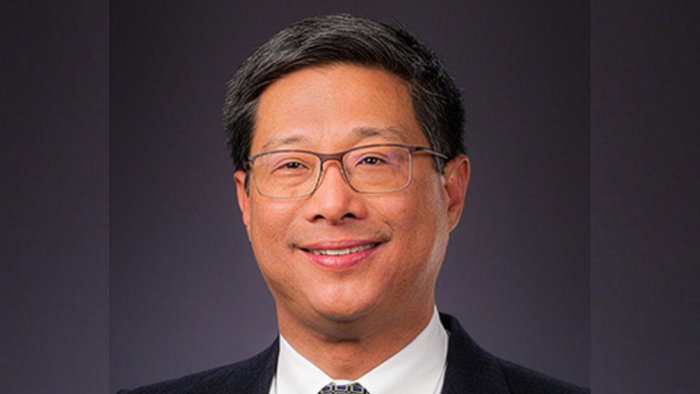
Since 2022, Ken Woo has been the president of Marmon Utility, an advanced manufacturing firm based in Milford that produces polymer insulators and underground cables, including the Hendrix and Kerite brands, for the electric utility industry.
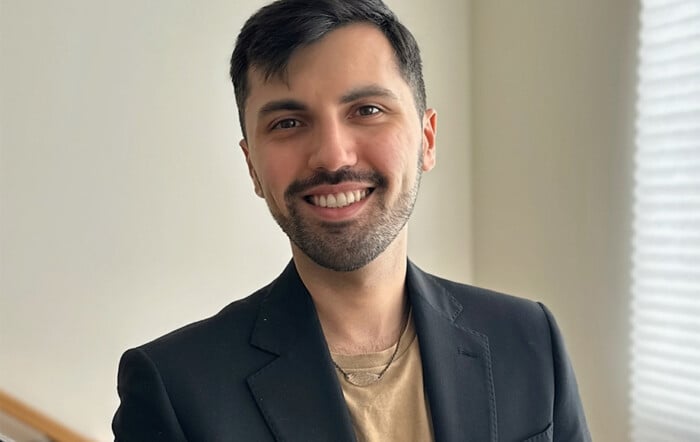
Kyle Moschen, a senior media relations manager at Weber Shandwick based in Seattle, was this year’s commencement speaker at Nashua Community College.
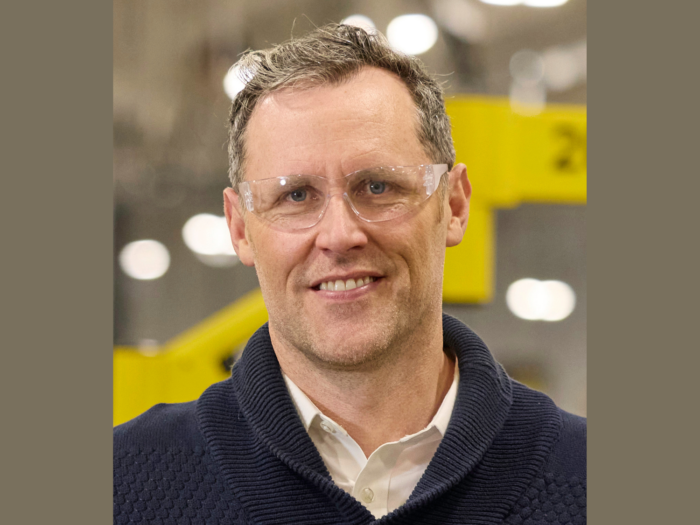
A company whose products are essential to manufacturing and food production worldwide is headquartered in a former Walmart building in Bedford, New Hampshire.
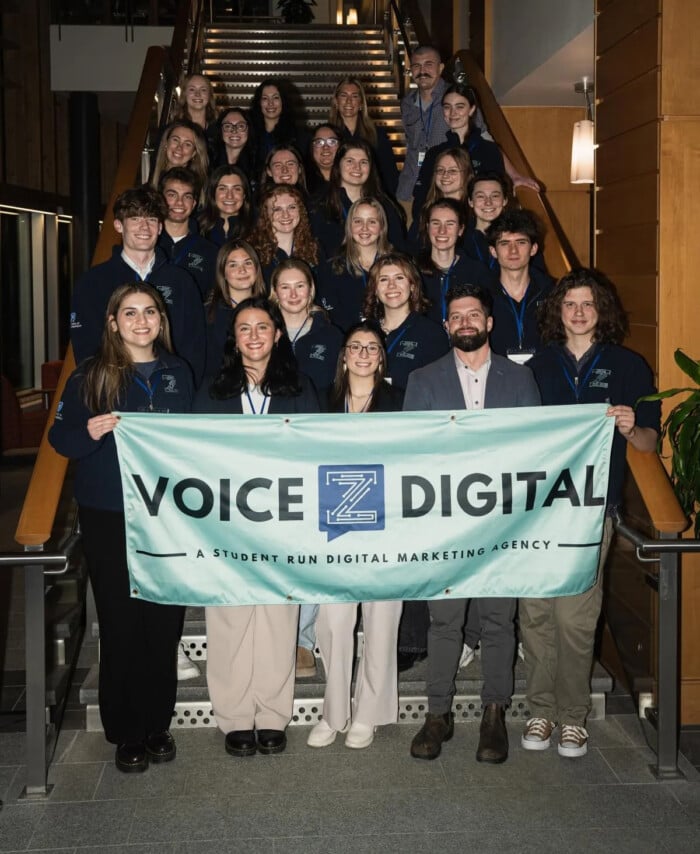
Voice Z Digital, a digital marketing agency run by students at the University of New Hampshire, recently celebrated working with its 100th client.
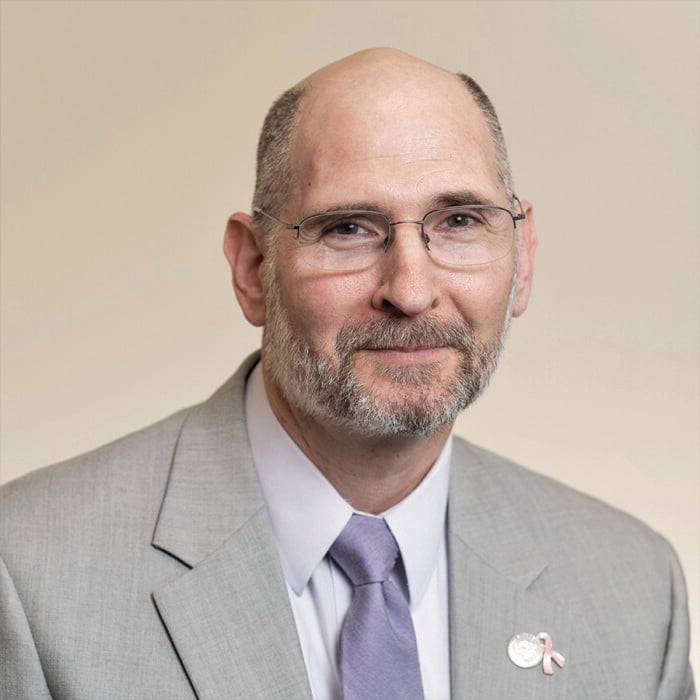
Rubinstein, who has served as the chancellor of the Community College System of New Hampshire since 2021, announced his plan to retire before the start of the 2026-27 academic year, capping a career in education that spans more than four decades.
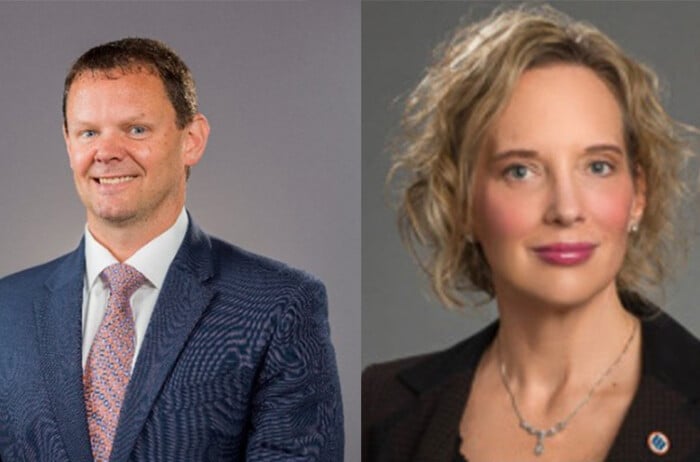
Eastern Bank entered the New Hampshire market in 2015, when it acquired Centrix Bank in Bedford. The Boston-based bank operates seven branches in New Hampshire and more than 125 in its overall footprint in eastern Massachusetts and Rhode Island.
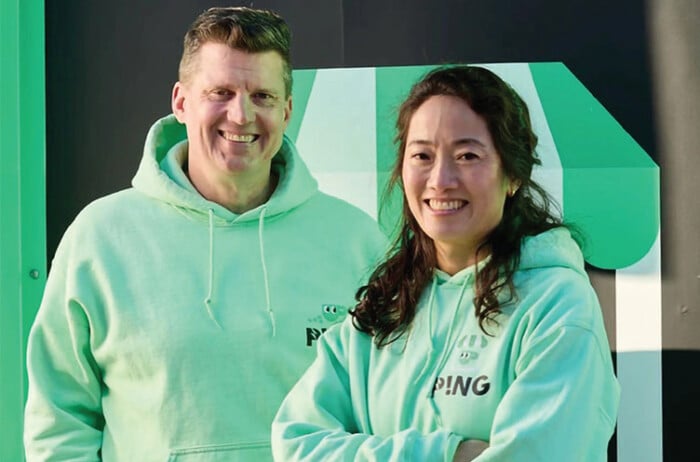
Rob Whitten and Jane Lo want to speed up that line of cars that snakes around a coffee shop. With P!ng, they’re updating the traditional drive-thru model by replacing human servers with robotic automation and moving orders from speaker boxes to smartphone apps.
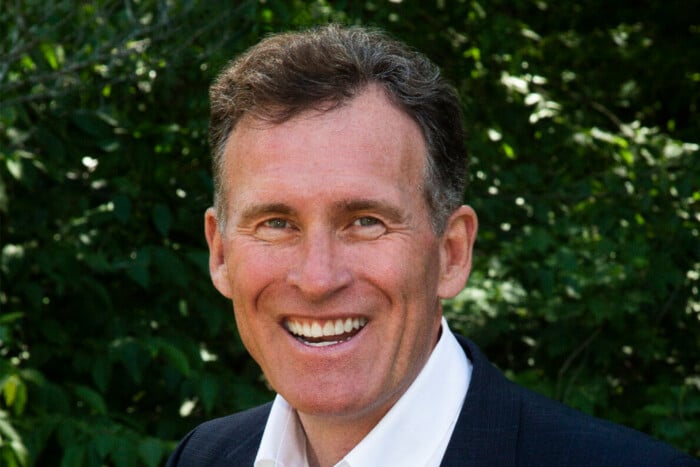
Since Michael Flaherty joined Taylor Community as president and CEO more than a decade ago, the Lakes Region continuing care retirement community (CCRC) has grown to three sites, expanding form its Laconia flagship to locations in Wolfeboro and one in Meredith that it acquired from other providers.