Workforce is both an opportunity and challenge for NH manufacturers
Annual summit scheduled as NH welcomes company from Massachusetts
As manufacturers in the state prepare to gather for their annual summit, they face both opportunities and challenges ahead.
According to Tony Fernandez, president of the N.H. Manufacturing Extension Partnership, those opportunities and challenges are wrapped up in the same issue — growing the workforce.
New Hampshire has what Fernandez called “a great resource” in young Granite Staters, whose manufacturing skills can be nurtured starting in middle school, right through the state’s community college or university system.
But that resource, cautioned Fernandez, won’t remain in New Hampshire for the many manufacturing jobs that are available if issues such as affordable housing and child care aren’t addressed.
“We grow these people, we put them into the community colleges, we get them ready, and then when they’re ready to get a job, there’s nothing really for them aside from the job itself,” said Fernandez. “There’s housing problems. There’s health healthcare issues. There’s childcare issues. There’s things like that that the state is actually working on, but that’s the impediment we have right now.”
The Manufacturing Extension Partnership (MEP) is a national program designed to help small and medium-sized U.S. manufacturers grow, improve their operations, and stay competitive in the global economy. It is managed by a division within the U.S. Department of Commerce.
There are 51 MEP centers in every U.S. state and Puerto Rico, some federally and state funded, some only federally funded.
The NH MEP, which is located at the John Olsen Manufacturing Center, operated by the University of New Hampshire in Durham, is federally funded with additional support from manufacturers here.
It represents the interests of some 1,700 small to medium-sized manufacturing companies in the state.
The NH MEP’s clientele isn’t the state’s largest manufacturers, such as BAE Systems; it’s the smaller guys, according to Fernandez.
“What we do is five levels down,” said Fernandez. “We’re looking at the person who makes the widget, the component that goes to the next company, the next company, the next company. These companies are manufacturers that have 10 people, 20 people, 30 people, 40 people. In order for BAE to be an all-star, all those companies down on the bottom have to have support, and that’s what we do.”
The NH MEP is holding its 24th annual Advanced Manufacturing & High Technology Summit on Friday, Oct. 9, at the Grappone Center in Concord. See registration information here:
According to the N.H. Department of Business and Economic Affairs (BEA), manufacturing is a major contributor to the state’s economy.
Approximately 1,700 manufacturing businesses employ more than 70,000 workers statewide, representing nearly 12% of total private employment in New Hampshire. The BEA said the sector encompasses an increasingly sophisticated and diverse range of industries, including advanced electronics, precision manufacturing, aerospace and defense, plastics and chemicals, machinery, and other high-value industries.
The NH MEP’s summit program includes keynote comments from Chuck Lloyd, named in August as the newest chancellor of the New Hampshire Community College System.
Given the opportunity/challenge associated with the workforce, Fernandez said Lloyd’s presence at the summit is important.
“We want the community colleges and we want the manufacturers to talk to each other and find out what the needs are and how can we satisfy them,” said Fernandez.
That New Hampshire is an aging state is no secret. It, with Vermont, has the second oldest population by average age behind Maine.
This has a tremendous impact on the current manufacturing workforce in the state, according to Brian Knapp, NH MEP’s operations and supply chain director, which is why getting involved early in the education process is important.
“There is opportunity for manufacturing jobs. We are trying to educate from middle school all the way through our college systems that manufacturing is a career path,” said Knapp. “As we talk about our manufacturing companies and all of that, we have a major risk that they’re all aging out, right? You talk to most manufacturers, a good portion of their workforce are older, and there’s that risk of not being able to find help.”
There is also risk at the higher end of the management ladder, too, according to Fernandez. Company owners and managers are aging out.
Another of the presentations at the summit is from representatives of Acres Partners in Concord, which specializes in business succession planning and exit strategies.
“The big concern that I have personally with the state is that we’re an aging population. We’re the (second) oldest state in the country. We have more retirees than anybody else. If you look at the manufacturing base, one third of the manufacturing companies of these 1,700 companies are owned by people 65 and older. They’re aging out,” said Fernandez.
What can be done to get the younger middle managers ready to maybe assume control of a local company, asks Fernandez.
Tariffs a supply chain challenge
Another challenge for local manufacturers to challenge are the tariffs imposed by the White House since Donald Trump became president in January 2025, the trade war with Canada hitting especially hard.
“Tariffs is a big issue for us, and the concerns that are happening in Canada, in New Hampshire,” said Knapp. “A lot of our imports are from Canada. The tariffs that are happening and all of that are going to affect us in the next couple of years. There’s no doubt about it.”
Knapp said the MEP network of 50 other centers could be an important asset for manufacturers looking to source a part or material or skillset that might otherwise come from Canada.
“I have this network that allows me to look and go out to all 50 states plus Puerto Rico and say: Do you have this type of manufacturing? Do you have these skill sets in your state? And I do the same for New Hampshire. I have these three companies that can build what you’re looking for,” said Knapp. “Tariffs are an issue, and looking at that, bringing back domestic buying is a big push for the MEP.”
More manufacturing to NH
The manufacturing summit arrives as news breaks concerning three major manufacturing developments.
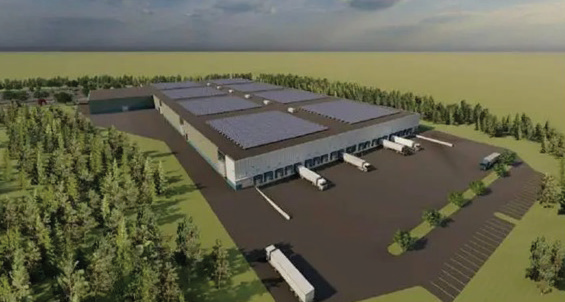
The latest involves Vicor Corporation, an Andover, Mass., company that designs, develops, and manufactures high-density modular power components and complete power conversion systems. Earlier this month, it announced plans to purchase industrial land and buildings in Merrimack and Hooksett with the ultimate goal of having up to 1 million square feet of manufacturing space.
The company said the new locations will support the construction of ChiP Fab-2 and Fab-3, adding a combined footprint of nearly 1 million square feet to meet surging demand for advanced AI power modules.
According to the company, its ChiP (Converter housed in Package) is a compact, high-density modular power component that efficiently converts and delivers electrical power to demanding processors and electronic systems.
In welcoming Vicor to New Hampshire, Michael Bergeron, senior business development manager for the BEA, said the company will add approximately 1,200 new jobs.
“New Hampshire is proud to be a hub for advanced manufacturing and innovation, and we will continue to ensure it stays that way by protecting our economic advantage, growing our workforce, and recruiting companies from across the country and the world to create more, good-paying careers for Granite Staters,” Gov. Kelly Ayotte said in a statement welcoming Vicor’s expansion into the state.
BEA Commissioner Lucy Lange said Vicor’s decision underscores New Hampshire’s attraction as a destination for advanced manufacturing.
“Our highly skilled workforce, strong manufacturing heritage, business-friendly environment, and
proximity to major technology and innovation centers in the Northeast provide an ideal platform for companies like Vicor to innovate, grow, and compete globally,” she said.
Also in September, the biotechnology firm United Therapeutics Corporation announced its purchase of the former Anheuser-Busch brewery in Merrimack for $47.5 million.
The company produces pharmaceuticals and is engaged in bio-engineering activity.
In June, Ayotte welcomed Analogic in person to its new headquarters in Salem, bringing with it up to 500 jobs from its previous location in Massachusetts. The company designs and manufactures advanced imaging, detection, and power technology for aviation security, healthcare, and industrial markets worldwide.
“I thank Analogic for choosing the Granite State for its new headquarters, and I look forward to partnering with them to ensure we remain a hub for advanced manufacturing and cutting-edge technology,” said Ayotte in welcoming Analogic to the Granite State.