Outdoor recreation is economic infrastructure
It’s time to treat it that way

Taylor Caswell
New Hampshire has long acknowledged outdoor recreation as an asset. We speak of it in terms of quality of life, tourism appeal and regional character. That framing, while not inaccurate, is no longer sufficient.
Outdoor recreation in New Hampshire is not a peripheral amenity. It is foundational economic infrastructure, as essential to the state’s competitiveness as its transportation networks, housing supply and workforce systems. Treating it as anything less than core infrastructure is not just a missed opportunity; it is a self-imposed constraint on our growth.
For a state without major metropolitan centers, the competition for talent and investment demands a differentiated value proposition. New Hampshire’s advantage has never been scale. It has been the experience of being able to live and work here, and reach world-class outdoor assets within minutes, not hours. That distinction is not incidental to our economic model; it is central to it.
This is most apparent in workforce. Employers across industries consistently identify talent availability as their primary constraint to growth. Compensation remains important, but it is increasingly insufficient on its own. Mid-career professionals and younger families are making location decisions based on a broader calculus: community quality, access to nature and overall standard of living.
New Hampshire’s trail systems, ski areas, lakes, rivers and conserved lands are not lifestyle amenities layered on top of an economic offer. They are active components of that offer, reducing friction in recruitment, strengthening employee satisfaction and supporting long-term retention.
This is visible in migration patterns, in direct employer feedback and in the growing alignment between outdoor access and residential decision-making across the Northeast.
Outdoor recreation is also a significant economic sector in its own right. These are mostly local small and medium-sized businesses like ski or bike retailers, gear manufacturers, land and trail managers and guides. Outdoor rec also generates substantial tourism revenue, sustains small businesses and anchors regional economies particularly in rural communities where traditional industries may have contracted. But its strategic value extends further than direct spending. It functions as a conversion mechanism: bringing visitors into contact with the state, demonstrating its quality of life and creating the conditions under which those visitors become new community members and, ultimately, business investments and workforce participants.
This tourism industry–> quality of life–> workforce cycle is not incidental. When managed with intention, it converts short-term visitor activity into durable economic growth, driving talent attraction, community stability and the private-sector investment that follows both.
Yet outdoor recreation remains under-integrated into formal economic development policy. Investments in trail systems, public access infrastructure and land conservation are routinely treated as conservation or recreation expenditures rather than as economic investments. That distinction is a strategic error.
During my tenure with the state, I worked with the Legislature to establish a dedicated outdoor recreation position sitting at the intersection of tourism and economic development, and we embedded it in state economic strategy. All that work has since catalyzed coordination across dozens of businesses, nonprofits, municipalities and organizations like the Granite Outdoor Alliance. It demonstrated that, with the right institutional structure, recreation assets can be deployed as deliberate economic tools.
The next phase requires deeper integration: embedding outdoor recreation into economic development frameworks, capital investment decisions, and long-term planning at both the state and regional level.
For business leaders, this means treating outdoor access not as a benefit offered to employees, but as a competitive input to talent strategy. Using access to outdoor recreation as a workforce recruitment and retention strategy is a secret weapon already for many employers.
For policymakers, it means aligning land use, housing, transportation and workforce systems around the outdoor assets that make New Hampshire a place people choose to be. Many of these assets already exist, such as trailheads or boat launches, but improving their usefulness and access is something investors, developers and realtors will react to.
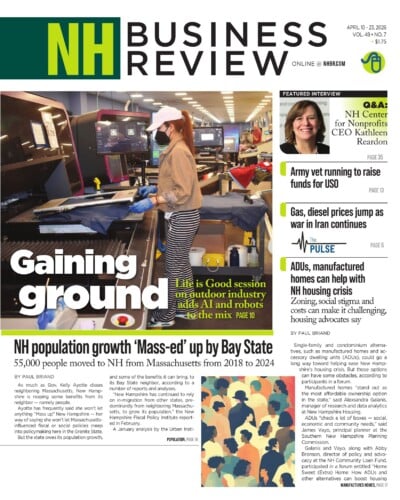
The states that are gaining ground in talent attraction and quality-of-place competition are those that have made this alignment explicit. New Hampshire has the assets. The question is whether we deploy them with the strategic intentionality they warrant.
In a small, rural state, economic differentiation is not optional; it is the strategy. Outdoor recreation is among our most powerful and under-leveraged competitive advantages. Public policy and business strategy must reflect that reality.
Taylor Caswell has led economic policy agencies on the state and federal level for decades, most recently serving as New Hampshire’s commissioner of business and economic affairs. You can reach him on LinkedIn: linkedin.com/in/taylorcaswell.