Sig Sauer and Israeli company partner on combat drone
Sig Sauer is partnering with an Israeli aerospace company to develop a military-application drone armed with the Newington company’s latest-generation machine gun

I recently attended an economic development breakfast with representatives from our state government and local businesses on the panel. The star topic, the one that got the most attention, was our severe housing shortage.
It’s very difficult, in many cases impossible, for people without really deep pockets to buy a house or even a condo. Rents are very high as well if you can even find an apartment. Many employers can’t hire because their new employees can’t find an affordable place to live.
The panel highlighted many of the causes: “We’ve become victims of our own success. New Hampshire is such a great place to live, everybody wants to live here. The demand is much greater than the supply driving up prices.” “Current interest rates put mortgages out of reach for many people.” “Local zoning ordinances limit homes and apartments for low-income people.” “Building luxury homes is far more profitable than building low-income housing,” etc., etc., etc.
From what I could see, everything everybody said was true, but there was one glaring cause nobody mentioned.
Back in the ’80s, Digital Equipment Corp. was the largest employer in New Hampshire and Massachusetts. They had manufacturing plants and office buildings everywhere. Today, the largest employer in both states is Walmart. In fact, they’re the largest private employer in the world.
What we’ve effectively done is send our high-paying manufacturing jobs to Mexico and the Far East, replacing them with retail and fast-food jobs. Unless you’re a store manager, it’s very difficult, if not impossible, to buy a house.
Yes, there’s no question that inflation and the factors mentioned above increased housing prices dramatically. Simultaneously, the purchasing power of middle-class Americans fell precipitously.
Back in the ‘70s and ‘80s, many of the technicians at Digital bought houses. It wasn’t even considered unusual. In fact, it’s like there was something wrong with you if you didn’t buy a house.
And it wasn’t just Digital jobs that disappeared. Lucent Technologies in North Andover, Mass., employed a lot of New Hampshire people. There used to be 12,500 people working in that location. Today, many of those jobs found their way to the Far East. Many of the high-tech companies along Route 128 in Massachusetts also followed suit.
This link, https://fred.stlouisfed.org/series/BOPGSTB, leads to a graph which shows our Balance of Trade in Goods and Services since the early ‘90s. You can see we’ve been on a continuous losing streak exporting our jobs and our money since then. If you wanted to look at a graph of just Goods, you’d see we’ve been losing since the mid ‘70s.
This is what’s killed the American Dream for so many people. Can you imagine how different things would look if we hadn’t exported our jobs and hundreds of billions of our dollars, if we had maintained a positive trade balance or at least a fairly equal one? We might still have a housing shortage, but it wouldn’t be so severe.
I recently heard a political leader celebrating the fact that we were getting rid of manufacturing jobs and moving to a service economy. Over a hundred years ago, Mark Twain said, “We’ll never get rich doing each other’s laundry.” He was right. Visit any third-world country and you’ll see the standard of living in a service economy.
Manufacturing is what created the American Dream. When we do it right, the sum of the whole is much greater than the sum of the parts, and the difference is what enabled us to pay living wages, enabling workers to buy or rent decent housing.
If we had kept more of our manufacturing here, our local school systems would have been forced to continue to teach kids how to add, subtract, multiply and divide in their heads. Regardless of where it’s located, manufacturing has become more and more automated. There aren’t that many muscle jobs anymore. Rather, they need people who can set up, adjust and program machines. People who can’t make change from a dollar aren’t qualified for such jobs.
Our current administration is using unpopular tariffs to try to effectively bring some manufacturing back and reduce our trade deficit. Unfortunately, our education deficit is making that even more of a challenge. Hopefully, we can rise to the occasion. Otherwise, our national debt, already at $38.4 trillion, will continue to rise, and this is simply not sustainable.
Ronald J. Bourque, a consultant and speaker from Salem, has had engagements throughout the United States, Europe and Asia. He can be reached at 603-898-1871 or RonBourque3@gmail.com.

Sig Sauer is partnering with an Israeli aerospace company to develop a military-application drone armed with the Newington company’s latest-generation machine gun

Firearms manufacturer Sturm, Ruger & Co., confirmed earlier this month that it had reduced its force.

Gordon Crossman Gilroy, 101, passed away peacefully at his home in Bedford, New Hampshire, on January 27, 2026. Gilroy founded Summit Packaging Systems, a Manchester-based company that makes aerosol valves.

Loss of manufacturing jobs contributed to our housing crisis

As we begin 2026, we face another set of choices about how to forge a future that enables us to navigate the continuing instability and volatility in our civic and economic lives.

When I started my first business in 1982, I didn’t know exactly where the journey would lead. What I did know was that I wanted to build something lasting, something rooted in innovation and capable of creating good jobs.

The Anheuser-Busch brewery on Daniel Webster highway will close in the company months after 55 years of operation in town.

U.S. Rep. Christopher Pappas is sponsoring new legislation that seeks to exempt small businesses from tariffs and reimburse them for the trade war duties that the 1st District congressman described as “unnecessary and harmful.”
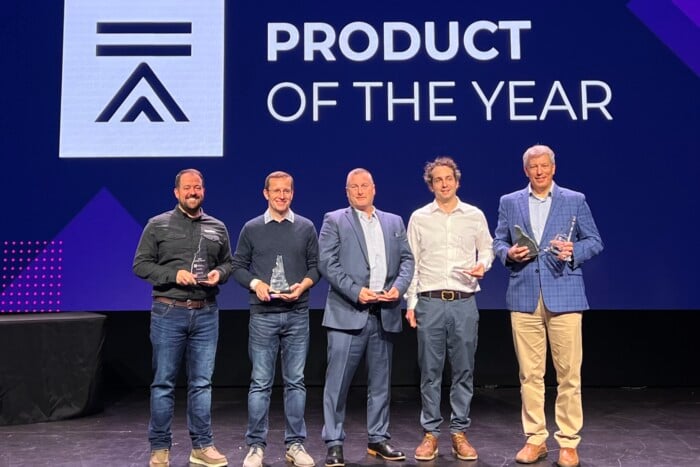
A process to create human tissue and bone through 3D printing won top honors at the NH Tech Alliance’s Product of the Year competition. The BioAssembly Bot 500, a robotic-based tissue fabrication and manufacturing platform, was developed by Advanced Solutions Life Sciences, a Louisville, Kentucky-based company whose research and development team is based in the Manchester Millyard.