C-Suite leaders share priorities at NH Life Sciences forum
Executive leadership from some of New Hampshire’s top life sciences companies gathered March 25 for New Hampshire Life Sciences’ (NHLS) third annual C-Suite Forum.
Executive leadership from some of New Hampshire’s top life sciences companies gathered March 25 for New Hampshire Life Sciences’ (NHLS) third annual C-Suite Forum.
Together, the executives shared the headwinds they are facing and where they could work together for change.
“It’s really good to see the community come together to talk about the challenges, opportunities and how we can help the patient population,” said Jenn Azar, CEO of Stellix, which sponsored the event.
United Therapeutics, which joined NHLS this year, hosted the event at its Manchester facility that has steadily expanded floor after floor of its renovated Amoskeag mill building. There, the company researches and tests the capacity for the creation of artificial organs needed for life-saving transplants Of NHLS, Avi Halpert, vice president of government affairs and community relations for United Therapeutics, said, “We’re a powerful group.”
“NHLS pulled all the pieces together,” he explained. “Organizations like this create magic and attract more attention than individual life sciences companies can.”
Some of the top concerns expressed by the life sciences leaders were navigating the federal regulatory environment; attracting local workers, particularly for high-skilled engineering and scientific work; and extending the venture capital pool that’s centered in the Boston metro area to Granite State companies.
NHLS President Andrea Hechavarria said that these issues are something that are solvable now, with more than 60 members working together.
“Our growth has been exceptional,” Hechavarria said.
She noted that BIO, based in Washington, D.C., has recognized that the state of New Hampshire has the fastest-growing life sciences workforce in the country at 28%.
“We have this opportunity to develop this industry further.”
Gov. Kelly Ayotte and newly appointed Department of Business and Economic Affairs Commissioner Lucy Lange also addressed the business leaders.
“We’re excited about what you’re doing here,” Ayotte said. She affirmed support for raising the cap on the R&D tax credit — the House recently passed HB 1102 — and said she and Lange were always available to chat with business leaders about their concerns.
“We’re not going to be like everyone else,” Ayotte said of New Hampshire. “We’re nimble.”
Ayotte also said that $204 million from the U.S. Centers for Medicare and Medicaid Services (CMS) as part of the federal Rural Health Transformation Program, the largest award among New England states, will go in part to investing in innovative technologies and care models, as well as workforce development.
Mike Ambrogi, senior technology fellow at Novocure, highlighted a bipartisan federal bill that would allow medical devices that earn the FDA’s “breakthrough” designation to be reimbursed more immediately by CMS, as is allowed for pharmaceutical products.
H.R. 5343, “Ensuring Patient Access to Critical Breakthrough Products Act,” is co-sponsored by Rep. Chris Pappas and 36 other congresspeople. A similar bill is in the Senate. Ambrogi would like to see New Hampshire’s other federal delegates endorse the bill, and he encouraged the other life sciences leaders to reach out to show their support.
Novocure has developed tumor-treating medical devices that use electrical forces to kill cancer cells for certain types of lung, brain and pancreatic cancers. Its Optune Pax device is the first treatment to be FDA-approved in nearly 30 years for locally advanced pancreatic cancer.
Nate Doemling, the president of HiArc, a medical device manufacturing service, said his company has an aggressive growth plan, with 150 employees currently and looking to get to 200. However, it’s been a challenge to hire enough senior-level engineers, he said, sharing that one role with a more than $200,000 annual salary has been vacant for a year.
“I can’t find people locally,” Doemling said.
While NHLS is raising awareness of life sciences in New Hampshire, board member John Whelan, who is also senior managing director at Alexander Technology Group, said there is still work to be done.
“Thousands of people are sitting in traffic, driving past your office, who don’t know you’re there,” Whelan said.

Executive leadership from some of New Hampshire’s top life sciences companies gathered March 25 for New Hampshire Life Sciences’ (NHLS) third annual C-Suite Forum.
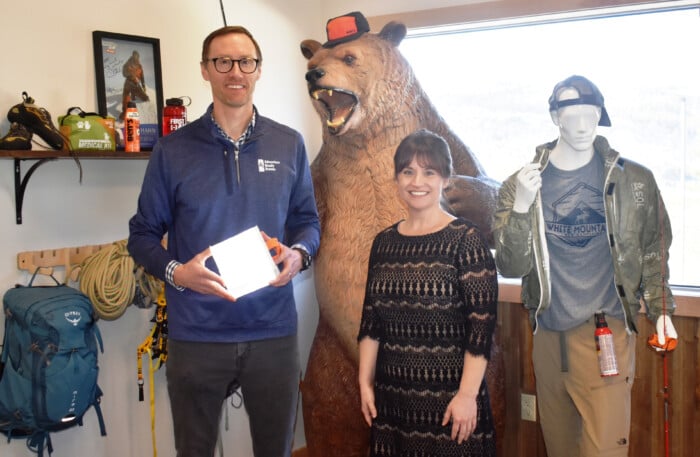
Adventure Ready Brands makes health and safety products at North Country industrial park

The NH Executive Council paused the approval of $773 million in federal spending contracts for the “GO NORTH” rural health program Wednesday, March 4, putting the brakes on a major initiative of Gov. Kelly Ayotte after councilors said the contracts were rushed and needed more scrutiny.

Employer health benefits costs are rising faster than inflation and wage growth, putting continued pressure on employer-sponsored plans. According to KFF’s 2025 Employer Health Benefits Survey, per-employee benefit costs increased 6% in 2025, with another 6.5% increase projected for 2026.

When families face a cancer diagnosis, mental health crisis, or any unexpected change in their health, the last thing they should worry about is navigating a complicated health care system. But for many, that is exactly what they face. Complex benefits, rising out-of-pocket costs and uncertainty about where to turn can add stress to already difficult moments.

The country’s declining pool of health care workers is a threat to the functionality of the U.S. health care system

Started in 2021, Cytokind describes itself as 'the global leader in using UVB light to treat immune disorders and improve survival and the quality of life for patients'

Lebanon company’s technology helps surgeons pinpoint size, shape of tumors
Amid statewide shortage, schools and hospitals aim to increase workforce