NH property taxes not only among highest in country, but vary widely from town to town
New report shows the state's disproportionate reliance on property taxes, among the highest in the nation
Saying she is “looking for more creative ways that we can expand the opportunities for housing in New Hampshire,” Gov. Kelly Ayotte suggests leasing surplus land for residential development.
“It’s something that we’ve talked about for a while and that is: what the state owns in terms of property,” said Ayotte. “We’ve been looking at that issue in my office, and looking at creative ways, not just what do we own, but what are appropriate pieces that we’re not utilizing and we don’t need as a state.”

Gov. Kelly Ayotte makes her remarks March 18 at the New Hampshire Housing’s annual conference, at which she offered the idea of using surplus state land for residential housing development. (Paul Briand)
She said she recognizes the requirement that communities get right of first refusal for surplus state land within their borders and added: “But we’re also looking at ways that perhaps the state could lease, which may be a more affordable way to use certain parcels for housing.”
Ayotte made her comments on March 18 at the annual conference hosted by New Hampshire Housing.
Her observations about the use of surplus state land for housing were part of her remarks to those gathered at the Grappone Conference Center in Concord. Her remarks were part of her overview of initiatives that have been made — and need yet to happen — to address the state’s need for more housing, particularly more affordable housing.
“If we want to grow New Hampshire, it’s a key workforce issue to have more housing,” said Ayotte, a Republican, noting that with a roomful of real estate professionals, developers and housing advocates she was “preaching to the choir.”
Karen Liot Hill, the lone Democrat on the five-member Executive Council, attended the conference and said the idea of surplus land for housing is worth looking at. The Executive Council plays a key role in the disposal of surplus property.
“Things are only going to happen when we have everyone at the table,” Liot Hill said. “We don’t have a lot of money, but we have some land, and maybe we can be a part of the solution and help bring down some of the cost of building.”
There’s lots to sort through if the governor follows up on the idea, not the least of which is identifying the number, location and size of these surplus lots and which state department or agency currently controls them.
A lot of the surplus land is in the hands of the NH Department of Transportation.
One example identified by NHBR is property NHDOT took in Dover as part of the Spaulding Turnpike widening project that ran from 2010 to 2020.
There are two side-by-side parcels on Dover Point Road in Dover — a vacant parcel (formerly K9 Kaos) of 0.72 acres currently valued by the city of Dover at $163,800, and a rundown, unused residence on 0.77 acres valued at $486,100. The parcels, purchased in 2010 as part of the widening project, are opposite Newick’s seafood restaurant in an area that includes single-family residences and a townhouse condominium project, near the Hilton State Park on the Piscataqua River.
“We need to do a real inventory and analysis,” said Liot Hill, who noted that when she was a member of the Lebanon City Council, surplus municipal property was set aside for workforce housing development.
Ayotte cited the residential conversion of unused office space as an important upcoming addition to statewide efforts to increase the housing supply.
Taking effect July 1, a new law enacted by the 2025 Legislature and signed by Ayotte requires municipalities to allow multi-family residential development in commercial zones.
“We just have office space that isn’t being used as much,” she said. “I’m excited about the opportunities that we already know are there and are going to accelerate with being able to easily convert that type of commercial property to residential.”
She added: “I’m talking to businesses that want to locate to the state of New Hampshire and enjoy our quality of life and all that we have going for us. But housing is a key issue to it, because their workforce needs a place to live.”
Ayotte cheered the fact that the number of construction permits issued for new housing in 2024 was the highest in 20 years.
Bob Quinn, CEO of the New Hampshire Association of Realtors, said that success is owed to a state-run program — the Housing Champions — overseen by the Department of Business and Economic Affairs, a program legislators sought to kill in the current session.

Bob Quinn, CEO of the New Hampshire Association of Realtors, was one of the speakers March 18 at New Hampshire Housing’s annual conference that touched on topics including the influence of property taxes on homeownership affordability. (Paul Briand)
“There was an attempt to try to kill the program, and that was beaten back,” Quinn said. “We’d still like to see more money going into programs like Housing Champions and the housing fund.”
The homeownership conference also focused, in part, on federal policy that affects the local housing market and the burden local property taxes add to housing affordability.
The affordability issue is tied directly to supply, Quinn told the gathering.
While the overall supply is ticking up, according to Quinn, the last time the state had what was considered a balanced market with six months’ worth of supply was 10 years ago.
“2016 was the last time we saw that six-month number, when you see sellers and buyers basically on equal footing when it comes to negotiation,” Quinn said. “Since 2016 we’ve really slipped into a seller’s market.”
The elevated median price of a single-family home in the state — $525,000, per the latest NHAR data — puts pressure on other residential options such as condominiums and manufactured housing.
In fact, according to Quinn, the cost of a manufactured home is rising faster than single-families and condos.
“Manufactured housing has increased the median sale price by 301% over the past decade,” he said.
Quinn talked about pending action in the 2026 legislative session, including SB 564. It prohibits municipalities from imposing specific restrictions on road lengths and housing lot caps on dead-end streets, provided they comply with the state fire code. The bill also requires municipalities to allow the placement of utilities, such as septic systems and electric distribution, within designated open space or perimeter buffer areas of subdivisions, so long as the area is not wetlands or protected shoreland.
“No silver bullets, small changes,” Quinn said.
Federal legislation and White House executive orders related to housing were part of the conference discussion.
Some bipartisan efforts in Washington, D.C., including the 21st Century ROAD to Housing Act, are stalled.
“There was a time not that long ago when the next step would have been for the leaders in the House and Senate to get together and have a conference committee and iron out what are significant, meaningful differences,” said Stockton Williams, executive director of the National Council of State Housing Agencies. “The problem is that’s not really how the process has been working lately.”
By all accounts, President Donald Trump expressed early support of the bill.
“President Trump was really strongly pushing the Senate version of the bill and the Treasury Secretary amplified that,” Williams said. “That’s quieted down somewhat. And so the thinking now is that unless President Trump gets really engaged in this and pushes very hard for either the House to accept the Senate bill, which seems like a tough ask even for the president of the United States, or for the House and Senate to go to a real conference and sort out their differences, that this one may get stuck on the five yard line.”
On March 13, Trump signed executive orders focused on enhancing housing affordability by reducing federal, state and local regulatory barriers to construction, alongside a second order aimed at expanding access to mortgage credit.
But the effect won’t be immediate.
“These executive orders, they can sound quite specific, but what they really do is instruct agencies across the government to begin complex, often lengthy work processes,” Williams said. “Each agency that’s involved now has to go through a process to figure out what that means for them.”
That gives advocacy groups the opportunity to work on the respective agencies — the Environmental Protection Agency (EPA) — to lobby for the regulatory changes that might make a new residential project easier to develop.
A growing measure of concern about housing affordability is the property tax payment that more often than not is built into the monthly mortgage payment. As homes become more valuable — as reflected in their selling price — so does the assessed value.
According to Phil Sletten, research director at the New Hampshire Fiscal Policy Institute (NHFPI), 61% of local government revenue comes from property taxes.
“And that’s not counting the statewide education property tax,” he said to the crowd. “So even setting that aside, 61% is the highest percentage of any state in the country in terms of the amount that our local governments raise in property taxes.”
A lender — Carol Zink-Mailloux of Waterstone Mortgage — advised brokers in the group that property taxes are a factor in where someone might be looking to buy a home.
“Definitely it steers people to where they’re going to look,” she said. “People want a certain school system, but then they don’t want the tax, or can’t support the tax, and probably the price that comes along with it.”
She used herself as an example of how property taxes have changed the calculus of affordability.
“Our taxes were $5,100, but the reassessment now is pretty close to double that, and our taxes just crested $10,000,” said Zink-Mailloux. “So looking at me from 13 years ago, I would not have bought that same home, I wouldn’t have been able to.”
That affordability factor can also come into play for someone who’s been in the house for many years, with a fixed monthly mortgage payment that, with a new assessed value, suddenly rises.
“The affordability challenge can come in later, when you’ve been in the home for 10 years or 20 years or 30 years, and the property taxes have behaved the way they have, in a way that’s harder to predict,” Sletten said.

New report shows the state's disproportionate reliance on property taxes, among the highest in the nation
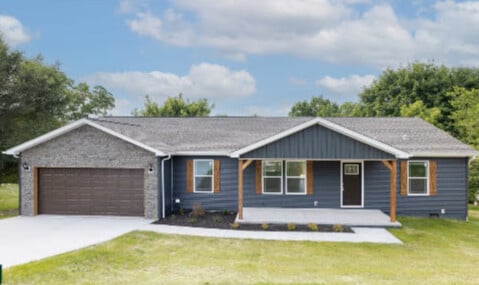
Single-family and condominium alternatives, such as manufactured homes and accessory dwellings units (ADUs), could go a long way toward helping ease New Hampshire’s housing crisis. But those options can have some obstacles, according to participants in a forum.

Efforts are underway in Manchester to fashion a version of the iconic board game "Monopoly" into a Who's Who and What's What of New Hampshire's largest city.
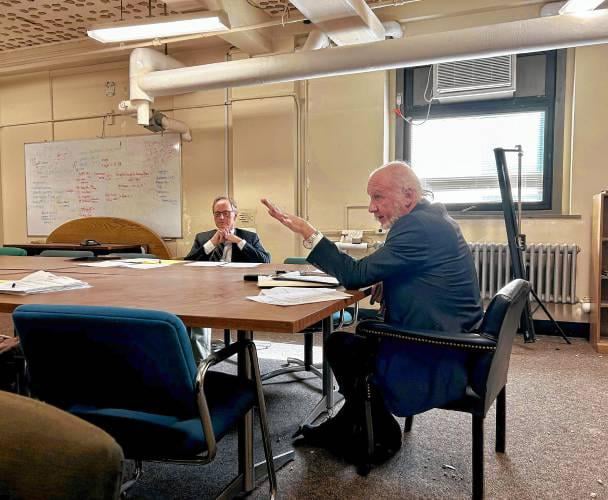
Nine months after the office that handles disputes over access to public records was vacated, the state has yet to staff it.

On February 26, 2026, the Department of Labor’s Wage and Hour Division released a new notice of proposed rulemaking that would significantly revise the test used under the Fair Labor Standards Act (FLSA) for determining independent contractor status, marking the third major change to the federal independent contractor rule in less than five years.

Gov. Kelly Ayotte suggests leasing surplus state land for residential development to help curb New Hampshire's housing shortage and attract more workers to the state.
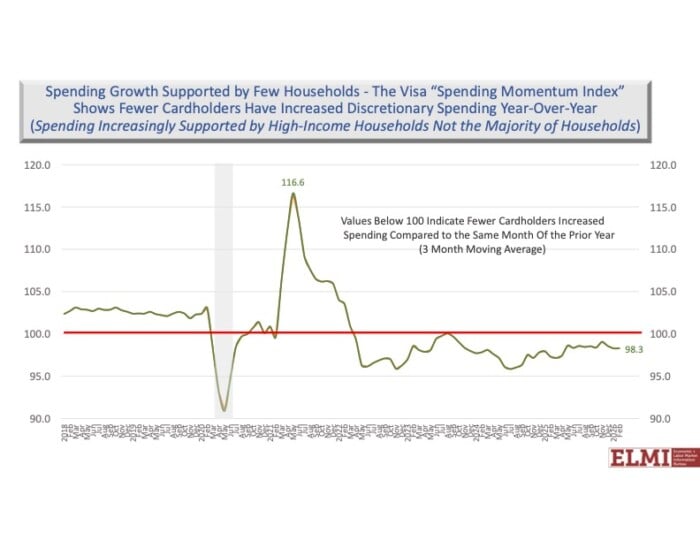
A key New Hampshire economist has trimmed down to 2.2% his forecast for the growth in the state's economy this for 2026, citing lackluster consumer confidence and the uncertainty of the U.S. war against Iran.

POLICY By: Kevin Cavanaugh To be a family who isn’t struggling in today’s economy, a lot has to be going right. You need steady work, an income that stretches far enough, reliable child care — or the flexibility to provide…
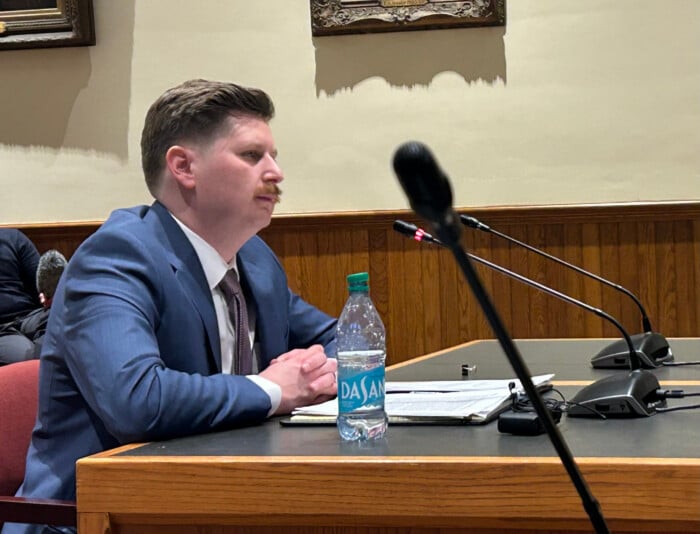
Christopher Ellms Jr. received a 4-1 vote from the executive council on Wednesday, March 4, to become the next chair of the state’s Public Utilities Commission.