Workforce is both an opportunity and challenge for NH manufacturers
Annual summit scheduled as NH welcomes company from Massachusetts
Data from a new report focused entirely on New Hampshire dispels the notion that affordable housing development in a community depresses the property values of nearby residences.
“Affordable development shows no measurable effect on the value of nearby homes, whether in a city neighborhood or a rural town,” concludes the study, “Affordable Housing and Nearby Home Values: Evidence from New Hampshire,” commissioned by New Hampshire Housing and released last month.
“For local officials and policymakers, that means this longstanding question can now be informed by evidence from New Hampshire itself rather than by assumptions or findings from other housing markets,” it adds.
That long-lingering question — What happens to residential property values if affordable housing is located nearby? — is what motivated NH Housing to get a qualitative answer, according to Alexsandra Galanis, the agency’s manager of research and data analytics.
“We wanted to move the conversation from assumptions to evidence,” said Galanis. “We wanted to know what actually happened here when affordable housing was built.”
The work was done by CommunityScale. Based in Massachusetts, it describes its work as “transforming complex demographic and real estate datasets into actionable intelligence for municipalities, developers, and regional planning agencies across the United States.”
The study is groundbreaking in the sense that it’s the first to focus entirely — and only — on the Granite State.
“Typically, a lot of the existing literature has really been national, or or it’s been mostly focused on metropolitan areas like New York or Arlington, Virginia,” said Galanis. “This is really New Hampshire specific, and so we didn’t want a planning board in New Hampshire to have to rely on a study from New York, California, or any other very different housing market.”
CommunityScale researchers say they looked at 93 affordable housing developments and 68,488 nearby home sales across 13 years of New Hampshire housing data.
They had three takeaways from the data they assembled:
“For New Hampshire communities, these findings provide strong evidence that concerns about affordable housing lowering nearby property values are not supported by observed housing market data,” the researchers said.
The report adds more tinder to the smoldering issue of housing availability and affordability in the state.
The NH Housing commissioned study brings to mind a study from two years ago that assessed whether having more young families adding more children into local schools resulted in higher property taxes.
It is another trope used by residents in some communities to limit new residential development, especially housing that appeals to young families.
The New Hampshire Association of Realtors (NHAR) commissioned a University of New Hampshire economics professor to study the issue. “One cannot say that if you bring more children into town and they entered the public schools, that the property tax will go up. It simply isn’t supported by the data or by logic,” that study concluded.
New Hampshire Housing (known fully as the New Hampshire Housing and Finance Agency) is a self-supporting public corporation that promotes, finances, and supports housing solutions for Granite Staters.
Its new study looked at a variety of urban, suburban and rural communities where affordable housing units were constructed without harming the values of nearly single-family homes. The broad look at the issue, according to Galanis, will help inform state and local policy makers.
“For planning boards and local officials, the study provides clear guidance: concerns that affordable housing will lower nearby property values are not supported by New Hampshire’s experience and should not be used as a reason to deny, delay, or place additional conditions on a proposal,” the study says.
Galanis emphasized that property values are often an important part of the discussion when local planners assess the impact of a residential development.
“Property values are part of the public conversation around housing, and in some cases, they are directly relevant to local land use decisions,” she said. “So this study gives policymakers and local board New Hampshire local boards a New Hampshire specific evidence to consider, rather than relying on a generalized assumption that affordable housing will reduce surrounding property values.”
The more relevant issues, she noted, relate to a proposed development alignment with local zoning and regulations that apply to traffic and environmental impact, for instance.
“That’s where the focus should be on, not just focusing on generalizing that building affordable housing is going to lower property values,” said Galanis. “Now we actually have evidence-based research to really debunk that claim and hopefully move the conversation away from that generalized assumption and really push focusing more on let’s see this project and look more at the design, let’s see how it impacts on the traffic infrastructure.”
A lack of enough housing here to meet the demand has driven up home prices over the last several years. Available data shows appreciable increases in all types of housing — rentals, single-family homes, condominiums/townhouses, even manufactured homes.
The median price of a single-family home, for instance, was $569,900 in August, according to the latest NHAR data. That comes after an all-time high of $580,000 in July.
And tax property tax bills are reflecting these higher values as communities are reassessing properties — and taxing them accordingly — in an effort to keep assessed values as close to market values as possible.
The NH Housing study will be one of the topics when the organization holds its Housing & Economy Conference on Sept. 23 at the Grappone Center in Concord.
Gov. Kelly Ayotte is on the agenda to offer opening remarks. Panels include discussions about reusing and preserving historic buildings and building a trades workforce. The keynote speaker is Christopher Thornberg, founding partner of Beacon Economics, one of the nation’s leading economic research firms whose topic is “Social Narratives, Housing Realities, and the Economic Outlook for New Hampshire.”

Annual summit scheduled as NH welcomes company from Massachusetts
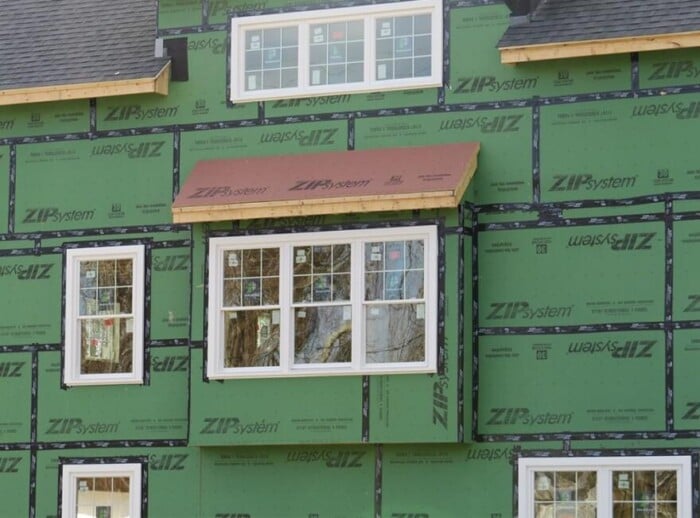
Data from a NH Housing report focused entirely on New Hampshire dispels the notion that affordable housing development in a community depresses the property values of nearby residences

If you live in Manchester or Concord, you probably don’t think twice about finding a doctor. There is a specialist within a few miles for almost anything you need. But if you live in Colebrook, or Lancaster, or any one of dozens of small communities spread across New Hampshire’s North Country, the picture looks very different, and the gap between those two realities is wider than most people realize.

Androscoggin Valley Hospital (AVH), a member of North Country Healthcare in Berlin, performed its first cataract surgery in recent memory on August 20, 2026, a milestone made possible through the hospital’s partnership with North Country Ophthalmology, a physician-led alliance of board-certified MD ophthalmologists that began seeing patients at AVH in January.
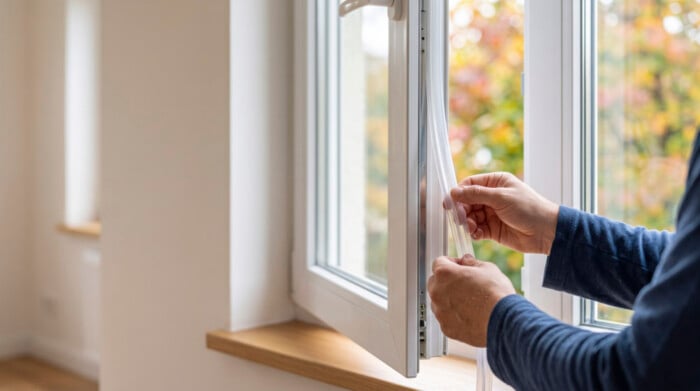
Evan Clements and Precia Harthcock of Jaffrey love their 1926 home, but they acknowledge the drawbacks of houses built in that era. The room that is now their sitting room, for example, was once a porch that had been enclosed and is noticeably colder than other parts of the house. The second floor was much hotter than the first floor, and their kitchen was drafty.

The NH Tech Alliance is seeking applications from New Hampshire technology and life sciences companies for its 20th annual Product of the Year competition, which will showcase some of the state’s most innovative new products and significant product advancements.

F.L. Putnam (FLP), a growing financial services company based in Lynnfield, Mass., is bullish on New Hampshire.

Employee co-op takes over Wilton publisher Earth Sky + Water as founder retires

New report cites Tradeport’s ‘uniquely important role in New Hampshire’s economic architecture’ as executive director looks toward ‘retooling’ for life science users