(Opinion) UNH partnerships strengthen NH’s blue economy
EDUCATION
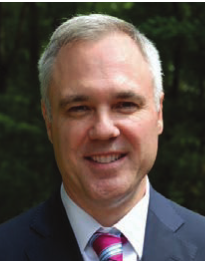
Ted Curley
By: Ted Curley
When people talk about New Hampshire’s economy, they often picture tourism, small to mid-sized businesses, and manufacturing. Increasingly, there’s another category that belongs on that list: the blue economy.
Thanks to strong research-to-industry partnerships, New Hampshire is becoming a place where ocean science turns into real-world technology, and where students and professionals can build sustainable, career-defining futures in maritime innovation.
New Hampshire’s advantages go well beyond its renowned mountains and scenic geography. Its concentration of top-tier talent, fueled by a superb higher education system, makes New Hampshire a place where innovation comes naturally.
That spirit is one of the reasons Klein Marine Systems chose to deepen its partnership with the University of New Hampshire’s Center for Coastal and Ocean Mapping/Joint Hydrographic Center (CCOM/JHC). Klein is a world leader in designing and manufacturing advanced side-scan sonar systems used for exploration, mine countermeasures (MCM), hydrographic mapping and research, which makes collaboration with one of the world’s premier ocean mapping centers a natural fit.
UNH’s Institute for the Study of Earth, Oceans, and Space is celebrating its 40th anniversary this year. That milestone represents four decades of advanced research, technical expertise and problem-solving that have helped elevate New Hampshire’s reputation across the globe. The full value of research is realized when academic excellence meets industry urgency, real-world constraints and opportunity.
That is exactly what partnerships like CCOM and Klein enable. At the Klein Sonar Innovation Lab at UNH’s John Olson Advanced Manufacturing Center, our engineers are advancing the next generation of sonar technology while helping cultivate the workforce that will sustain this sector for decades.
We collaborate with undergraduate and postgraduate students on open projects spanning research, manufacturing process improvements and general R&D. Students work shoulder-to-shoulder with seasoned engineers on the same real-world manufacturing challenges they will face after graduation.
The University of New Hampshire and the CCOM Joint Hydrographic Center are ideal partners for Klein Marine Systems. It’s a full-circle moment for me, from being a student here nearly 40 years ago to becoming an industry partner with a university that has grown into a world leader in maritime and oceanographic research. With key resources such as access to research vessels, test facilities and local engineering talent, we believe the next generations of Klein sonars will be developed right here at our Sonar Innovation Lab.
Access to UNH research vessels and testing facilities enables us to validate performance throughout every phase of development. The partnership also supports Klein-sponsored summer training sessions that give students handson experience with Klein sonar equipment, strengthening our team, sharpening skills and deepening the relationships that make collaboration work.
The impact is immediate for both the students and the Klein engineers. Students gain confidence and competence faster because they see how ideas become reality, concepts become a design, a process, a test plan, and ultimately a functioning, reliable product. They learn the habits that matter most in advanced manufacturing, including documenting decisions, working through tolerances, iterating quickly and solving problems collaboratively under real constraints.
For our engineers, the benefit is just as real. Working with students brings fresh perspective to ongoing projects and keeps our experts sharp. Teaching processes forces clarity, and student questions often lead to smarter, more efficient ways to build. That exchange strengthens a culture of innovation and continuous improvement while building a pipeline of talent that already understands the pace and standards of mission-critical marine technology.
New Hampshire benefits as well when talented graduates choose to build their careers here rather than leaving for larger coastal tech hubs. In a competitive labor market, that retention is economic development.
Collaborations like CCOM and Klein are where the future begins. As UNH’s Institute for the Study of Earth, Oceans, and Space marks 40 years of impact, it is helping New Hampshire strengthen its position in the blue economy by connecting practical engineering with world-class research. It is turning learning into real jobs, innovation and lasting economic strength.
Most importantly, it helps ensure the next generation of maritime technology, and the engineers who will develop it, stay and grow here in the Granite State.
Ted Curley, UNH Class of ’87, is executive vice president and general manager of Klein Marine Systems in Atkinson.