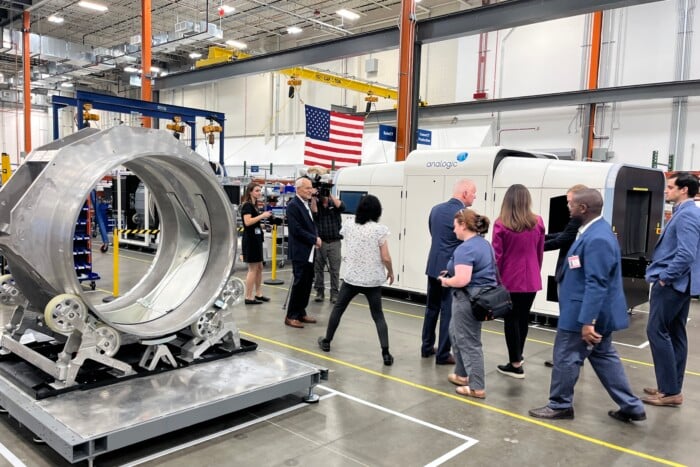
NH’s ‘Optics Valley’
Precision optics is booming in NH
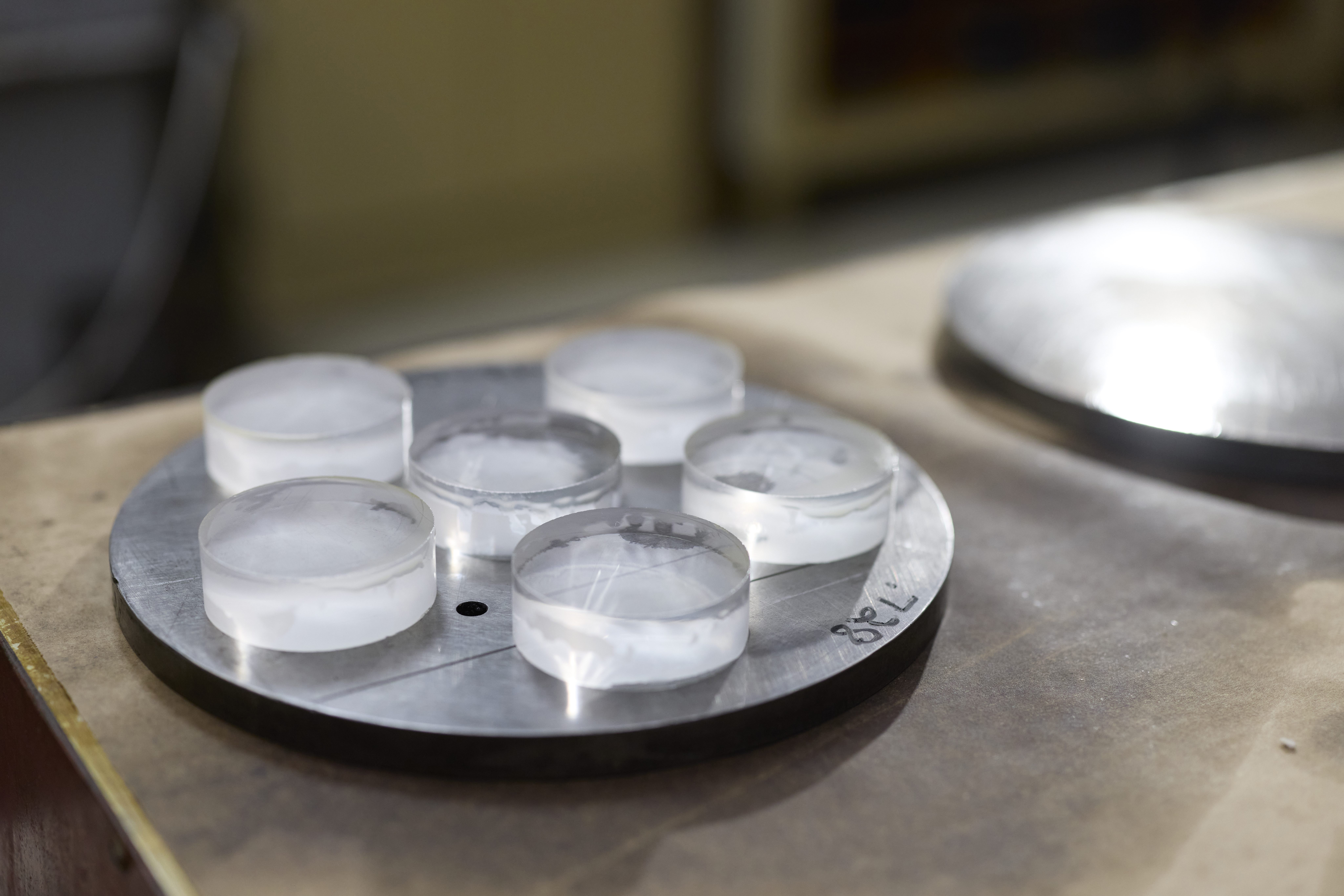
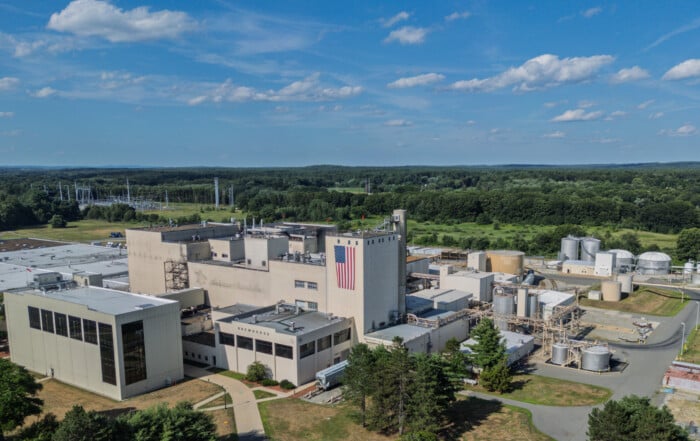
The production process at Bond Optics in Lebanon creates bond optics specialized components to OEM (original equipment manufacturer) companies across the aerospace, defense, semiconductor, medical and scientific industries. (Courtesy photo)
Precision optics is likely one of the biggest manufacturing sectors in New Hampshire that most Granite Staters have never heard of.
That’s because the precision optics sector has a wide reach, touching direct jobs, such as Bond Optics in Lebanon, a maker of high-precision optical components, and touching indirect jobs, such as those in Wilcox Industries in Portsmouth, a military contractor that makes, among other products, laser-aiming devices.
Everything from the lenses in your cellphone camera to the communications satellites in low orbit around the Earth to virtual reality headsets, missile tracking sensors and the automatic braking system in new cars has to do with optics.
“When I really think about precision optics, it really touches everything that we do now,” said Matt Zabko, CEO of Bond Optics. “The amount of technological advances in the last 50 years have generally in some way been powered by optics. We find optics today in our cellphones, in our cars. Every piece of emerging technology is being powered by optics.”
New Hampshire’s grip on the technology is not only widespread, but deeply rooted, not only in history but in location.
A core of manufacturers is clustered in the region around Keene. So much so that Keene State University has embarked on producing optics-job-ready individuals through a new one-year certification program to help fill the need for new skilled workers.
“I think a lot of people don’t realize how it underpins so many technologies; it’s this hidden huge industry,” said Sarah McGregor, academic director of the Precision Optics Certificate Program and professor of physics at KSU.
“I took a lot of the local companies, mapped as many of the needs that we thought that we were going to be able to hit, and then developed coursework,” she added. It graduated its inaugural class of certificate holders in May.
Some 50 optics-related companies alone are in Keene’s Monadnock Region, an “Optics Valley,” as promo material for the KSU certificate program calls it.
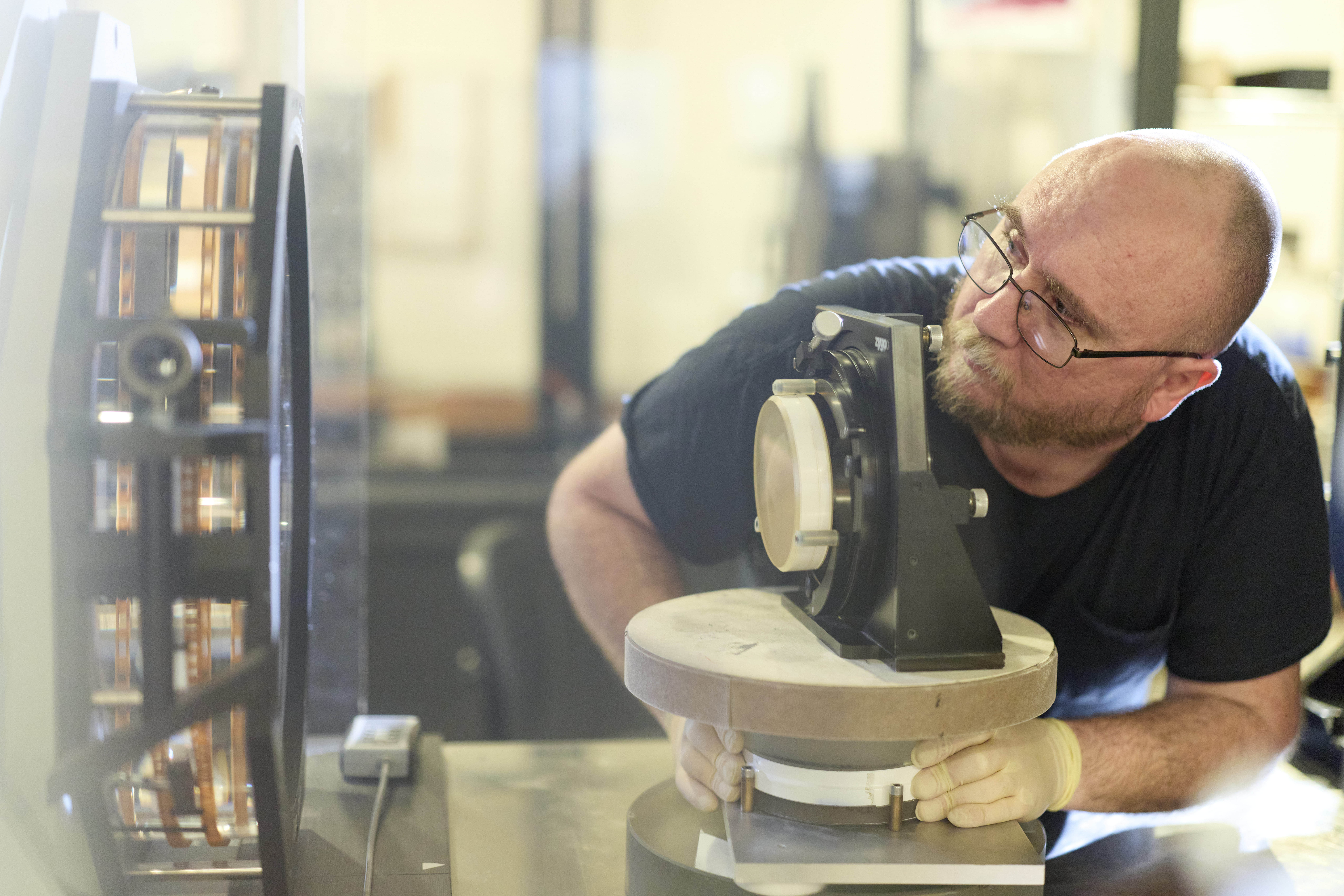
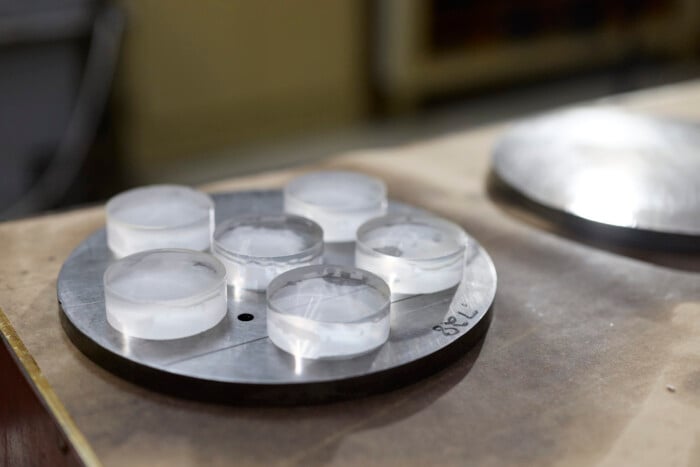
Bond Optics in Lebanon is one of several companies related to a large, but relatively unknown, cadre of manufacturers who make or use high-precision components related “to every piece of emerging technology,” says company CEO Matt Zabko. (Courtesy photo)
Optics origins
The industry’s origins are well established in the region along with one of its pioneers: Leonard Chaloux. In fact, it was Chaloux’s attachment to the region that helped create among the first successful precision optics companies in New Hampshire: Moore Nanotechnology Systems in Swanzey.
Chaloux was a student at what was then Keene State College in 1972, working as an apprentice machinist at Pneumo Precision in Keene, founded 10 years earlier by young machinist Don Brehm. It made spindles for measuring applications.
Here’s why Pneumo is important in the history of precision optics: It used air bearing technology to create its products. That technology uses pressurized air (think of an air hockey table) to create a zero friction and very clean production environment.
Among the offshoots of air bearing technology was single-point diamond turning (SPDT). It was the union of frictionless sub-micron motion with ultra-precise machining, a process that could replace the hand polishing of lenses, mirrors, etc. with nanoscale computer-controlled sculpting.
The factors of precision required in this work are measured in microns — equal to one-millionth of an inch.
Pneumo used the tech to start making the platens for Xerox’s copy machines.
As Pneumo changed hands, Chalou also changed jobs within the company, ultimately running the operation as president. After it was absorbed into Precitek in Keene, Chaloux left in 1997, teaming up with Moore Tools of Bridgeport, Conn., which wanted to establish a diamond-turning operation there with Chaloux running it.
“My boys were small in elementary school here in Keene, and I told them I really appreciated the offer, but there was no way I was going to leave Southern New Hampshire,” Chaloux said.
So Moore Tools fronted Chaloux $2 million to create Moore Nanotech here in New Hampshire as a worldwide supplier of advanced machine tools for the optical industry.
“We started from scratch with a completely clean sheet of paper, redesigning machines from the ground floor up, and ended up designing the most effective and capable machines on the market at that time,” said Chaloux, who retired from the company in 2019.
He said he saw applications being used across the board by different industries. IBM used the diamond-turning process to create two-sided computer memory discs for its mainframe computers, for instance.
Innovations on the use of optics continue, with no ceiling in sight, in Chaloux’s view.
“You could never identify what was the new thing that was being developed and how that was going to take over, and in my 50-plus years, the market went exactly that way,” Chaloux said. He recalled getting specs for the optical parts of a new product that turned out to be a first-issue augmented reality (AR)/virtual reality (VR) headset.
“That’s kind of the way the industry has grown, and to be honest with you, I don’t see any change in that going forward,” he said.
Emphasis on NH
At Bond Optics, the principle of grinding glass is the basis of the work they do, supplying specialized components to OEM (original equipment manufacturer) companies across the aerospace, defense, semiconductor, medical and scientific industries.
“Guys like Copernicus and Galileo were essentially doing the same thing that we’re doing here in Lebanon, New Hampshire,” Zabko said. “They were grinding glass using an abrasive material to shape it, and then they were polishing, and we’re essentially doing the same thing, only there’s been a lot of technological advances in that.”
He considers the importance of how a collection of companies here have an impact on other companies.
“I look at the optics industry today, there’s somewhere between 35 and 50, maybe 60 companies in New Hampshire that are either directly manufacturing optics and photonic equipment, or what I would consider photonics adjacent,” he said. “These are the guys like BAE, L3 and Wilcox Industries, who may not be making optics; however, they are certainly consuming a lot of optics in everything they do.”
But the state has no central depository of the number of direct and adjacent jobs that are impacted by the optics industry. McGregor attempted to use U.S. Bureau of Labor codes to decipher that information in New Hampshire. While she couldn’t come up with a precise number, she said her research indicates that the state has the highest per capita direct and indirect optics-related employment of anywhere in the country.
Zabko formed the New Hampshire Photonics Alliance this year to bolster the high-tech precision manufacturing sector in the Granite State and New England.
He looked around and saw coalitions of manufacturers in other parts of the country — Arizona and New York in particular — getting state and federal funding to support workforce development in the industry.
“I kind of was thinking about this.
I said: You know, there’s enough companies in New Hampshire where we should all be kind of aligned under one banner,” he said. “Why should they be getting all the glory when we have all this here?”
Laser engraved
Both Zabko and McGregor at Keene State believe state policymakers and educational institutions — on the university and community college levels — can be doing more with workforce development in the sector.
“I would love to see the rest of the University System of New Hampshire start to offer things, so it’s not just the southwest corner,” Zabko said.
When Keene State held its ceremony to recognize its seven inaugural Precision Optics Certificate Program recipients, Zabko lauded the school for its efforts.
“What you have built here is impressive,” he said. “You heard the need from the industry, you designed a program to meet it, and now you are delivering a talent pipeline that is needed at both the local and national level.”
He also underscored the work that the students will undertake.
“Take pride in what you are doing. Learn everything you can. Pay attention to the small stuff. The tolerances are tight. Microns matter. Surface quality matters.
Cleanliness matters. The people who grow the fastest are the ones who want to understand why something works, not just how to do it,” he said.
Each certificate-holder received a plaque of achievement engraved on the very laser engraving system they trained on throughout the year.
See details of the program at keene.edu/optics.