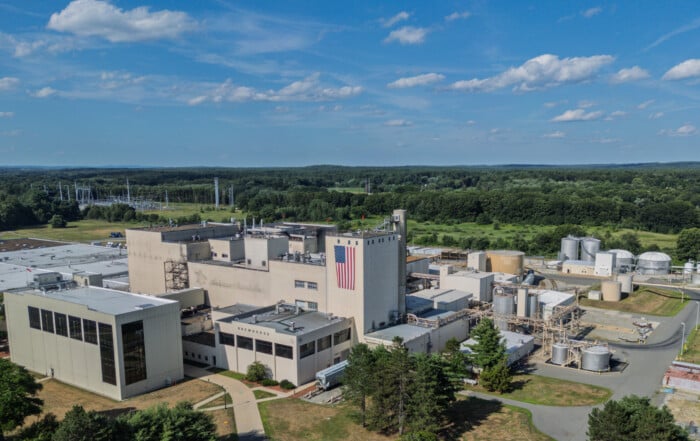
Peterborough sells contaminated South Municipal Well to NH Ball Bearings for $110,000
The Peterborough Select Board unanimously approved the $110,000 sale and the company’s conditions to shut down the site on Tuesday

This is a manufactured home at the Hemlocks, Sun Communities-owned property in Tilton, that was recently for sale for $320,000, a price that didn’t include the cost of the lease for the land on which the home sits. (Courtesy photo)
Landmark legislation that originated in New Hampshire 43 years ago is being put to the test today as for-profit investors snap up manufactured home communities here and across the country.
The so-called “opportunity to purchase” law, created here in 1983, gives residents of a manufactured home community — formerly known as a mobile home park — the chance to form a cooperative to buy their community when it is put up for sale.
Originally seen as a way to protect the land from becoming a commercial or condominium development, the law’s application has grown in recent years to give residents of these communities a hedge against for-profit owners who may increase rents, thus endangering residents’ ability to stay in their homes.
That threat has piqued the interest of U.S. Sen. Maggie Hassan (D-NH), who sent a letter in December to corporate owners with questions about their business practices.
“Residents of manufactured housing communities include significant numbers of seniors, people with disabilities, low-income families and people who live in rural areas,” wrote Hassan.
“In addition, residents often have limited ability to move; homes can be difficult to resell, and homeowners rarely relocate them because of the costs and risk of structural damage. Therefore, residents may have few if any options when faced with egregious rent increases, changes in lease terms or other business decisions by community owners,” added Hassan, who launched the query in her capacity as the top Democrat on the Congressional Joint Economic Committee.
Manufactured homes, as an asset, have increased in value for similar reasons as other residential properties: site-built, single-family homes and condominium/townhouses. There is a high demand and a limited supply.
According to Bob Quinn, CEO of the New Hampshire Association of Realtors (NHAR), the price of manufactured homes has increased in recent years at a faster rate than site-built homes and condominiums.
Over the past decade, he told a housing forum in March, single-family prices have risen 125%, while condos have risen 128%.
“Manufactured housing has increased the median sales price by 301% over the past decade,” he said. “Why? Single-family homes have become out of reach for many average New Hampshire families. They’re looking for less expensive options.”
Because of those soaring values and because residents of these communities tend to stay in place (what investment analysts call “sticky” tenants), they become targets for profiteering companies.
(Any discussion about manufactured home communities needs some lexicography background. See related story.)
Investments in these communities are often made through real estate investment trusts (REITs), which raise capital from investors to purchase portfolios of properties, generating revenue primarily through rent collection.
Among the largest corporate investors is Sun Communities, which owns some 300 communities across the country, including six in New Hampshire: Brook Ridge in Hooksett, Crestwood in Concord, Farmwood Village in Dover, Hannah Village in Lebanon, Hemlocks in Tilton and River Pines in Nashua.
Letter of inquiry
Hassan’s inquiry went to Sun Communities and five other corporate owners. Her letter included a 2021 analysis that 23% of manufactured housing community purchases over the previous two years were made by corporate investors.
According to Hassan, 27 mobile home parks in New England — more than 5,200 housing units — are now owned by private equity–backed companies.
According to the New Hampshire Community Loan Fund, 20 communities in New Hampshire with more than 3,800 homes have been purchased by out-of-state investors for $293 million since it started tracking the purchases in 2016.
“Given this impact on our economy, public reports of concerns with the management of some manufactured home communities, and the pressing need to increase access to safe, reliable housing that people can afford, I seek more information on your business practices,” she said, requesting a lengthy list of data about fees, rent increases, policies, licensing, etc.
Hassan’s office is compiling responses to the letter, as well as responses to an online survey of residents of corporate-owned communities in New Hampshire.
The survey seeks information about residency, including questions about whether the home is rented or owned, cost of leasing the land, additional costs for utilities or other fees charged by the owner, and the percentage of monthly take-home pay that goes towards these housing costs.
U.S. Sen. Jeanne Shaheen (D-NH) is also taking an interest in the issue.
She announced on May 21 legislation she’s filed in Congress to incentivize manufactured home park owners to sell the park to community residents or nonprofits, rather than another developer or landlord.
Her Manufactured Housing Community Sustainability Act would create a 75% federal tax credit offsetting capital gains on a sale, but only if that sale is to a qualified entity other than a for-profit company.
“By helping residents of manufactured housing communities buy their communities, they’ll be protected from predatory rent increases and get real relief from high costs,” she said in a statement that notes companion legislation has been filed in the House by U.S. Rep. Chris Pappas (D-NH-CD1).

Residents of Cotton Farm Village in June celebrated their cooperative ownership of their manufactured home community in Danville with a ribbon-cutting, a purchase made possible with the help of the New Hampshire Community Loan Fund. (Courtesy photo)
A first line of defense
The New Hampshire Community Loan Fund can be a line of defense against corporate ownership.
The nonprofit organization held a webinar May 8 that largely focused on Snowy Ridge — a made-up community using real-life data — as an example of how the opportunity to purchase law can create a resident-owned community (ROC).
Community Loan Fund representatives walked through the steps that the residents went through: formation of a cooperative, due diligence and financing.
The fund helps finance these purchases with investors of their own.
The most recent was the Cotton Farm Village Cooperative in Danville, which in June of last year celebrated becoming New Hampshire’s 152nd resident-owned community.
Financed by the Community Loan Fund, the purchase was made possible by what the fund described as “our neighbors-investing-neighbors model that turns donations and impact investor funds into loans and services for homeowners, small businesses, nonprofits and communities.”
Throughout the process, through its ROC-NH efforts, fund personnel provide all kinds of technical assistance, from infrastructure assessment to ROC guidance creation, financial coaching and community management once the sale has occurred.
“Here at the New Hampshire Community Loan Fund, the technical assistance is our secret sauce,” said Hannah Chisholm, the organization’s acquisitions program manager and housing cooperative coach. “That is what makes the community loan fund different from a traditional bank. We are hands on. We are the backstop for a lot of our communities, helping them to thrive for years to come.”
New Hampshire has led the way in creating ROC opportunities elsewhere in the country in some 15 states, according to Sarah Marchant, the fund’s chief operating officer and senior vice president of ROC-NH.
“I’ll say, about 20 years ago, we helped to create ROC-USA, which does this work nationally,” said Marchant. “Nationally, there’s about 350 resident-owned communities.”
Legislative help
Legislatively, there are remedies fund personnel believe Congress and state legislatures could make to help the manufactured home communities help address the housing shortage and help those residents stay in their homes.
One local remedy is zoning, according to Abby Bronson, the fund’s director of policy and advocacy.
“Addressing the zoning challenges is an important part of helping to solve the affordable housing crisis in New Hampshire,” said Bronson.
“Unfortunately, that has not included manufactured housing yet, but that is still something that we’re hopeful to include is addressing zoning barriers, to making manufactured housing more accessible.”
Across other states, the mobile homes of old are considered chattel, in other words property like a vehicle, not like a home. That ownership distinction, according to Marchant, can affect financing terms. “You don’t get the consumer protection standards that come with a mortgage,” she said.
And she would like to see Congress work on ways to help manufactured home communities, some dating back to the 1950s, help address infrastructure issues associated with water and sewer.
“When we think about how much the federal government supports infrastructure in so many ways, infrastructure funds at the federal level would be incredibly helpful,” she said.
The Peterborough Select Board unanimously approved the $110,000 sale and the company’s conditions to shut down the site on Tuesday
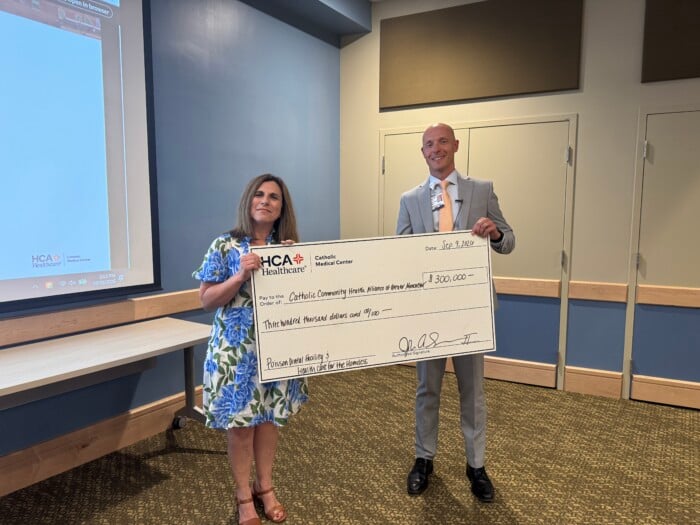
The investment is the second installment of CMC’s $2 million, three-year commitment to the programs, bringing its total support to date to $600,000

Annual summit scheduled as NH welcomes company from Massachusetts
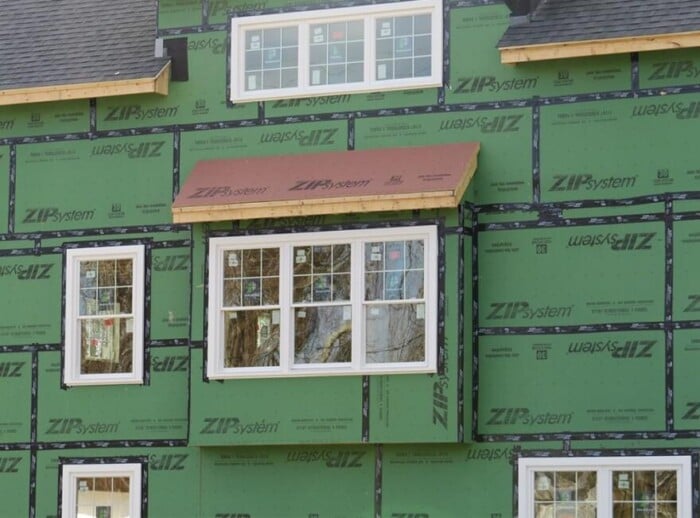
Data from a NH Housing report focused entirely on New Hampshire dispels the notion that affordable housing development in a community depresses the property values of nearby residences

If you live in Manchester or Concord, you probably don’t think twice about finding a doctor. There is a specialist within a few miles for almost anything you need. But if you live in Colebrook, or Lancaster, or any one of dozens of small communities spread across New Hampshire’s North Country, the picture looks very different, and the gap between those two realities is wider than most people realize.
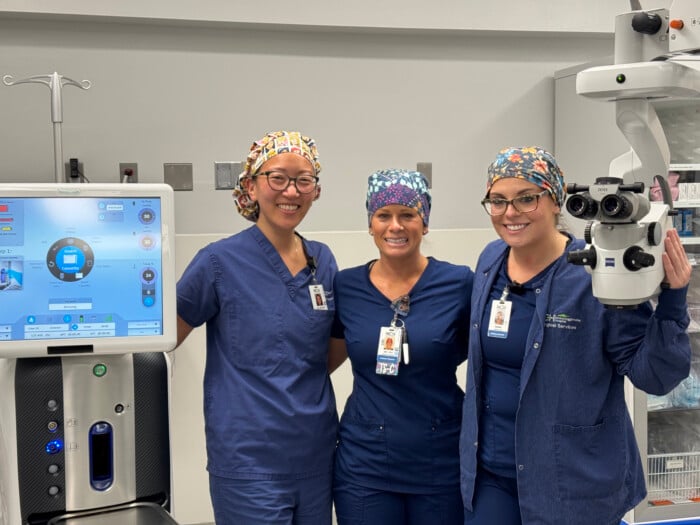
Androscoggin Valley Hospital (AVH), a member of North Country Healthcare in Berlin, performed its first cataract surgery in recent memory on August 20, 2026, a milestone made possible through the hospital’s partnership with North Country Ophthalmology, a physician-led alliance of board-certified MD ophthalmologists that began seeing patients at AVH in January.
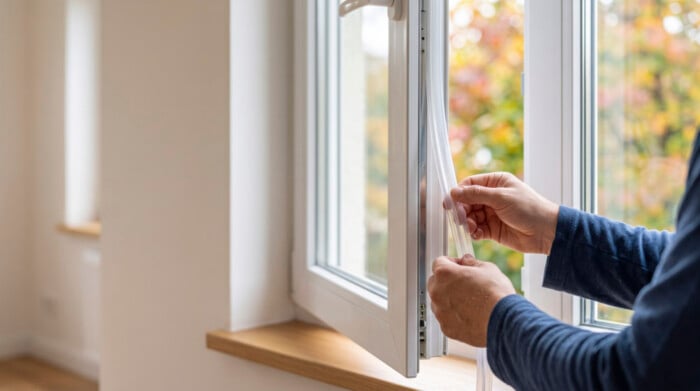
Evan Clements and Precia Harthcock of Jaffrey love their 1926 home, but they acknowledge the drawbacks of houses built in that era. The room that is now their sitting room, for example, was once a porch that had been enclosed and is noticeably colder than other parts of the house. The second floor was much hotter than the first floor, and their kitchen was drafty.

The NH Tech Alliance is seeking applications from New Hampshire technology and life sciences companies for its 20th annual Product of the Year competition, which will showcase some of the state’s most innovative new products and significant product advancements.

F.L. Putnam (FLP), a growing financial services company based in Lynnfield, Mass., is bullish on New Hampshire.