State of artificial intelligence in New Hampshire
Forum at Saint Anselm's Center for Ethics in Society explores the impact of AI and its potential to boost profit margins
TL;DR: In 2025, cybersecurity shifted from a “best practice” to a mandatory requirement for operational survival. Three significant events—enforcement of CMMC, the global Salt Typhoon campaign, and a critical US government shutdown—exposed the failure of fragmented security tools and established that point solutions can no longer protect against modern threats.
The Collapse of the “Point Solution” Era
For the past decade, the cybersecurity industry has operated under the illusion that buying individual security products equates to safety. That illusion broke in 2025. It wasn’t a single catastrophic breach that caused the shift, but the realization that the coordination burden of managing fragmented tools exceeded most organizations’ capacity.
The data revealed a stark reality: purchasing point solutions does not equal achieving security outcomes.
1. The CMMC Enforcement Crisis
On November 10, 2025, the Department of Defense made CMMC (Cybersecurity Maturity Model Certification) compliance a binding condition for contracts. The enforcement came with no grace periods and no exceptions.
Despite years of advance notice, the industry was largely unready:
This failure demonstrated that simply having access to security tools is insufficient if organizations lack the internal technical leadership to coordinate them.
2. Salt Typhoon: Cyber as National Defense
While contractors struggled with compliance, the FBI revealed the extent of “Salt Typhoon,” a Chinese state-sponsored campaign that had been running undetected since at least 2019.
Salt Typhoon proved that infrastructure compromise enables both intelligence collection and operational disruption, making cybersecurity inseparable from national defense.
3. The Government Shutdown Vulnerability
A record-long government shutdown in 2025 further exposed the fragility of the US cyber defense posture.
The shutdown proved that adversaries view coordination gaps as operational windows to launch accelerated attacks.
The Path Forward: Integrated Accountability
The events of 2025 eliminated the buffer zone between theoretical risk and operational consequence. Moving into 2026, the weaponization speed of zero-day vulnerabilities—now deployed within hours of disclosure—has rendered traditional reactive monitoring obsolete.
To survive this new landscape, organizations must abandon the strategy of assembling collections of point products. Instead, they must prioritize integrated security programs that:
The verdict for the future is clear: readiness depends on integrating security, compliance, and infrastructure into a unified strategy. Organizations that continue to rely on fragmented tools will face the same failures that left 99% of defense contractors unprepared in 2025.

Forum at Saint Anselm's Center for Ethics in Society explores the impact of AI and its potential to boost profit margins
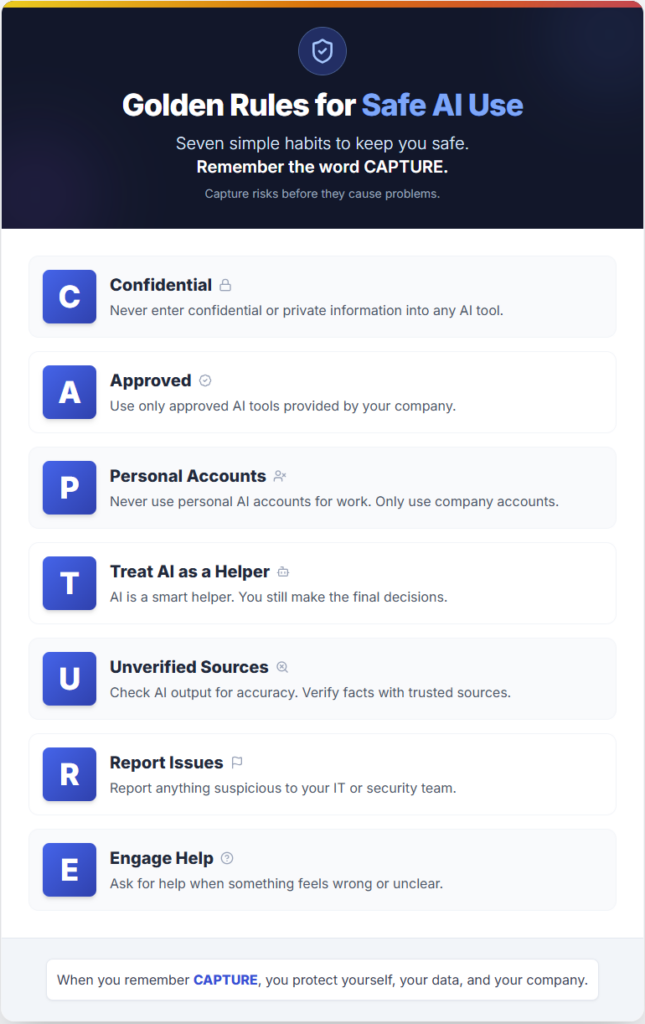
Practical tips to help you avoid the most common AI usage mistakes cybersecurity professionals see today

Cybersecurity isn’t just a defensive measure; it’s a strategic asset that can significantly enhance enterprise value

Significant cyber events exposed the failure of fragmented security tools and established that point solutions can no longer protect against modern threats

The Cybersecurity Maturity Model Certification (CMMC) isn’t some distant regulatory cloud looming; it’s here, it’s already appearing in contract language

A phishing scam, ransomware attack or data breach can turn an ordinary Tuesday into a flat-out disaster if businesses avoid basic, consistent cyber care

For businesses in the United States, AI governance will soon become a compliance imperative, not just a best practice

The ever-evolving digital world we operate in each day offers infinite opportunities for business growth and development, but it also presents many risks.
Overwatch Foundation is helping the state and school districts protect critical systems