The New England energy market
Rising demand, transmission constraints, and the push for regional solutions
Rising energy demand, driven in part by the needs of data centers, AI infrastructure, and other energy-intensive end-users, is accelerating interest in small modular reactors (SMRs), both in New Hampshire and nationally, as a source of reliable, carbon-free power to meet energy and climate needs and stabilize energy costs.
SMRs are a class of advanced nuclear reactors designed to be smaller, factory-fabricated and equipped with passive safety features. Although designs differ, most SMRs range from 50 to 300 megawatts (MW).
Their modularity, flexible siting potential, and ability to operate off-grid make them particularly attractive to data centers seeking 24/7 power insulated from market volatility. Those same attributes are appealing to New Hampshire policymakers confronting high regional electricity prices, constrained transmission and increasing energy demand.
In 2022, the Legislature created the Commission to Investigate the Implementation of Next-Generation Nuclear Reactor Technology in New Hampshire. In its December 2023 final report, the Commission concluded that advanced nuclear power generation will play a “vital role” in generation of carbon-free, reliable and affordable power.
The Commission’s report signaled a consensus recommending further policy decisions to incentivize development of SMRs in New Hampshire.
More recently, House Bill 672, signed into law on August 1, 2025, by Governor Kelly Ayotte, created a new legal category for “off-grid electricity providers,” reducing regulatory hurdles by exempting from state public utility regulation facilities that generate and transmit power without interconnecting to the existing distribution system.
Other legislative activity reflects both enthusiasm and caution toward SMRs. One Senate bill in 2025 moved to add SMRs into the state’s list of clean energy resources and to provide a statutory framework for microgrids; a concurrent resolution declared that advanced nuclear energy development is in the state’s interest. HB 710, which would have allowed electric utilities to own and operate SMRs, failed to pass in part because critics viewed utility ownership of SMRs as inconsistent with electric restructuring.
Yet, despite the predictable scrutiny that commonly accompanies conversations around preferences for electric generation technologies, the policy landscape in New Hampshire, and nationally, seems to favor SMRs.
For data center operators and other high energy end-users, the appeal is simple: continuous, carbon-free baseload power that can be paired with local grids or operate as part of a microgrid to insulate a facility against regional energy market volatility.
For policymakers, with informed policy decisions and investment, SMRs present the opportunity to transform New Hampshire into a provider of reliable and cost-efficient electricity.
Still, SMRs face high regulatory hurdles. In New Hampshire, SMRs over 30 MW in generating capacity must receive a Certificate of Site and Facility from the State Site Evaluation Committee (SEC), the siting board for larger energy projects. Among the required showing to gain SEC approval pursuant to the state siting statute (RSA 162-H), developers must demonstrate that the proposed facility will not have an unreasonable adverse effect on aesthetics, historic sites, air and water quality, the natural environment, fish and wildlife resources, and public health and safety. Developers must also secure all required state environmental permits.
Federally, SMRs, regardless of size, are subject to the jurisdiction of the Nuclear Regulatory Commission (NRC), which possesses authority under the Atomic Energy Act to license the design and construction of reactors and regulate the possession and use of nuclear materials.
Nuclear facility licensing remains a lengthy and resource-intensive process, even as the NRC seeks to modernize it. Recognizing criticism from stakeholders that NRC’s existing regulatory framework as misaligned with smaller, passively safe reactor designs, the NRC initiated a rulemaking (SECY-23-0021) to establish a “risk-informed, technology-inclusive” licensing framework for advanced reactors.
The final rule, referred to as the Part 53 rule, is expected in 2027. Until then, SMR licenses must proceed under legacy licensing pathways designed for older reactor designs. The Tennessee Valley Authority (TVA) is the first U.S. utility to seek an NRC construction permit for a proposed 300-MW SMR. TVA anticipates commercial operation no earlier than 2032, illustrating that first-mover projects face a development timeline measured over many years.
In New Hampshire, and elsewhere, the promise of local, firm, emission-free generation is an attractive option to meet energy needs and climate objectives. New Hampshire’s recent legislative moves reflect a deliberate effort to incentivize SMRs and respond to real economic pressures: high electricity costs, increasing demand, and competition for data center and manufacturing investment.
Viggo Fish is a member of McLane Middleton’s Administrative Law Department.

Rising demand, transmission constraints, and the push for regional solutions
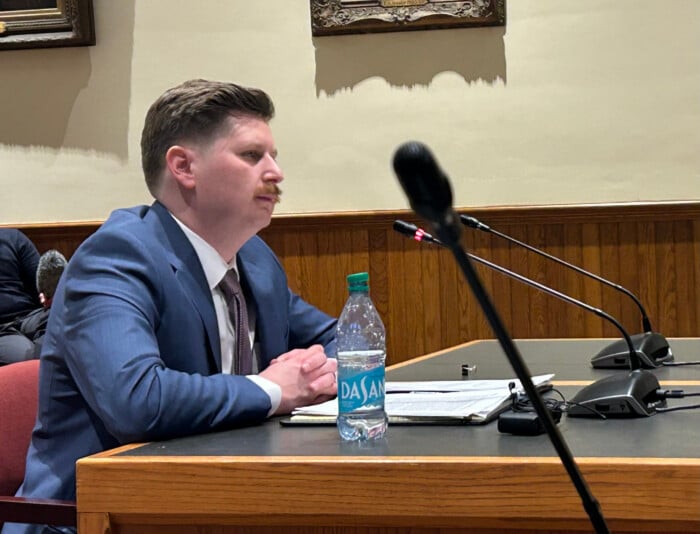
Christopher Ellms Jr. received a 4-1 vote from the executive council on Wednesday, March 4, to become the next chair of the state’s Public Utilities Commission.

Will New Hampshire ever land a massive data center?
Bow could become the first town to withdraw from the Community Power Coalition of New Hampshire as residents confront high energy costs.

New Hampshire’s energy officials are asking the state’s Supreme Court to review a decision by utility regulators that raised rates for Eversource customers last summer.

Residents debated a proposed $2.66 million wastewater project during a town deliberative session at Pittsfield MidCadle High School, with discussion focusing on costs, long-term planning and who should pay.
Innovation is promising for builders, loggers and rural communities
For the last several years, housing and commercial development have been under the spotlight in New Hampshire. Building professionals have had to be creative to address challenges in infrastructure, resilience in the face of a changing climate and a focus on sustainable design. Our expert weighs in on engineering innovations and trends.

Dublin is considering whether to join 27 other New Hampshire towns in a statewide Styrofoam recycling program and will host a trial foam collection event on Saturday, Jan. 31, with a snow date of Feb. 7.