Manchester to end up on the Monopoly board
Efforts are underway in Manchester to fashion a version of the iconic board game "Monopoly" into a Who's Who and What's What of New Hampshire's largest city.

George Antoniadis, president and CEO of PlaneSense
PlaneSense, the largest aviation company in New Hampshire, spent 2025 celebrating its 30th anniversary. The fractional ownership company operates a fleet of jets and turboprops out of the Portsmouth International Airport. George Antoniadis, Founder, President, and CEO offered NH Business Review some insights on success, growth, and doing business in the Granite State.
Q. Congratulations on 30 years. It’s an impressive stretch from your founding to your current growth point. As the CEO, how do you account for the success?
A. Thank you. Reaching the 30-year milestone is a testament to our collective vision and perseverance. We have continually differentiated ourselves in the marketplace by making strategic choices from the very start. Selecting the right aircraft enabled us to offer highly cost-effective, intelligent flight solutions for our clients. This thoughtful approach to fleet development has been instrumental in delivering value and establishing our reputation for excellence.
Equally important is our unwavering commitment to exceptional service and safety. From our focus on the client experience to our rigorous safety protocols, every aspect of our operations is designed to ensure that our clients experience not only convenience and efficiency, but also peace of mind when they fly with us.
Another critical element is our team. The people behind our brand truly make the difference. Our high attention to service has set us apart in a very competitive industry. We’ve also practiced metered growth and maintained a conservative approach to both our business and expansion, ensuring that every step forward is sustainable and strategic. These combined efforts have paved the way for our longevity and current growth point.
Q. Fractional ownership of aircraft is definitely a niche business. What about it makes it so attractive to people?
A. Fractional aircraft ownership is appealing because it offers remarkable flexibility and efficiency to flyers. Instead of having to purchase an entire aircraft, individuals can buy only the share size that matches their actual flying requirements, which is much less than what full ownership would entail. For example, the average private aircraft in the United States is flown just 300 hours per year, or less than an hour a day. With a fractional program, share owners additionally take advantage of a shared fleet that operates close to one thousand hours annually per aircraft which results in a significant reduction in overhead costs.
Q. Your introduction of jet planes (the Pilatus PC-24s) to supplement your turboprop planes certainly allowed you to ‘spread your wings,’ as it were. What specifically did it give you the opportunity to do?
A. Introducing the Pilatus PC-24 jet to our fleet has significantly expanded our capabilities, building on the proven strengths of the PC-12 turboprop. Both aircraft are renowned for their cabin size, internal luggage storage, reliability, efficient operation, and unique ability to operate from shorter runways. This gives our clients access to a wider range of airports than other programs. The PC-24 takes this a step further by offering faster speeds, greater range, and a larger cabin with increased payload capacity, all while maintaining the versatility that sets Pilatus aircraft apart. Our clients can now enjoy coast to coast travel with one fuel stop.
Q. Today, as a fractional owner of an aircraft, where can I be flown to? How many people can I take with me?
A. As a fractional owner with PlaneSense, you can fly to thousands of airfields across the U.S., Canada, Bermuda, the Bahamas, the Caribbean, Central America and Mexico, including many smaller and remote airports that commercial airlines and larger aircraft can’t reach. This significantly reduces your total travel time, or what I like to call “minimizing the last mile.” For example, we have clients who tell us the address of their event rather than the airport they think they should fly to. Our Flight Operations team finds the airport that gets them closest to that destination, eliminating longer ground commutes. In a joint venture with Jetfly, a successful operator of the Pilatus PC-12 and PC-24 in Europe, we have significantly expanded travel options even further, providing access to an almost identical fleet for flights across Europe.
The PC-12 turboprops in the PlaneSense fleet comfortably fit up to six and the PC-24 up to eight passengers. As part of the fractional program, clients enjoy the utmost flexibility and convenience, allowing them to fly on their schedule, not ours.
Q. Your business originally started in Westwood Norwood, Mass., in 1995, then moved to Nashua in 1997, to Manchester, NH in 2000, then to your current home at the Portsmouth International Airport at Pease since 2007. How has New Hampshire been as a place to headquarter your business?
A. We are proud to be part of the New Hampshire business community. Over the years, we have worked with State leadership to improve aviation regulations and infrastructure. The collaborative environment at Pease has been a wonderful experience and we feel at home in Portsmouth. Our New Hampshire clients have been instrumental in our company’s development. Their loyalty and support have shaped our services and strengthened our reputation, providing a foundation for growth both statewide and nationally. New Hampshire also provides an exceptional talent pool, allowing us to thrive and scale our business while also maintaining an unwavering focus on quality and safety.
Q. You’ve been using the Swiss-made Pilatus planes as your primary aircraft over the years. What is it about that company that you’ve been such a consistent partner?
A. The reason we’ve consistently partnered with Pilatus is their well-deserved reputation for reliability, quality, and innovation. The Pilatus aircraft have proven to be extremely dependable, offering excellent performance and safety features that meet our operational needs. Additionally, Pilatus is known for their attention to detail and customer service. Our close partnership allows us to collaborate directly with their team on aircraft enhancements, and we continually learn from their expertise and innovative approach. Their commitment to excellence aligns well with our standards, which is why they remain our primary aircraft provider. Over the last three decades, we have taken delivery of 94 Pilatus PC-12s and 18 PC-24 jets with many more to come.
Q. Tell us about your staffing. How many people do you employ? Where are they located? What types of jobs do you hire for?
A. PlaneSense has grown from a small team of two at its inception in 1995 to over 600 employees today, including nearly 300 pilots. While 80 percent of our team is headquartered in Portsmouth, we also have staff and pilots positioned throughout the United States to support our national operations. In addition to our New Hampshire headquarters, we operate a training facility in Tampa, Florida, and a large-scale maintenance facility in Boulder City, Nevada, to ensure seamless service of our fleet across the country. Our teams are comprised of skilled professionals in areas such as flight operations, customer service experts, aircraft maintenance, sales and marketing, information technology, finance, legal support, and client relations.
Q. You seem to be always looking ahead for what’s next when it comes to PlaneSense, so what’s next?
A. We’re always focused on what’s next for PlaneSense, continually exploring new ways to enhance the value we provide to our clients with innovative products and service features to elevate their travel experience. This forward-thinking approach has led to the launch of offerings like CobaltPass jet cards, the strategic collaboration with Jetfly, and the creation of the PlaneSense Sourcing Solution, an internal team that supports clients with flight needs beyond our own fleet. We are actively expanding our footprint across the United States, broadening our client base, and growing our fleet to meet increasing demand. Continued investment in our core strengths, such as maintenance and training, remains a top priority to ensure exceptional operational performance. For instance, while our pilot training program was once exclusive to our own team, we have opened it to the wider aviation community and plan to expand this outreach in the coming years.

Efforts are underway in Manchester to fashion a version of the iconic board game "Monopoly" into a Who's Who and What's What of New Hampshire's largest city.

Rising demand, transmission constraints, and the push for regional solutions

The Rugg family and the Town of Exeter have settled their long running land dispute, clearing the way for a developer to proceed with a housing development to be built on the Exeter-Newfields town line.

First-time-participant M&T Bank cites community’s ‘strong relationships’

On February 26, 2026, the Department of Labor’s Wage and Hour Division released a new notice of proposed rulemaking that would significantly revise the test used under the Fair Labor Standards Act (FLSA) for determining independent contractor status, marking the third major change to the federal independent contractor rule in less than five years.
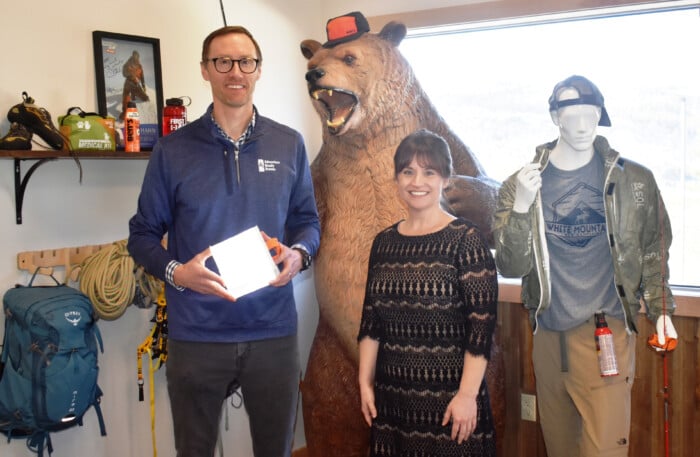
Adventure Ready Brands makes health and safety products at North Country industrial park

Exacom, which provides voice and multimedia recording and logging solutions for 911 emergency communications, has been acquired by Motorola Solutions (NYSE: MSI). Terms of the transaction were not disclosed.

Keene State College’s (KSC) Safety and Construction Sciences programs recently hosted a three-day summit that brought students, faculty, alumni and industry leaders from across the country to address the future of the occupational safety profession and the growing demand for qualified safety professionals.

The board of directors of the Education Alliance for New Hampshire (EANH) has voted unanimously to close the organization’s operations following the loss of significant federal funding that has historically supported its core college access programs, the organization said in a press release.