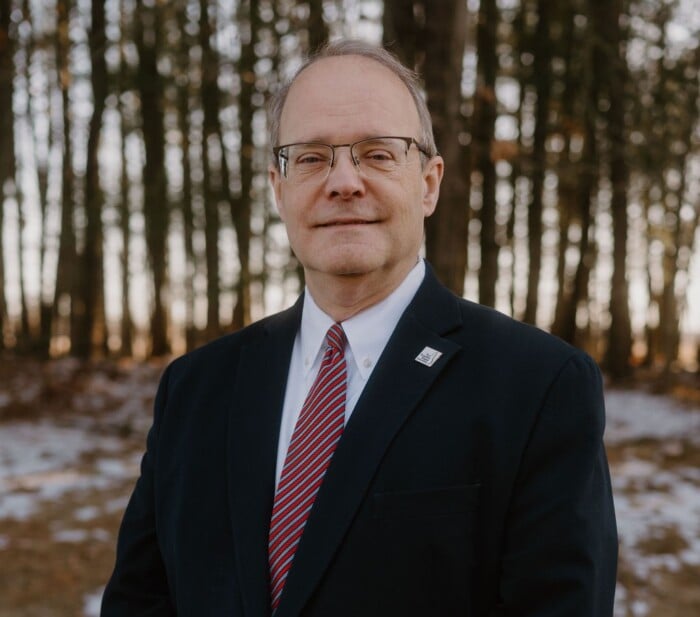
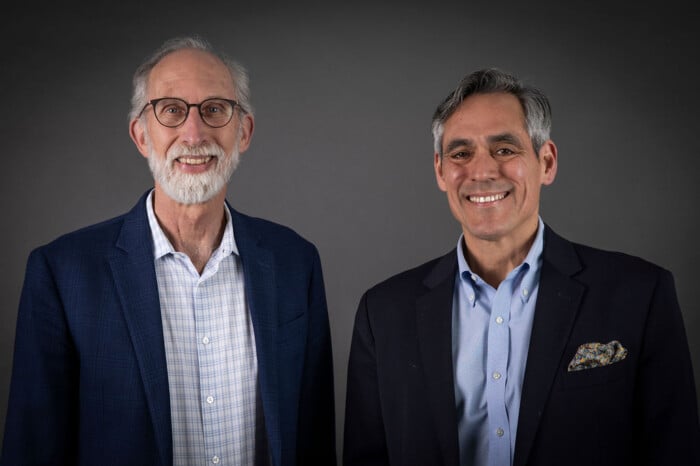
Q&A with Partner and chief scientist, Advanced Solutions Life Sciences Jay Hoying
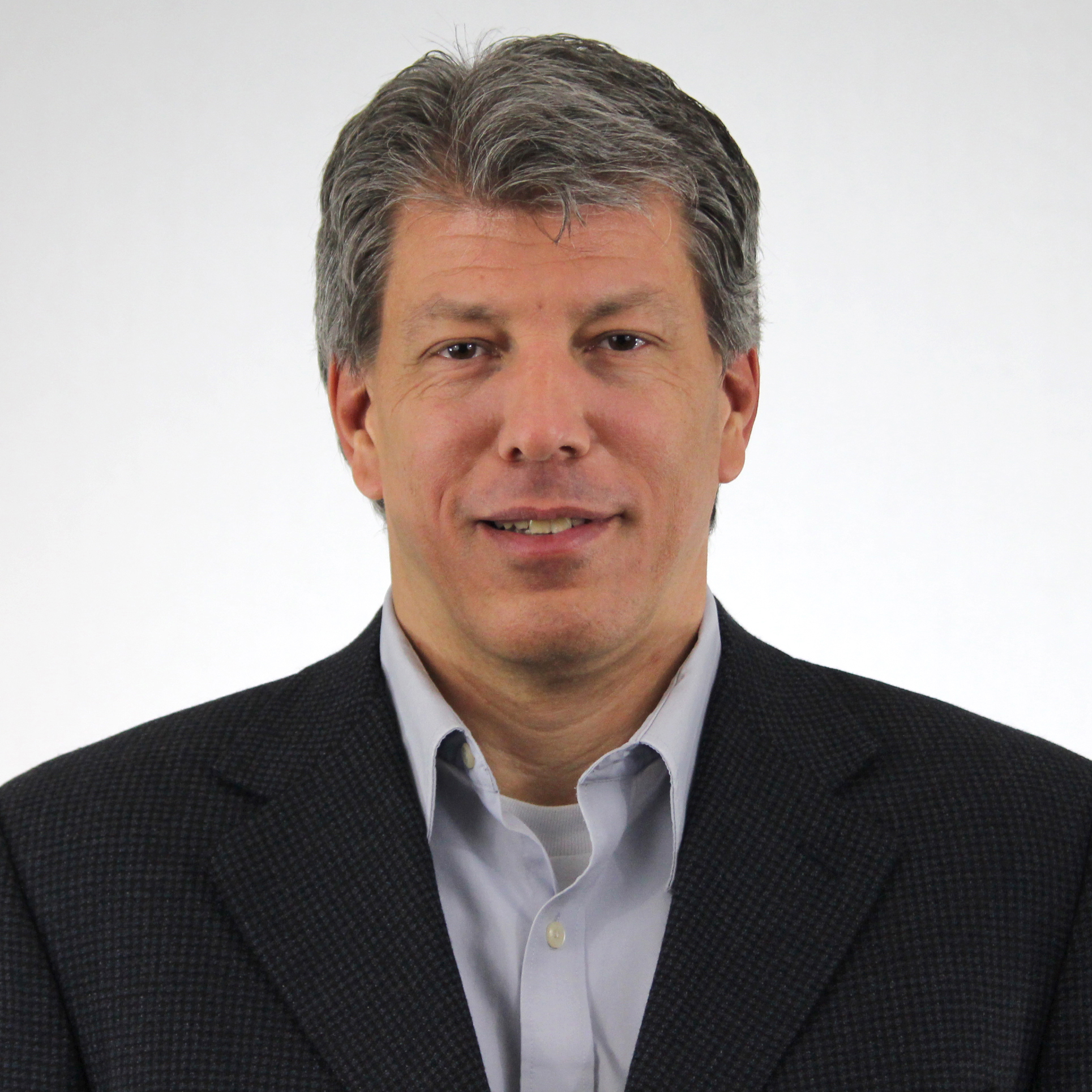
‘We have enabling technologies that lets others build tissues, whether it’s for creating human tissues in the laboratory for drug discovery … or building a replacement tissue to treat disease in a patient.’
Advanced Solutions Life Sciences earned top honors at the NH Tech Alliance’s Product of the Year competition last year for the AI-powered software it uses to create human tissue and bone through a 3D printing platform known as the BioAssembly Bot 500, which features a multi-axis robotic arm.
During his pitch Nov. 20 at the Bank of NH Stage in Concord, Jay Hoying, partner and chief scientist, talked about the technology’s origins, which began about 5½ years ago with the reconstruction surgical team at a VA hospital in Seattle.
A patient had lost part of his jaw during surgery to remove a tumor on his face, making it difficult to eat, speak and express himself.
“We asked the question, what if we could reconstruct our veteran friend’s face by building a piece of living bone, matching his shape or anatomy, as well as his biology?” Hoying told the group.
The Louisville, Kentucky-based company was one of the first to set up a lab in Manchester after the Advanced Regenerative Manufacturing Institute (ARMI) was established in 2017, an effort that was kickstarted with an $80 million grant from the U.S. Defense and has racked up millions more, most recently a $44 million federal grant in 2024.
Hoying visited NH Business Review to appear as a guest on the “Down to Business” podcast. This article was adapted from that interview.
Q. What is your background?
A. In addition to setting the scientific vision for the company is, I oversee what I call an applications lab. Broadly speaking, we’re a regenerative medicine company.
We have enabling technologies that lets others build tissues, whether it’s for creating human tissues in the laboratory for drug discovery … or building a replacement tissue to treat disease in a patient.
My background is a life scientist by training. I joined the company in 2018. Before that, I was a tenured faculty member in academia for close to 30 years in life sciences and health sciences. My laboratory’s research effort was around tissue biology.
Q. The BioAssembly Bot is a robotic arm behind glass that builds tissue and bone.
A. About 13 or 14 years ago, I was having conversations with our CEO, Michael Golway, and they’re headquartered in Louisville, Kentucky, which is where I was at the time as faculty. I was consulting with them. The idea was, can we somehow automate and roboticize what you do at the bench?
What you do at the bench is a person moves their arms around, they grab tools, etc., and we wanted to capture that kind of workflow as much as we could. The BioAssembly Bot — the robotic arm — has six axes of motion. The human arm is seven, so the arm can do just about any kind of range of motion that a human arm does.
BAB, as we call it for short, doesn’t have a hand, but she can swap out hands at the wrist, so where we might grab a tool, Bab will essentially swap hands to do that.
In the broadest sense, BAB is recapitulating or redoing much of what I might do personally at the bench but now in that glass-enclosed cabinet. We spent a lot of time instructing Bab how to do certain workflows, build a certain replacement tissue, for example.
Q. Tell us a little bit about why you joined ARMI in 2017.
A. Around 2016, when we sold our first unit, we thought we were poised to be part of a larger industry. Around that same time, the Department of Defense put out a grant call around the industry of regenerative manufacturing, and three groups competed for that. Our technology was part of two of those three groups. The group that won — which was Dean Kamen’s team at ARMI — was the one group that we were not a part of.
Once we found out who won, we had the chance to get in front of ARMI’s leadership and pitched our technology. That led to us meeting with them here in the Millyard. We got a better impression of what’s going on, how big this could be for us and for the industry. We were the first to officially sign and the first to locate some of our activity up here. We’re located now at 500 Commercial St. in some of the ARMI space there.
Q. Were you surprised that Manchester, NH, won this big award ($80 million)?
A. What’s interesting is no one really knew who that third group was, because the first two were coming out of the academic centers, which is why I think Dean’s team really put the best proposal forward, because they’re coming at it from a manufacturing perspective and an innovation perspective. In hindsight that makes perfect sense.
It was a great pick. I think it was the right pick.