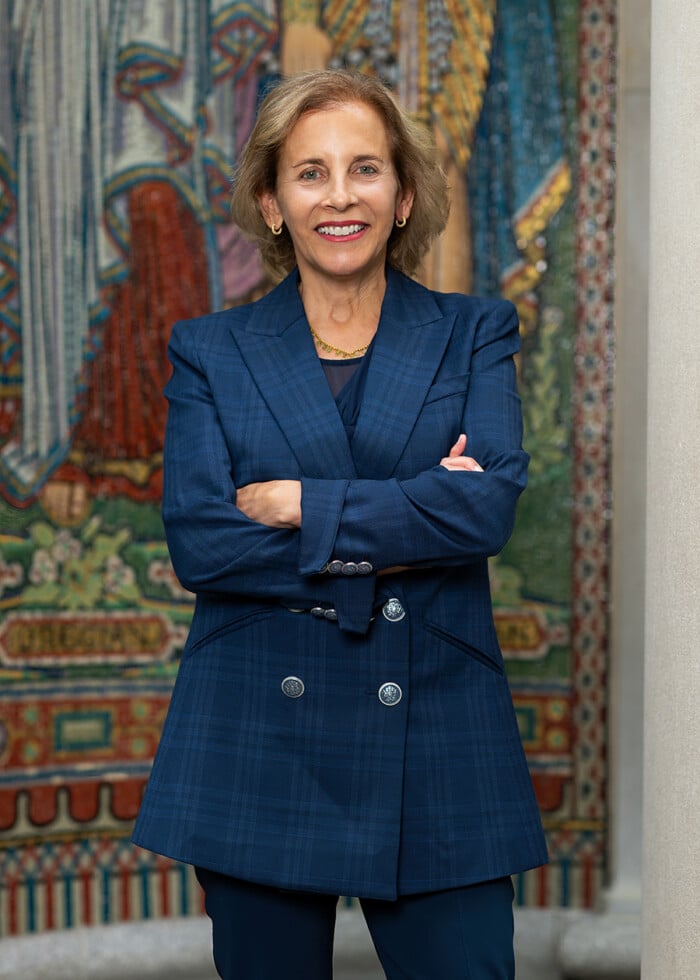
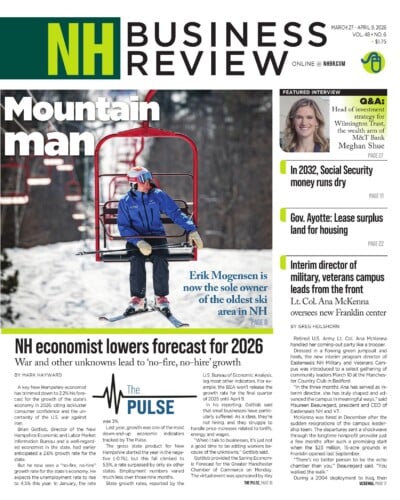
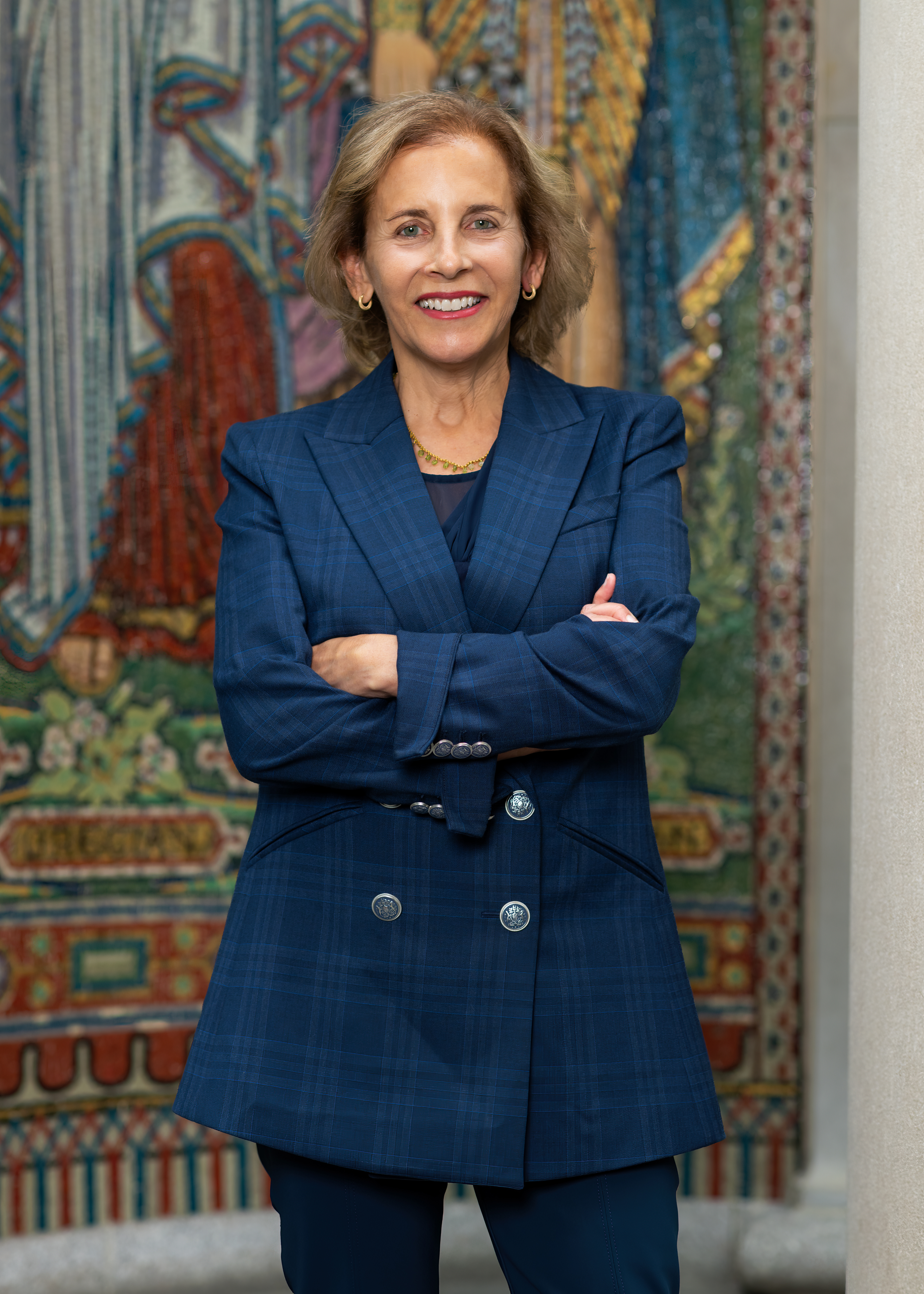
Q&A with Director and CEO, Currier Museum of Art Jordana Pomeroy
‘We need to create larger endowments to sustain our current work and our future work … We need to raise visibility. We don’t want to be a hidden gem anymore.’
Jordana Pomeroy’s path to New Hampshire included stops in much bigger locales, but when the board of the Currier Museum of Art contacted her to consider leaving South Florida to come to Manchester, it was the right move at the right time.
Pomeroy, who joined the Currier in September 2024 as director and CEO, spent nearly a decade as director of the Patricia & Philip Frost Art Museum at Florida International University in Miami, though her longest tenure was 15 years at the National Museum of Women in the Arts, where she served as chief curator.
Pomeroy aims to expand the Currier’s reach and make more extensive use of its vast holdings, which include works by Pablo Picasso, Claude Monet and Georgia O’Keeffe. It also owns two houses in Manchester that were designed by iconic architect Frank Lloyd Wright that are open for public tours.
Pomeroy recently visited NH Business Review to appear as a guest on NH Business Review’s “Down to Business” podcast. This article was adapted from that interview.
Q. What brought you to New Hampshire?
A. What prompted me to come to the Currier was the reputation of the Currier, which is nationally known and is in some ways internationally known, and has a great collection. The board did a great job of recruiting me. I was eager to get back North for a lot of reasons, including family, so it seemed like the right move to make at this point in my career.
The longest part of my career I spent in Washington, D.C., as the chief curator of the National Museum of Women in the Arts, which at the time was a very new museum. In a sense, that taught me all that I needed to know as a director, because you had to do a lot on your own. It was sort of a do-it-yourself place for a long time, although it’s definitely professionalized and become a more seasoned institution.
And then I became a director. I wanted to run a university museum, so I went first to LSU, where I was for three years, then to Miami, where I spent 10 years. If it’s one thing I miss, it’s being around students, because they keep you young and they keep you nimble. The students I worked with there had great work ethic, so I felt like I was giving back and teaching about a profession that I’ve loved.
Q. You mentioned the collection at the Currier. As an art historian and just a lover of art, what drew you here in terms of, “Wow, there’s Matisse, and there’s two Frank Lloyd Wright homes and Picasso.”
A. It has a little of everything and a lot of really good art. It punches above its weight class. In some ways, it is a surprise. When I walked in, it was a Wednesday morning. I was sleuthing the institution. I’d come out of interviews and I walked in, anonymous.
Even though I’d seen some of the works online, it really hit me hard, the way when you walk into a house that you might want to buy and you know it’s the right place.
It had an aura to it, and a lot of it is because the art is so, so good: 16th century to contemporary … We have 18th century European, a lot of 19th century American, and are steadily building a contemporary art collection.
There has been a lot of thought involved in the acquisitions. There were some remarkable donations over the years, which shows a lot of confidence in the institution.
Q. You’re celebrating your two-year mark in the role. What have you been focusing on in the past couple of years?
A. Strengthening the future is one way to put it. It’s like walking into any new job: You don’t know what you don’t know. We really need to fundraise for the future. We need to create larger endowments to sustain our current work and our future work.
It’s been pretty heavy in that sense of bringing back members who may have lapsed, bringing back the sort of confidence in the institution that it truly is a great place. We need that kind of sustenance, and these are challenging times, although I will say museums never have unchallenging times.
We need to raise visibility. We don’t want to be a hidden gem anymore. That’s a question of communications and also the quality of the programs and experiences you’re offering. These things are already in motion, and it’s exciting.