Manchester to end up on the Monopoly board
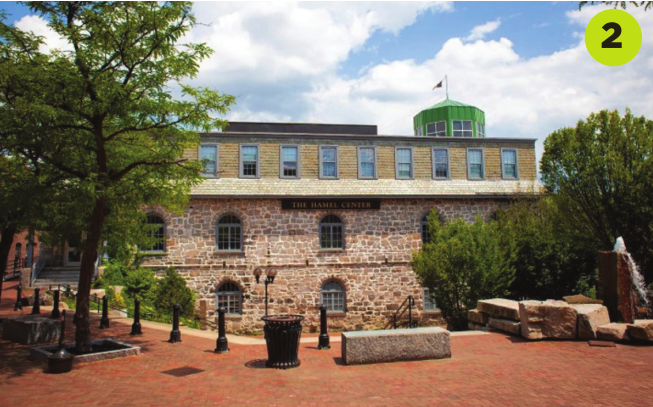
Efforts are underway in Manchester to fashion a version of the iconic board game "Monopoly" into a Who's Who and What's What of New Hampshire's largest city.
Now that 2026 is underway, New Hampshire employers should turn their attention to the state’s new Parental Medical Leave law (PML). Effective January 1, 2026, most employers with 20 or more employees are required to provide unpaid leave to allow employees to attend childbirth-related medical appointments, postpartum care and pediatric visits during a child’s first year. As a practical matter, many New Hampshire employers will need to review — and, where necessary, update — their existing leave policies to ensure compliance.
Under the new law, which amends RSA 275, eligible employees are entitled to up to 25 hours of unpaid leave during the first year following the birth or adoption of a child. This leave can be used for three specific purposes: the employee’s own childbirth-related medical appointments; postpartum care appointments; and the child’s pediatric medical appointments. If both parents work for the same employer, they do not each receive 25 hours; instead, they share a combined total of 25 hours.
The PML applies to employers with 20 or more employees. The statute does not address whether out-of-state employees are counted toward this threshold. The law also does not define the term “employee.” In those situations, New Hampshire courts typically apply the broad definition in RSA 275:4, which includes part-time, seasonal and temporary workers. As a result, many workers beyond the traditional full-time staff are likely covered by this law.
Employees who want to use PML must provide reasonable advance notice to their employer. Employees must also make a good-faith effort to schedule appointments in a way that minimizes disruption to the employer’s operations. Employers may request documentation to support the purpose of the leave. While the statute does not specify acceptable forms of documentation, a note from a health care provider will likely be considered reasonable and should typically be sufficient for the employer’s purposes.
The law only requires employers to provide unpaid leave. However, employers must permit employees to substitute accrued vacation or other forms of paid leave at the employee’s sole discretion.
In the case of salaried employees, employers should also consider RSA 275:43-b. Under that law, employers must pay salaried employees their full salary for any pay period in which they perform work, subject to limited exceptions. Therefore, if a salaried worker takes leave under the PML, employers generally may not deduct pay from the employee for that missed work time.
Employees who return to work after taking PML have a right to reinstatement to their original position. These protections are similar to those provided by the federal Family and Medical Leave Act.
PML is the latest of a series of efforts by New Hampshire to support working parents. For example, earlier this year, New Hampshire began mandating that covered employers provide nursing mothers with a reasonable space and 30-minute unpaid break every three hours to express breast milk (RSA 275:78–83).
New Hampshire also requires employers with six or more employees to provide leave for temporary physical disabilities related to pregnancy, childbirth or associated medical conditions (RSA 354-A:7, VI). Unlike the federal FMLA, which only provides job-protected leave for 12 weeks, New Hampshire does not specify a maximum duration and leave continues as certified by a health care provider. Employees returning from such leave are entitled to reinstatement to their original position or a comparable role, unless business necessity makes this impossible.
Additionally, in 2023, New Hampshire launched a voluntary Paid Family and Medical Leave (PFML) program. In contrast to mandatory PFML programs in neighboring states, participation in New Hampshire’s program is optional for both employers and employees.
Key takeaways for employers
• PML Effective Date: January 1, 2026.
• Applies to employers with 20 or more employees, including full- and part-time staff.
• Up to 25 hours of unpaid leave during the first year after a child’s birth or adoption; both parents share this total if employed by the same employer.
• Leave may be used for childbirth-related medical appointments, postpartum care and pediatric visits.
• Employees must provide reasonable advance notice; employers may request documentation from a health care provider.
• Employees may choose to substitute accrued vacation or other paid leave; salaried employees must continue to receive full weekly pay.
• Employees are entitled to reinstatement to their original position or a comparable role.
• Employers should review and update leave policies to be sure they are in compliance.
Amanda Brahm is of counsel and a member of McLane Middleton’s Litigation Department, and Amanda Archambault is a member of the law firm’s Litigation Department.
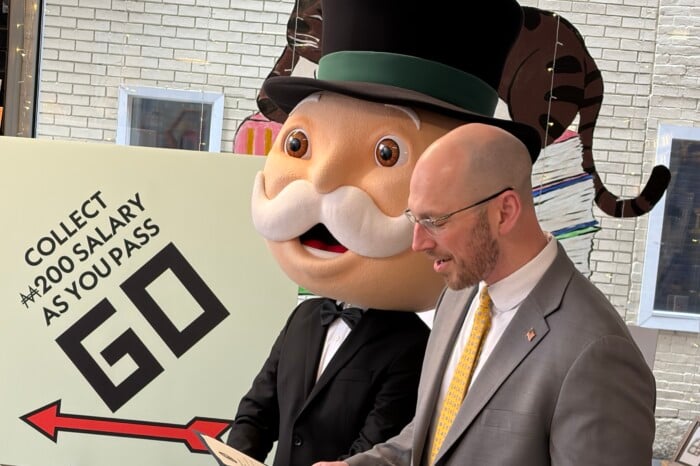
Efforts are underway in Manchester to fashion a version of the iconic board game "Monopoly" into a Who's Who and What's What of New Hampshire's largest city.
Business and event happenings around the state of NH

The Latest is a roundup of the comings and goings of the movers and shakers in NH's business community

Rising demand, transmission constraints, and the push for regional solutions

The Rugg family and the Town of Exeter have settled their long running land dispute, clearing the way for a developer to proceed with a housing development to be built on the Exeter-Newfields town line.

For nearly six decades, Paul Young has been a constant, if often understated, presence in public and government affairs, both in New Hampshire and beyond. Since founding Novus Public Affairs in 1996, Young has helped shape how businesses, nonprofits and political leaders communicate and connect with the world around them, leaving a mark on the state that is hard to measure but easy to feel.
When Emerson McCourt passed away in 2006, he left behind an extensive tool collection, meticulous instructions and a commitment to Great Bay Community College (GBCC) students that continues today.

UNH is home to the state’s largest school of nursing
New Hampshire is falling behind in the care of our aging population