State revenue got a helpful one-time shot in the arm. Now what?
Analysts fear that once it’s gone for the remainder of the fiscal year, overall revenue will lag unless other accounts, which have been underperforming to date, pick up the pace
The federal government will give with one hand and take with another when it comes to New Hampshire’s rural health care system in 2026.
The state has been awarded a $204 million federal grant to improve that system. However, federal spending on Medicaid, a lifeline for rural health care, is expected to decline by $2.3 billion in the state over the next decade under the “Big Beautiful Bill” President Donald Trump signed into law on July 4, according to KFF, a national health policy nonprofit.
The NH Hospital Association says in its 2025 report, “Challenges Confronting New Hampshire’s Health Care System,” that Medicaid cuts under the bill “affects more than just Medicaid patients.
“As a result, hospitals will have to review all their programs and services and make very difficult decisions on which ones they can sustain in the face of severe government cutbacks impacting all in their community.”
Medicaid pays for a significant share of rural health care nationwide, including half of all births and one-fifth of in-patient discharges, KFF says on its website.
Courtney Tanner, senior government relations director for Dartmouth Health, said in an interview Monday that the grant money will be most useful if spent in a way that will allow for a good return on investment. Cheshire Medical Center in Keene is an affiliate of Dartmouth Health.
“It will be a nice resource, but it has to drive change, it has to drive transformation because there will absolutely be less resources in New Hampshire’s Medicaid program,” she said.
Gov. Kelly Ayotte announced the $204 million Rural Health Transformation Program grant from the U.S. Centers for Medicare and Medicaid Services on Dec. 29. The grant, largest among New England states, is a first-year award in a five-year program.
Exact details for how the money will be spent locally or statewide are not yet available. Eventually, state contracts for use of the money will be written and released publicly.
Tanner said that if New Hampshire uses all of the grant money, it would be eligible for similar awards in subsequent years of the program.
Dartmouth Health is working with the NH Department of Health and Human Services and the Governor’s Office of New Opportunities & Rural Transformational Health to identify good uses for the money.
One of the priorities listed in the state’s grant application is improving efficiency and sustainability of rural providers through “high-quality regional systems — to share or coordinate operations, technology, primary and specialty care, and emergency services.”
“One of the initiatives we are really looking forward to partnering with the state on is some of our telehealth work,” Tanner said. “Dartmouth Health is uniquely positioned to not only support the Granite State but also support the region in our telehealth leadership.”
Dartmouth Health founded its Center for Telehealth in 2012.
“It’s been pretty amazing over the last five years to see our telehealth work evolve,” she said.
A specialist can be sitting at Dartmouth-Hitchcock Medical Center in Lebanon and assist a patient or advise another doctor hundreds of miles away in a rural pocket of New Hampshire.
The state, in its application for the grant money, listed as priorities supporting access to remote care, improving data sharing, strengthening cybersecurity and investing in emerging technologies.
Even improvements such as increased use of automation in cleaning hospital rooms can yield dividends, Tanner said. If rooms can be cleaned more efficiently, patients can be served faster.
The funding could also be used to drive improvements in the broader medical community.
For example, if long-term care providers have the resources they need, they could more quickly accept patients who are ready to be released from an acute-care hospital, Tanner said.
Meanwhile at Monadnock Community Hospital in Peterborough, chief financial officer Richard Scheinblum said his proposals for using the grant money include programs related to suicide prevention, cybersecurity, network infrastructure and workforce housing for employees.
Retaining and recruiting workforce is listed as a priority in the state’s grant application.
Scheinblum noted that an overarching goal of the grant money is to improve the access and delivery of rural health care.
“I’m hoping that it will basically strengthen our delivery of care in the community,” Scheinblum said.
He also said that, given the financial stresses in the rural health care system due to losses from insurance, questions arise as to what happens when the grant money runs out.
Proposed contracts for work to be done with the grant money will be subject to approval of the NH Executive Council.
This article is being shared by partners in the Granite State News Collaborative. For more information, visit collaborativenh.org.

Analysts fear that once it’s gone for the remainder of the fiscal year, overall revenue will lag unless other accounts, which have been underperforming to date, pick up the pace

Manchester Mayor Jay Ruais delivered his State of the City on Tuesday, Feb. 10, framing a path to the city’s future through the lens of history. His speech, at times rapid-fire and metrics-driven and at others raised to the passionate, oratorial tone of a secular civic sermon, addressed a standing-room-only crowd of business and civic leaders at the New Hampshire Institute of Politics at St. Anselm College.

The issue here in New Hampshire remains as it has been for many months: lack of supply that forces the hand of higher prices

According to housing advocate groups, the champions program is doing exactly what it set out to do: reward communities that are taking steps to build more housing

NH Tech Alliance task force maps AI in New Hampshire

There are no magic wands in tax disputes, but the current New Hampshire Department of Revenue Administration (DRA) tax amnesty program is about as close as it gets.
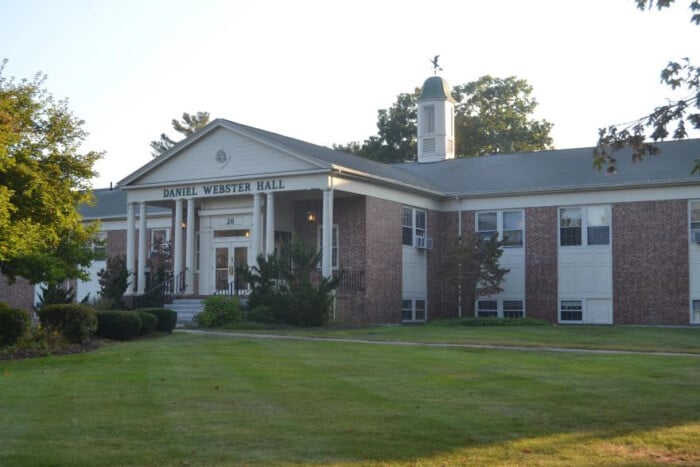
The state Senate Finance Committee voted along party lines January 13 against a bill that would give Nashua $20 million to purchase the former site of Daniel Webster College. Four Republicans voted in favor and two Democrats against.

Legislature also wrestles with the Business and Enterprise Tax, which has a direct effect on state revenues, and as it looks at how Meals and Rental Tax revenue is distributed and whether there should be an additional “Pillow Tax” on rentals

A state-run program that encourages communities to add much needed housing in New Hampshire, already defunded in the current budget, is on the precipice of disappearing altogether. The House Committee on Housing voted 10-8 on Jan. 20 to repeal the so-called Housing Champions program administered by the NH Department of Business and Economic Affairs.